THE ADVENTURE COLLECTIVE® · Independent discovery and booking for outdoor travel

Explore Snaefellsnes in one immersive day: from the glacier-capped volcano of Snaefellsjökull to basalt sea stacks, black pebble beaches, and the iconic Kirkjufell. This private tour blends geology, coastal history, and flexible pacing for photographers and casual hikers alike.
Explore Snaefellsnes in one immersive day: from the glacier-capped volcano of Snaefellsjökull to basalt sea stacks, black pebble beaches, and the iconic Kirkjufell. This private tour blends geology, coastal history, and flexible pacing for photographers and casual hikers alike.
You leave Reykjavík before sunrise and the road narrows into the peninsula’s spare geometry: black sand, basalt teeth, and the domed glacier of Snaefellsjökull watching like a patient founding figure.
Verified experiences and guided adventures in the surrounding area.
Operated by Arctic Advanced ehf. · Grundarfjörður, Western Region
You leave Reykjavík before sunrise and the road narrows into the peninsula’s spare geometry: black sand, basalt teeth, and the domed glacier of Snaefellsjökull watching like a patient founding figure.
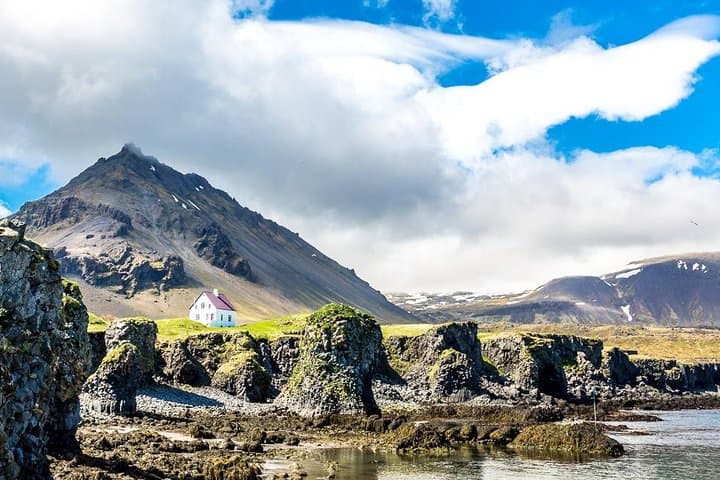
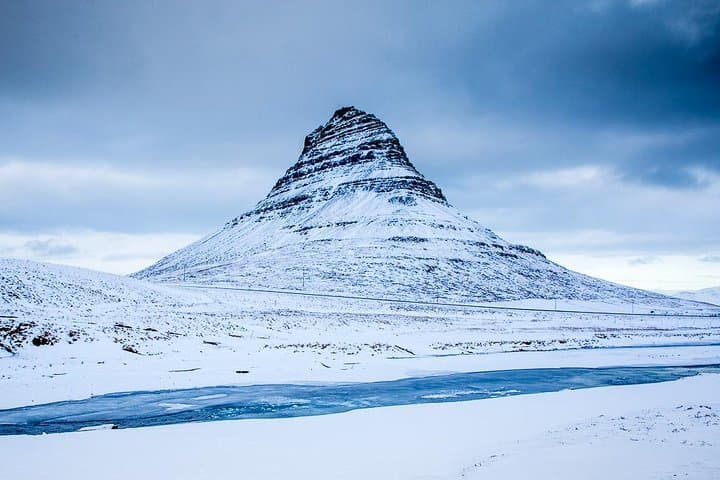
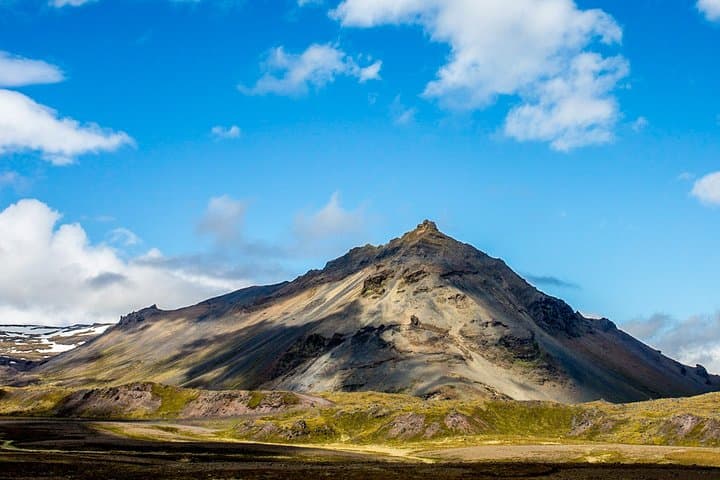
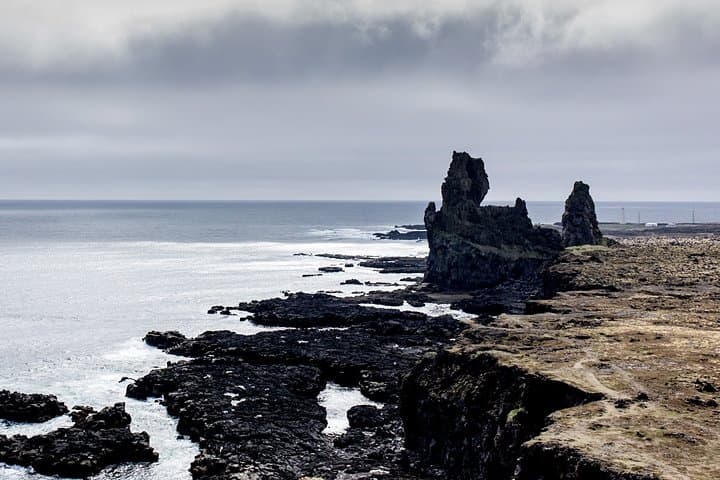
The day is a compact lesson in Icelandic geology and coastal culture. Snaefellsjökull, an ice-capped stratovolcano rising to roughly 1,446 m, anchors the western tip; along the way you encounter Londrangar’s volcanic dikes, the pebble sweep of Djúpalónssandur with its old fishermen’s lifting stones, and the photogenic symmetry of Kirkjufell (≈463 m) near Grundarfjörður. Small fishing hamlets such as Arnarstapi and Búðir speak to a history of coastal trade and hardy settlement, while Snæfellsnes itself appears in folklore and modern literature—most famously as the entrance in Jules Verne’s Journey to the Center of the Earth.
Geology here is immediate: columnar basalt, tuff beds, and glacially carved coves. The ocean shapes the shoreline aggressively; waves test cliffs and sea stacks in turn.
Practical guidance: this private excursion is designed as a full-day outing with frequent short stops and light walks—expect 8–10 hours including drive time. Wear layered, waterproof clothing and sturdy shoes for uneven coastal paths. Weather changes quickly; plan for wind and spray near cliffs. Photography is best in low sun—early morning or late afternoon—and allow extra time at Kirkjufell for crowd-free shots. Respect marked trails and nest sites; the island’s mosses and bird colonies are fragile. With a private guide and vehicle, the itinerary can flex by weather—bring a charged camera, windproof jacket, and patience for Iceland’s moods.
easy.
8–10 hours.
Suitable for most fitness levels; involves short, sometimes steep or uneven walks up to 30 minutes at stops
Most operators offer hotel pick-up and drop-off in Reykjavík; specify pickup location when booking and allow time for transfers.
Stops include short walks of 10–30 minutes on uneven terrain; no long hikes are required, making the tour accessible to most visitors.
Yes—routes and stop durations are adjusted for safety and visibility; if a stop is unsafe due to weather you’ll be offered alternatives or rescheduling.
Yes—many stops are family-friendly, but bring infant seats if needed and supervise children near cliffs and waves.
The peninsula has long been a maritime hub with fishing settlements preserved in small villages; Snæfellsjökull also features in Icelandic folklore and modern literature.
Trails and shorelines are ecologically sensitive—avoid off-road driving, stay on marked paths, and carry out waste to protect lichen and bird habitats.
Arctic Advanced ehf. operates guided outdoor trips and adventures with an emphasis on safety, stewardship, and memorable experiences.
You leave Reykjavík before sunrise and the road narrows into the peninsula’s spare geometry: black sand, basalt teeth, and the domed glacier of Snaefellsjökull watching like a patient founding figure.
You leave Reykjavík before sunrise and the road narrows into the peninsula’s spare geometry: black sand, basalt teeth, and the domed glacier of Snaefellsjökull watching like a patient founding figure.
The day is a compact lesson in Icelandic geology and coastal culture. Snaefellsjökull, an ice-capped stratovolcano rising to roughly 1,446 m, anchors the western tip; along the way you encounter Londrangar’s volcanic dikes, the pebble sweep of Djúpalónssandur with its old fishermen’s lifting stones, and the photogenic symmetry of Kirkjufell (≈463 m) near Grundarfjörður. Small fishing hamlets such as Arnarstapi and Búðir speak to a history of coastal trade and hardy settlement, while Snæfellsnes itself appears in folklore and modern literature—most famously as the entrance in Jules Verne’s Journey to the Center of the Earth.
Geology here is immediate: columnar basalt, tuff beds, and glacially carved coves. The ocean shapes the shoreline aggressively; waves test cliffs and sea stacks in turn.
Practical guidance: this private excursion is designed as a full-day outing with frequent short stops and light walks—expect 8–10 hours including drive time. Wear layered, waterproof clothing and sturdy shoes for uneven coastal paths. Weather changes quickly; plan for wind and spray near cliffs. Photography is best in low sun—early morning or late afternoon—and allow extra time at Kirkjufell for crowd-free shots. Respect marked trails and nest sites; the island’s mosses and bird colonies are fragile. With a private guide and vehicle, the itinerary can flex by weather—bring a charged camera, windproof jacket, and patience for Iceland’s moods.