THE ADVENTURE COLLECTIVE® · Independent discovery and booking for outdoor travel

Slide through Glen Canyon’s towering walls on a calm Colorado River float, then step to the edge of Horseshoe Bend—all in a single, guided day from Sedona. Expect big scenery, cultural stops on Navajo land, and easygoing water that welcomes first-timers and families.
Slide through Glen Canyon’s towering walls on a calm Colorado River float, then step to the edge of Horseshoe Bend—all in a single, guided day from Sedona. Expect big scenery, cultural stops on Navajo land, and easygoing water that welcomes first-timers and families.
Dawn starts soft in Sedona, the sandstone warming through pinks as the shuttle noses north. Oak Creek Canyon rises in tight curves, pines leaning in like curious locals. Beyond the switchbacks the San Francisco Peaks shoulder the skyline, and the Painted Desert spreads out in bands that seem to breathe as the light changes. By the time you cross the Navajo Nation and roll over Navajo Bridge—where California condors sometimes plane the thermals—the day has taken a wide-open, road-trip rhythm. The river is waiting.
Verified experiences and guided adventures in the surrounding area.
Operated by Angels Gate Tours · Page, Arizona
Dawn starts soft in Sedona, the sandstone warming through pinks as the shuttle noses north. Oak Creek Canyon rises in tight curves, pines leaning in like curious locals. Beyond the switchbacks the San Francisco Peaks shoulder the skyline, and the Painted Desert spreads out in bands that seem to breathe as the light changes. By the time you cross the Navajo Nation and roll over Navajo Bridge—where California condors sometimes plane the thermals—the day has taken a wide-open, road-trip rhythm. The river is waiting.
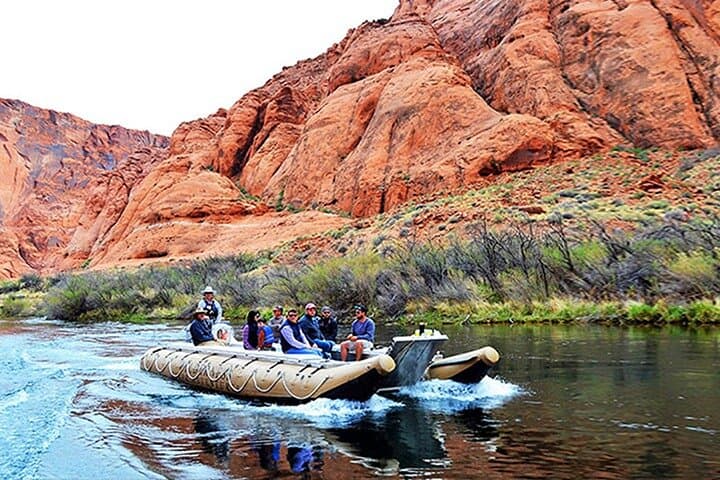
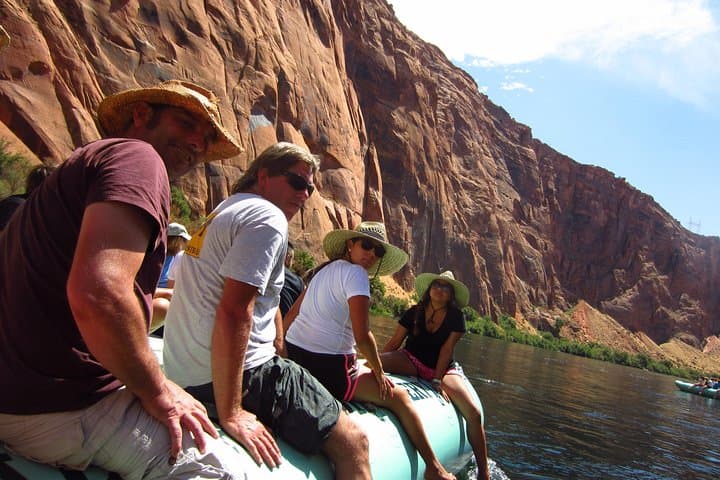
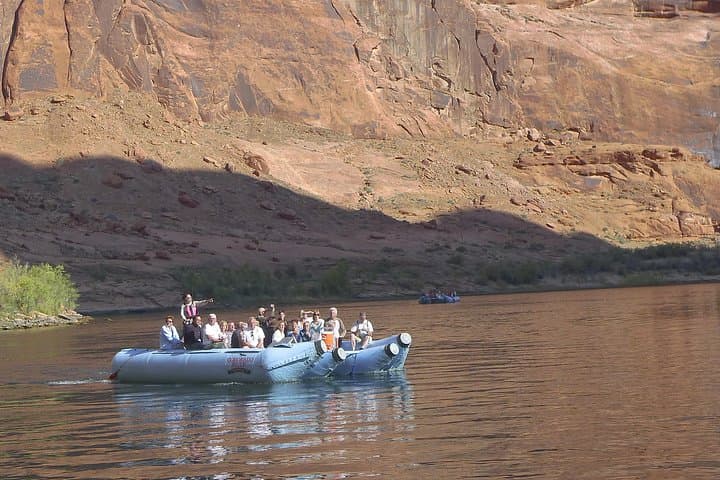
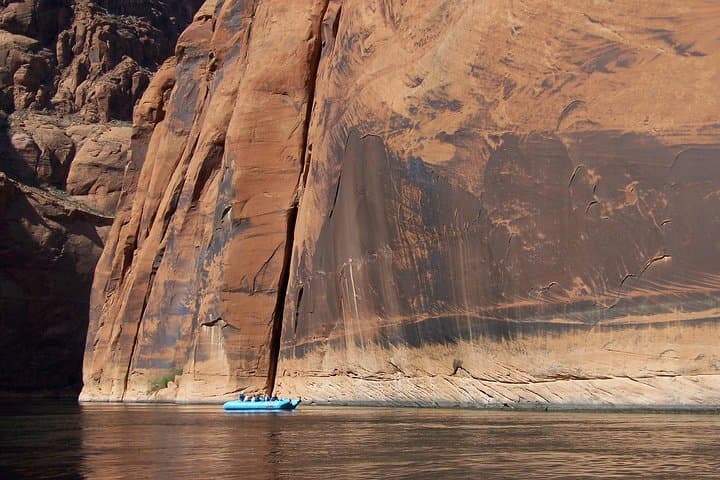
The float launches in the shadow of Glen Canyon Dam, the Colorado released as glass. Here, the river moves like a calm but determined guide, pushing forward under 1,000-foot walls of caramel Navajo Sandstone. Desert varnish paints the cliffs; swallows stitch the air. The water holds a steady chill year-round, a clear green ribbon that mirrors the canyon’s mood. Guides steer broad, motor-assisted rafts through Glen Canyon’s quiet bends, narrating the geology that began as dunes in an ancient erg, now frozen in cross-bedded stone. They point out petroglyph panels and the remnants of ferry-era history downstream near Lees Ferry, where pioneers once worked this corridor hard.
Horseshoe Bend arrives as a perfect arc, the famous curve framed by sheer walls. From the water, the perspective is disarming—you feel the bend wrap around you, the river inviting you to trace its loop with your eyes while it does the heavy lifting beneath the boat. A sandy beach stop breaks up the drift. Lunch unfolds as ravens supervise and the canyon breathes shade and sun in equal turns.
By afternoon, the gloss of the Colorado carries you toward take-out and a quick look from above. On the rim, Horseshoe Bend’s overlook reads differently: big sky, big drop, big country. The return drive resets the scale—you’ll pass the Cameron Trading Post for Zuni, Hopi, and Navajo art, then recross the bridge and watch the day’s color slide back into the same pines that waved you out.
This is a low-impact, high-reward desert day. No whitewater, no complex navigation—just steady current, canyon walls that keep their own time, and guides who translate rock into story. Bring layers; canyon winds can nip even in summer. Hydrate more than seems necessary. Closed-toe sandals or water shoes handle wet decks and sandy stops. And remember you’re traveling through living cultures and fragile desert—tread lightly, look closely, and let the river set the pace.
easy.
10–12 hours.
Comfortable sitting for extended periods with short walks on sand or uneven terrain; suitable for most travelers.
No—this is a smooth-water float through Glen Canyon with calm current and no rapids, ideal for first-timers and families.
The river runs cold year-round (often in the mid-40s°F/7–9°C) due to releases from Glen Canyon Dam, though air temps can be hot.
Quick-dry clothing, a light wind layer, and closed-toe water-friendly shoes. Bring sun protection and avoid heavy cotton.
Yes—there are facilities at the launch and take-out, and designated stops may have basic options depending on the day’s plan.
A picnic lunch and bottled water are typically provided; confirm dietary needs with the operator ahead of time.
Swimming is generally not recommended due to cold water, currents, and safety protocols; follow your guide’s instructions.
Glen Canyon Dam, completed in 1963, transformed seasonal flows and carved Lake Powell upstream; the corridor also preserves petroglyphs and the 19th-century Lees Ferry crossing that linked Arizona and Utah.
Stay off fragile cryptobiotic soil near riverbanks and pack out all micro-trash. Purchase art from reputable vendors to support Navajo artisans and local economies.
Angels Gate Tours operates guided outdoor trips and adventures with an emphasis on safety, stewardship, and memorable experiences.
Dawn starts soft in Sedona, the sandstone warming through pinks as the shuttle noses north. Oak Creek Canyon rises in tight curves, pines leaning in like curious locals. Beyond the switchbacks the San Francisco Peaks shoulder the skyline, and the Painted Desert spreads out in bands that seem to breathe as the light changes. By the time you cross the Navajo Nation and roll over Navajo Bridge—where California condors sometimes plane the thermals—the day has taken a wide-open, road-trip rhythm. The river is waiting.
Dawn starts soft in Sedona, the sandstone warming through pinks as the shuttle noses north. Oak Creek Canyon rises in tight curves, pines leaning in like curious locals. Beyond the switchbacks the San Francisco Peaks shoulder the skyline, and the Painted Desert spreads out in bands that seem to breathe as the light changes. By the time you cross the Navajo Nation and roll over Navajo Bridge—where California condors sometimes plane the thermals—the day has taken a wide-open, road-trip rhythm. The river is waiting.
The float launches in the shadow of Glen Canyon Dam, the Colorado released as glass. Here, the river moves like a calm but determined guide, pushing forward under 1,000-foot walls of caramel Navajo Sandstone. Desert varnish paints the cliffs; swallows stitch the air. The water holds a steady chill year-round, a clear green ribbon that mirrors the canyon’s mood. Guides steer broad, motor-assisted rafts through Glen Canyon’s quiet bends, narrating the geology that began as dunes in an ancient erg, now frozen in cross-bedded stone. They point out petroglyph panels and the remnants of ferry-era history downstream near Lees Ferry, where pioneers once worked this corridor hard.
Horseshoe Bend arrives as a perfect arc, the famous curve framed by sheer walls. From the water, the perspective is disarming—you feel the bend wrap around you, the river inviting you to trace its loop with your eyes while it does the heavy lifting beneath the boat. A sandy beach stop breaks up the drift. Lunch unfolds as ravens supervise and the canyon breathes shade and sun in equal turns.
By afternoon, the gloss of the Colorado carries you toward take-out and a quick look from above. On the rim, Horseshoe Bend’s overlook reads differently: big sky, big drop, big country. The return drive resets the scale—you’ll pass the Cameron Trading Post for Zuni, Hopi, and Navajo art, then recross the bridge and watch the day’s color slide back into the same pines that waved you out.
This is a low-impact, high-reward desert day. No whitewater, no complex navigation—just steady current, canyon walls that keep their own time, and guides who translate rock into story. Bring layers; canyon winds can nip even in summer. Hydrate more than seems necessary. Closed-toe sandals or water shoes handle wet decks and sandy stops. And remember you’re traveling through living cultures and fragile desert—tread lightly, look closely, and let the river set the pace.