THE ADVENTURE COLLECTIVE® · Independent discovery and booking for outdoor travel

Follow a historic roadbed and a clear mountain stream on a guided, interpretive walk through the Greenbrier side of Great Smoky Mountains National Park. In three hours you’ll see spring-houses, old rock walls and cascading whitewater while learning about the area’s natural and human history.
Follow a historic roadbed and a clear mountain stream on a guided, interpretive walk through the Greenbrier side of Great Smoky Mountains National Park. In three hours you’ll see spring-houses, old rock walls and cascading whitewater while learning about the area’s natural and human history.
You step off a quiet parking area into dappled light, the forest closing behind you and a cold creek daring you to follow its voice. The trail follows an old roadbed; moss-covered rock walls and a weathered spring-house whisper about lives lived in the Smokies before the park. Cascades flash white in the understory while the guide points out a log cabin foundation tucked into the trees.
Verified experiences and guided adventures in the surrounding area.
Operated by A Walk in the Woods · Gatlinburg, Tennessee
You step off a quiet parking area into dappled light, the forest closing behind you and a cold creek daring you to follow its voice. The trail follows an old roadbed; moss-covered rock walls and a weathered spring-house whisper about lives lived in the Smokies before the park. Cascades flash white in the understory while the guide points out a log cabin foundation tucked into the trees.
This guided walk runs through the Greenbrier approach to Great Smoky Mountains National Park, where 400-million-year-old uplifted rocks form rounded ridgelines instead of jagged peaks. Human history is layered here too: Cherokee travel routes, 19th-century farms, and the park’s creation in the 1930s after widespread logging shaped local communities.
Culturally the area still smells of wood smoke at neighboring hamlets and supports a working relationship between tourism and local stewardship; guides often interpret both natural history and settler stories. Expect a paced, interpretive 3-hour outing that’s ideal as an introduction to the park’s ecology and heritage.
Practical guidance: plan for roughly 2–3.5 miles of walking on packed dirt, roots and occasional rocky steps with modest elevation gain (under ~500 ft). Wear sturdy footwear, bring 1–2 liters of water, a light rain layer, and insect protection in warm months. Parking is at a meeting lot; you’ll follow the guide to the trailhead and return to your vehicle. Tours run rain or shine; a minimum group size is required, and the route may pivot for closures. Move deliberately, leave no trace, and listen for the river — it’ll tell you where to look.
easy.
3 hours.
Suitable for most fitness levels; expect sustained walking on uneven forest terrain, minimal steep climbs.
The guided walk runs about 3 hours and covers approximately 2–3.5 miles with modest elevation gain—classified as easy for most walkers.
Children are welcome but should be able to walk the distance; pets are typically not allowed on guided interpretive hikes—confirm with the operator when booking.
Tours run rain or shine; guides may adjust the route or postpone if safety or access is compromised. Cancel at least 24 hours for a full refund per policy.
Meet at the designated parking area where the guide — wearing the operator’s shirt— will gather the group and lead or drive participants to the trailhead.
This side of the Smokies holds traces of Cherokee travel routes and 19th-century settler farms; many stone walls and cabin foundations date to that era.
The park emphasizes leave-no-trace ethics and trail stewardship; stay on designated paths to protect fragile understory and rare plants.
A Walk in the Woods operates guided outdoor trips and adventures with an emphasis on safety, stewardship, and memorable experiences.


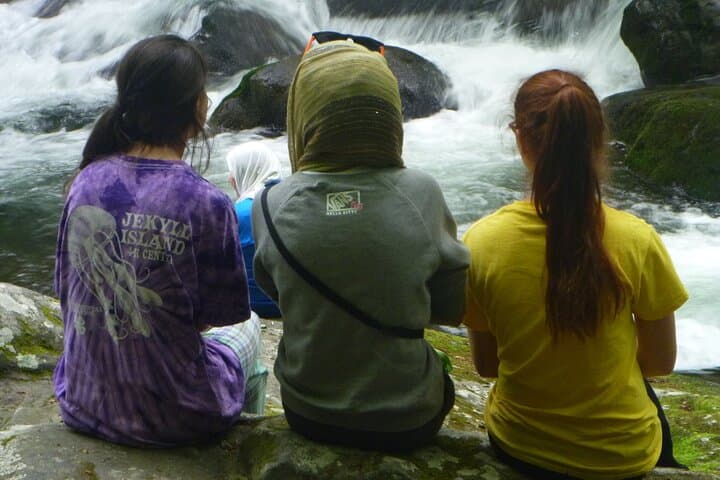
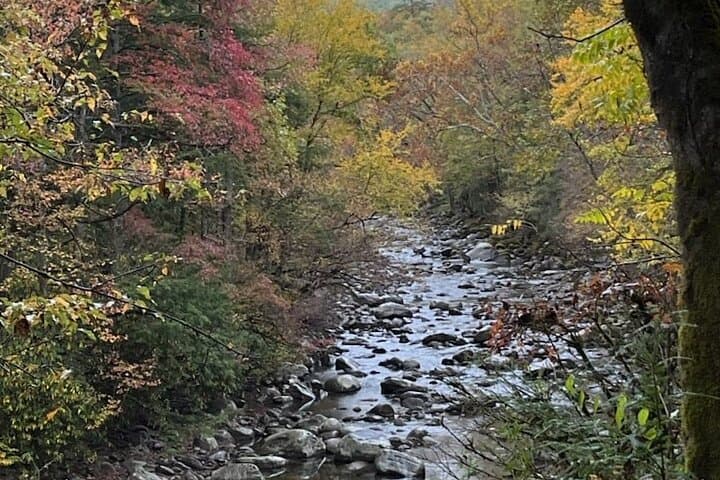
You step off a quiet parking area into dappled light, the forest closing behind you and a cold creek daring you to follow its voice. The trail follows an old roadbed; moss-covered rock walls and a weathered spring-house whisper about lives lived in the Smokies before the park. Cascades flash white in the understory while the guide points out a log cabin foundation tucked into the trees.
You step off a quiet parking area into dappled light, the forest closing behind you and a cold creek daring you to follow its voice. The trail follows an old roadbed; moss-covered rock walls and a weathered spring-house whisper about lives lived in the Smokies before the park. Cascades flash white in the understory while the guide points out a log cabin foundation tucked into the trees.
This guided walk runs through the Greenbrier approach to Great Smoky Mountains National Park, where 400-million-year-old uplifted rocks form rounded ridgelines instead of jagged peaks. Human history is layered here too: Cherokee travel routes, 19th-century farms, and the park’s creation in the 1930s after widespread logging shaped local communities.
Culturally the area still smells of wood smoke at neighboring hamlets and supports a working relationship between tourism and local stewardship; guides often interpret both natural history and settler stories. Expect a paced, interpretive 3-hour outing that’s ideal as an introduction to the park’s ecology and heritage.
Practical guidance: plan for roughly 2–3.5 miles of walking on packed dirt, roots and occasional rocky steps with modest elevation gain (under ~500 ft). Wear sturdy footwear, bring 1–2 liters of water, a light rain layer, and insect protection in warm months. Parking is at a meeting lot; you’ll follow the guide to the trailhead and return to your vehicle. Tours run rain or shine; a minimum group size is required, and the route may pivot for closures. Move deliberately, leave no trace, and listen for the river — it’ll tell you where to look.