THE ADVENTURE COLLECTIVE® · Independent discovery and booking for outdoor travel

Ascend to the 35th floor of Smith Tower for 360-degree Seattle views, prohibition-inspired cocktails, and century-old exhibits including a collection of Smith typewriters. This short, accessible visit pairs history with an open-air vantage point over Puget Sound.
Ascend to the 35th floor of Smith Tower for 360-degree Seattle views, prohibition-inspired cocktails, and century-old exhibits including a collection of Smith typewriters. This short, accessible visit pairs history with an open-air vantage point over Puget Sound.
You step out of the Otis elevator and the city exhales beneath you — glass roofs, the jagged arc of the waterfront, and Puget Sound pushing light toward the horizon. The 35th‑floor observatory at Smith Tower opens like a map: a 360‑degree, open‑air sweep where gulls and gusts share the same level as craft cocktails and century‑old typewriters.
Verified experiences and guided adventures in the surrounding area.
Operated by Smith Tower Visitor Experience · Seattle, Washington
You step out of the Otis elevator and the city exhales beneath you — glass roofs, the jagged arc of the waterfront, and Puget Sound pushing light toward the horizon. The 35th‑floor observatory at Smith Tower opens like a map: a 360‑degree, open‑air sweep where gulls and gusts share the same level as craft cocktails and century‑old typewriters.
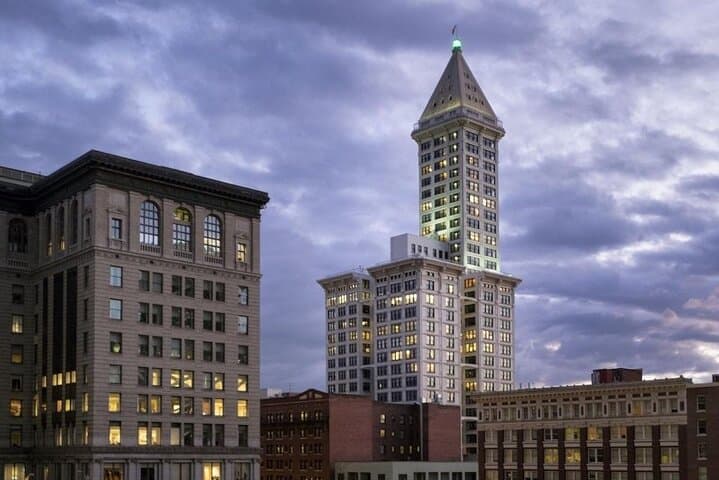
Built in 1914 during Seattle’s boom years, Smith Tower was once the city’s tallest structure; its story is one of ambition and early‑20th‑century commerce. The exhibits trace that arc, spotlighting the Smith Typewriters collection and audiovisual vignettes that place the tower in Prohibition‑era culture. Geologically, the view frames a region carved by glaciers — the deep U‑shaped Puget Sound valleys and distant volcanic silhouettes remind visitors why the Northwest’s skyline reads like a geography lesson.
Locals treat the Wishing Chair as a ritual: an easy, memorable photo stop and a nod to the tower’s quirks. The observatory bar leans into speakeasy flavors, offering small plates that echo Seattle’s farm‑to‑sea ethos.
Practical guidance: plan 15–60 minutes; arrive before the last elevator up (the last ascent closes one hour before the observatory closes). Expect lineups during peak hours and limited elevator capacity. The site is wheelchair accessible and accepts mobile or paper tickets; check in at the box office on Second Avenue for table requests. Dress in layers — the open deck can be breezy even on clear afternoons — and bring a camera and ID if you intend to use the bar. With a short visit window, timing and a little patience turn a quick stop into a memorable city‑scale vantage point.
easy.
15–60 minutes.
Suitable for all fitness levels; minimal walking and stairs beyond elevator access
Visits range from about 15 minutes for a quick look to an hour if you include time at the observatory bar and exhibits.
Mobile or paper tickets are accepted; check in at the observatory box office on Second Avenue to redeem your ticket.
Yes — the tower offers wheelchair‑accessible routes and surfaces; staff can assist with access and seating arrangements.
Table requests must be made in person with a Guest Experience Attendant at the box office when you check in; advance online table reservations are not guaranteed.
Completed in 1914, Smith Tower was a symbol of Seattle’s early 20th-century economic optimism and was for decades the tallest building on the West Coast outside Los Angeles.
The observatory operates within an urban historic site; visitors are encouraged to follow leave-no-trace principles, dispose of waste properly, and respect building preservation rules.
Smith Tower Visitor Experience operates guided outdoor trips and adventures with an emphasis on safety, stewardship, and memorable experiences.
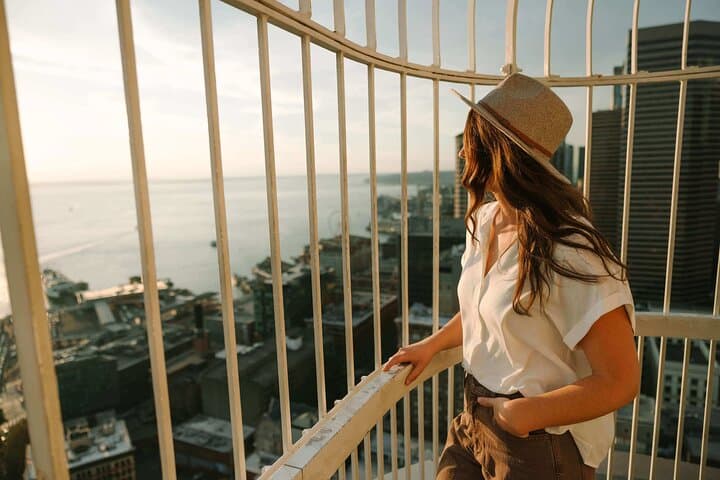


You step out of the Otis elevator and the city exhales beneath you — glass roofs, the jagged arc of the waterfront, and Puget Sound pushing light toward the horizon. The 35th‑floor observatory at Smith Tower opens like a map: a 360‑degree, open‑air sweep where gulls and gusts share the same level as craft cocktails and century‑old typewriters.
You step out of the Otis elevator and the city exhales beneath you — glass roofs, the jagged arc of the waterfront, and Puget Sound pushing light toward the horizon. The 35th‑floor observatory at Smith Tower opens like a map: a 360‑degree, open‑air sweep where gulls and gusts share the same level as craft cocktails and century‑old typewriters.
Built in 1914 during Seattle’s boom years, Smith Tower was once the city’s tallest structure; its story is one of ambition and early‑20th‑century commerce. The exhibits trace that arc, spotlighting the Smith Typewriters collection and audiovisual vignettes that place the tower in Prohibition‑era culture. Geologically, the view frames a region carved by glaciers — the deep U‑shaped Puget Sound valleys and distant volcanic silhouettes remind visitors why the Northwest’s skyline reads like a geography lesson.
Locals treat the Wishing Chair as a ritual: an easy, memorable photo stop and a nod to the tower’s quirks. The observatory bar leans into speakeasy flavors, offering small plates that echo Seattle’s farm‑to‑sea ethos.
Practical guidance: plan 15–60 minutes; arrive before the last elevator up (the last ascent closes one hour before the observatory closes). Expect lineups during peak hours and limited elevator capacity. The site is wheelchair accessible and accepts mobile or paper tickets; check in at the box office on Second Avenue for table requests. Dress in layers — the open deck can be breezy even on clear afternoons — and bring a camera and ID if you intend to use the bar. With a short visit window, timing and a little patience turn a quick stop into a memorable city‑scale vantage point.