THE ADVENTURE COLLECTIVE® · Independent discovery and booking for outdoor travel

A short, immersive raft trip from Lahaina that places you close to humpbacks in Maui Nui Whale Sanctuary. Guided by a marine naturalist with onboard hydrophone listening, the two-hour tour blends up-close viewing with conservation-focused education.
A short, immersive raft trip from Lahaina that places you close to humpbacks in Maui Nui Whale Sanctuary. Guided by a marine naturalist with onboard hydrophone listening, the two-hour tour blends up-close viewing with conservation-focused education.
The raft eases off Mala Ramp and the Pacific opens: pale blue near shore, deep indigo toward the horizon. Salted wind tugs at jackets and the captain cuts the throttle, listening — the ocean seems to exhale as a humpback surfaces nearby, arching and rolling with deliberate grace.
Verified experiences and guided adventures in the surrounding area.
Operated by Dive Maui · Lahaina, Hawaii
The raft eases off Mala Ramp and the Pacific opens: pale blue near shore, deep indigo toward the horizon. Salted wind tugs at jackets and the captain cuts the throttle, listening — the ocean seems to exhale as a humpback surfaces nearby, arching and rolling with deliberate grace.
Maui's central waters become a seasonal nursery each winter. Humpbacks migrate thousands of miles from Alaskan feeding grounds to the warm Hawaiian Islands to breed and calve; locals call these whales koholā. Lahaina itself was once a 19th-century whaling hub and the town’s shoreline carries that layered history: a working harbor, a visitor gateway, and now a place for conservation-minded encounters.
The seafloor off West Maui is volcanic shelf and reef, creating calm bays that attract mothers and calves. On a small raft you get 360-degree viewing and a marine naturalist translates behavior and song — the tour’s hydrophone makes whale vocalizations audible and immediate, as if the ocean were speaking back.
Practical details matter: tours run about two hours from Front Street, departures are punctual, and winter (December–April) is prime season with high sighting guarantees. Dress in windproof layers, bring reef-safe sunscreen, and have camera gear ready but respect viewing distances advised by guides. Expect light motion on open water and follow crew safety briefings when boarding the inflatable raft. This trip pairs education with close, low-impact observation — a short, powerful way to experience Maui’s winter giants while supporting local stewardship.
easy.
2 hours.
Suitable for most fitness levels; requires boarding a small inflatable and standing or sitting for the duration.
The peak season is December through April when North Pacific humpbacks migrate to breed and calve in Hawaiian waters; sighting guarantees typically apply in this window.
Children over the minimum age (check operator policy) are allowed; the operator restricts pregnant guests and those with back or neck injuries for safety reasons.
Crew follow federal and state guidelines and company policies; the raft offers intimate viewing without approaching or disturbing whales, and naturalists advise appropriate distances.
Trips may be canceled or rescheduled for safety; the operator commonly refunds if you cancel 24+ hours before departure or if the tour is called off due to weather.
Lahaina was a 19th-century whaling port; today the waters that once supported industry are protected as important marine habitat and cultural space for Native Hawaiian practices.
Operators emphasize low-impact viewing, reef-safe sunscreen, and educational outreach; maintaining distance and minimizing vessel noise helps reduce stress on whales and calves.
Dive Maui operates guided outdoor trips and adventures with an emphasis on safety, stewardship, and memorable experiences.
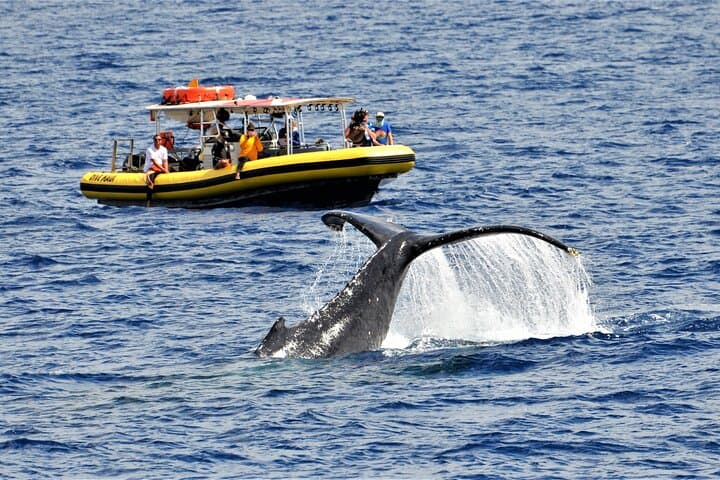


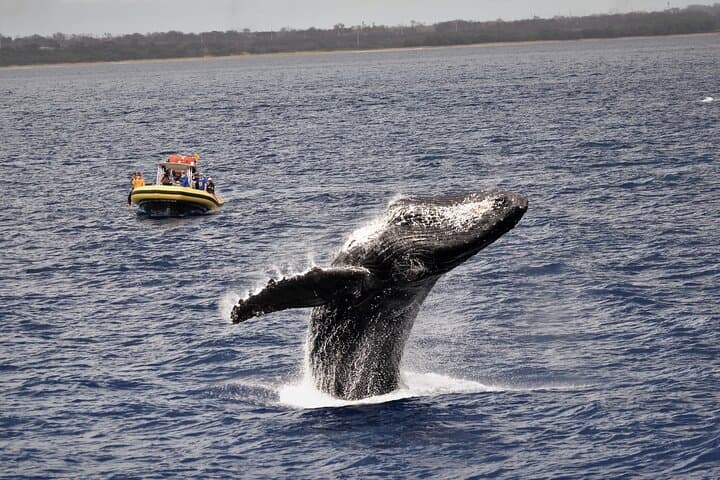
The raft eases off Mala Ramp and the Pacific opens: pale blue near shore, deep indigo toward the horizon. Salted wind tugs at jackets and the captain cuts the throttle, listening — the ocean seems to exhale as a humpback surfaces nearby, arching and rolling with deliberate grace.
The raft eases off Mala Ramp and the Pacific opens: pale blue near shore, deep indigo toward the horizon. Salted wind tugs at jackets and the captain cuts the throttle, listening — the ocean seems to exhale as a humpback surfaces nearby, arching and rolling with deliberate grace.
Maui's central waters become a seasonal nursery each winter. Humpbacks migrate thousands of miles from Alaskan feeding grounds to the warm Hawaiian Islands to breed and calve; locals call these whales koholā. Lahaina itself was once a 19th-century whaling hub and the town’s shoreline carries that layered history: a working harbor, a visitor gateway, and now a place for conservation-minded encounters.
The seafloor off West Maui is volcanic shelf and reef, creating calm bays that attract mothers and calves. On a small raft you get 360-degree viewing and a marine naturalist translates behavior and song — the tour’s hydrophone makes whale vocalizations audible and immediate, as if the ocean were speaking back.
Practical details matter: tours run about two hours from Front Street, departures are punctual, and winter (December–April) is prime season with high sighting guarantees. Dress in windproof layers, bring reef-safe sunscreen, and have camera gear ready but respect viewing distances advised by guides. Expect light motion on open water and follow crew safety briefings when boarding the inflatable raft. This trip pairs education with close, low-impact observation — a short, powerful way to experience Maui’s winter giants while supporting local stewardship.