THE ADVENTURE COLLECTIVE® · Independent discovery and booking for outdoor travel

Leave Reykjavik’s glare behind on a three-hour small-bus aurora chase that heads to the darkest skies available each night. Cozy blankets, hot chocolate and guide-taken photos complement a flexible hunt for the Northern Lights.
Leave Reykjavik’s glare behind on a three-hour small-bus aurora chase that heads to the darkest skies available each night. Cozy blankets, hot chocolate and guide-taken photos complement a flexible hunt for the Northern Lights.
A cold wind off the North Atlantic cuts through Reykjavik as the small bus pulls away from the sodium glow of the city. Tire tracks crunch on gravel, headlights sweep low hills and farmland, and the guide steers toward darker skies. You trade city light for open horizons, wrapped in a blanket with hot chocolate steaming between your hands while the guide scans cloud cover and geomagnetic forecasts for the telltale green sweep.
Verified experiences and guided adventures in the surrounding area.
Operated by Iceland Highlights Travel Agency · Reykjavik, Capital Region
A cold wind off the North Atlantic cuts through Reykjavik as the small bus pulls away from the sodium glow of the city. Tire tracks crunch on gravel, headlights sweep low hills and farmland, and the guide steers toward darker skies. You trade city light for open horizons, wrapped in a blanket with hot chocolate steaming between your hands while the guide scans cloud cover and geomagnetic forecasts for the telltale green sweep.
Iceland sits on the Mid-Atlantic Ridge where volcanic geology meets Arctic weather, and those elements shape how and where aurora viewing works—clear skies over low-lying lava fields and coastal plains give the best vantage. The aurora has long threaded through Norse and Icelandic folklore, seen historically as omens or sky fires; today locals read the KP index and satellite imagery to pick a viewing site each night.
Practically, this is a short, mobile chase: expect a three-hour outing with multiple stops up to an hour’s drive from Reykjavik depending on cloud cover. The tour provides warm blankets, hot drinks, and photos taken by the guide, but you should bring warm, layered clothing, insulated boots, and a camera with manual controls if you want long exposures. Phones can capture bright displays but a tripod and wide-aperture lens produce the best images.
Timing, patience and flexibility matter—sometimes the aurora appears in minutes, sometimes it’s a waiting game. Charge batteries in advance, keep movement to a minimum when shooting, and respect private land and quiet once you stop; the landscape and sky are the real attractions here.
easy.
3 hours.
Suitable for most fitness levels; involves minimal walking and standing in cold conditions
The listed start is 9:30 pm and the outing is approximately three hours, though exact timing can vary with conditions.
No—visibility depends on solar activity and cloud cover; guides pick dark locations to maximize chances but sightings cannot be guaranteed.
Yes—the guide will take group photos and allow time for guests to photograph; bring a tripod and manual camera for the best results.
Tours may be cancelled for poor weather or low visibility; cancel at least 24 hours prior for a full refund according to the provider’s policy.
Reykjavik grew from Viking Age settlement; the surrounding landscape features volcanic plains and glacial rivers that shaped settlement routes and folklore.
Tours minimize impact by using established roads and stopping only where permitted; limit light use, pack out all waste, and avoid trampling fragile moss and vegetation.
Iceland Highlights Travel Agency operates guided outdoor trips and adventures with an emphasis on safety, stewardship, and memorable experiences.
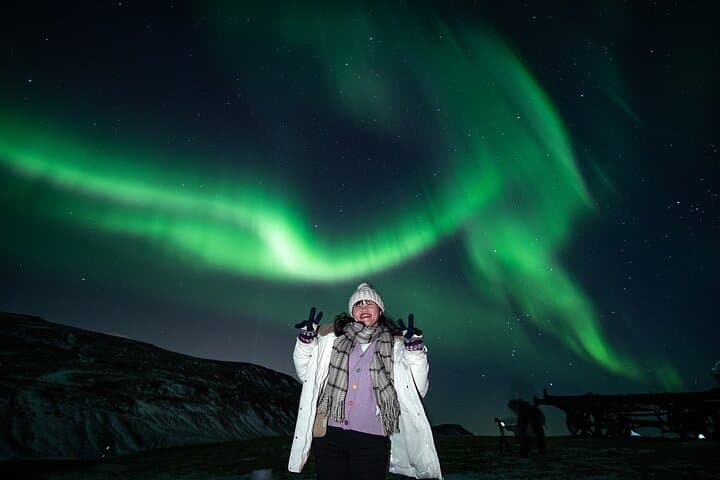
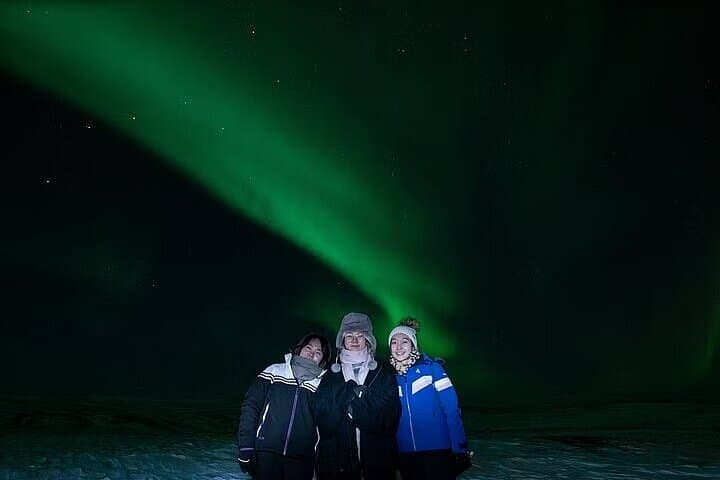
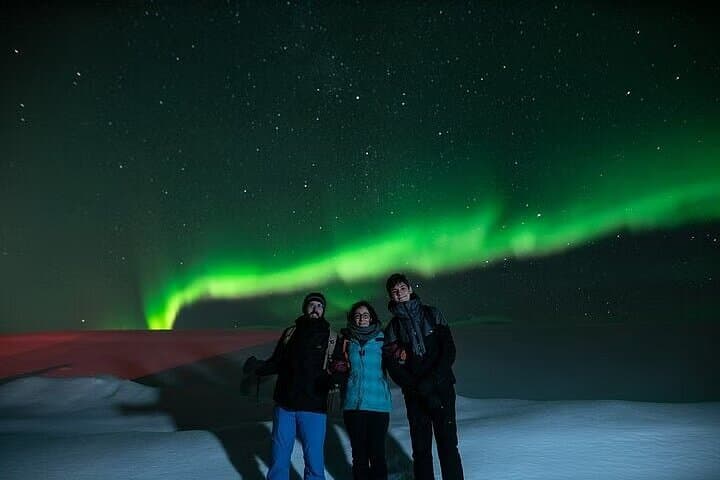
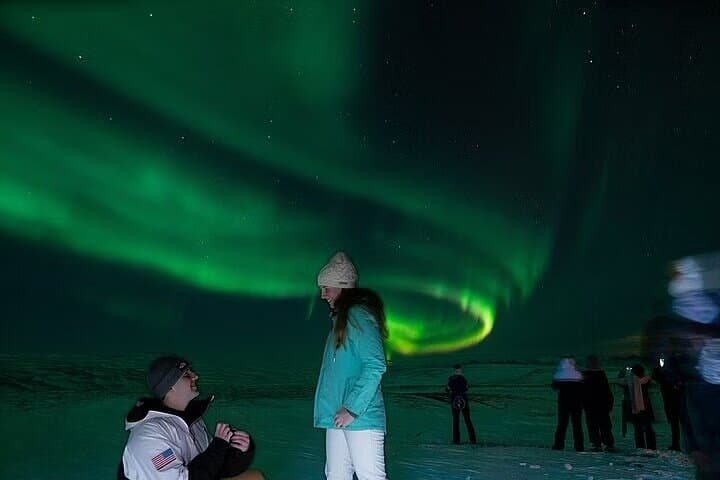
A cold wind off the North Atlantic cuts through Reykjavik as the small bus pulls away from the sodium glow of the city. Tire tracks crunch on gravel, headlights sweep low hills and farmland, and the guide steers toward darker skies. You trade city light for open horizons, wrapped in a blanket with hot chocolate steaming between your hands while the guide scans cloud cover and geomagnetic forecasts for the telltale green sweep.
A cold wind off the North Atlantic cuts through Reykjavik as the small bus pulls away from the sodium glow of the city. Tire tracks crunch on gravel, headlights sweep low hills and farmland, and the guide steers toward darker skies. You trade city light for open horizons, wrapped in a blanket with hot chocolate steaming between your hands while the guide scans cloud cover and geomagnetic forecasts for the telltale green sweep.
Iceland sits on the Mid-Atlantic Ridge where volcanic geology meets Arctic weather, and those elements shape how and where aurora viewing works—clear skies over low-lying lava fields and coastal plains give the best vantage. The aurora has long threaded through Norse and Icelandic folklore, seen historically as omens or sky fires; today locals read the KP index and satellite imagery to pick a viewing site each night.
Practically, this is a short, mobile chase: expect a three-hour outing with multiple stops up to an hour’s drive from Reykjavik depending on cloud cover. The tour provides warm blankets, hot drinks, and photos taken by the guide, but you should bring warm, layered clothing, insulated boots, and a camera with manual controls if you want long exposures. Phones can capture bright displays but a tripod and wide-aperture lens produce the best images.
Timing, patience and flexibility matter—sometimes the aurora appears in minutes, sometimes it’s a waiting game. Charge batteries in advance, keep movement to a minimum when shooting, and respect private land and quiet once you stop; the landscape and sky are the real attractions here.