THE ADVENTURE COLLECTIVE® · Independent discovery and booking for outdoor travel

Board a six-person sailboat off Moorea for a respectful, science-informed half-day of whale watching. Small groups, naturalist guides, and gentle approaches focus on encounters with humpbacks and local dolphins.
Board a six-person sailboat off Moorea for a respectful, science-informed half-day of whale watching. Small groups, naturalist guides, and gentle approaches focus on encounters with humpbacks and local dolphins.
You step aboard a low-profile sailboat as the reef falls away and Moorea’s jagged volcanic ridges shrink on the horizon. The ocean ahead is a bright, moving pane; gulls wheel and the captain checks wind, charts, and the crew’s binoculars. The goal is simple: find and observe humpback whales with minimal disturbance.
Verified experiences and guided adventures in the surrounding area.
Operated by Mori Ora · Moorea, Society Islands
You step aboard a low-profile sailboat as the reef falls away and Moorea’s jagged volcanic ridges shrink on the horizon. The ocean ahead is a bright, moving pane; gulls wheel and the captain checks wind, charts, and the crew’s binoculars. The goal is simple: find and observe humpback whales with minimal disturbance.
This stretch of the South Pacific, between Moorea and Maiao, sits on the edge of the Society Islands — geologically young, steep volcanic cores ringed by coral. Polynesian navigators have threaded these channels for centuries; modern whale research here builds on both indigenous knowledge and scientific surveys that track migration and breeding patterns.
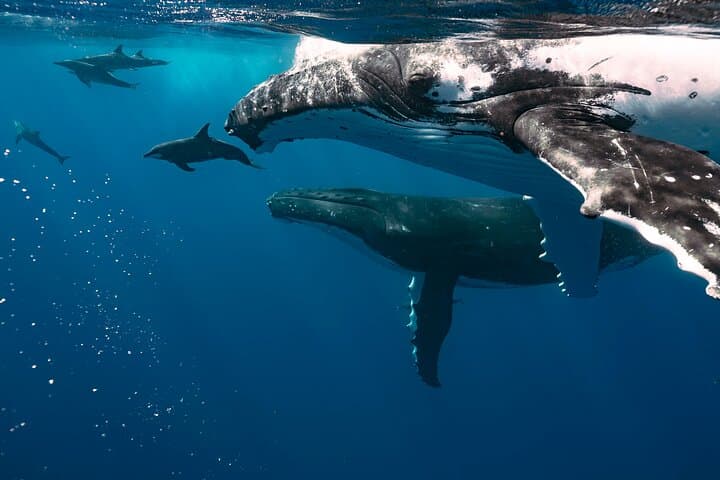
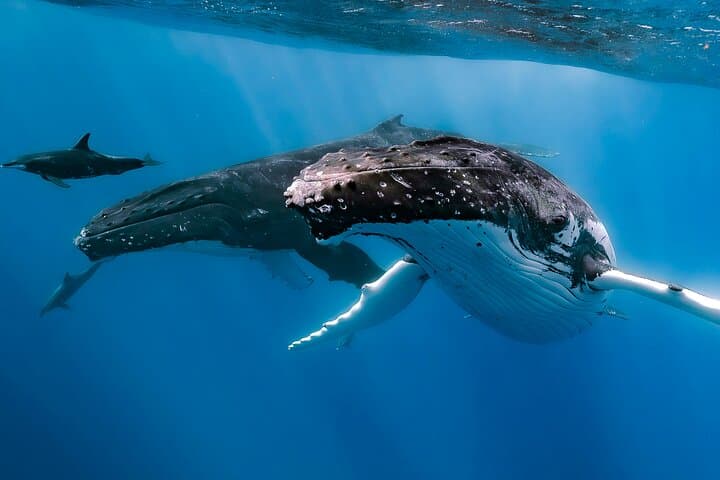
Expect calls of long-billed dolphins and the flash of flying fish as you transit deeper water. Naturalist-guides describe behaviors you’ll likely see — solitary singers, cow-and-calf pairs, social “love-plays” — and explain how the crew prioritizes slow, deliberate approaches to avoid stressing animals.
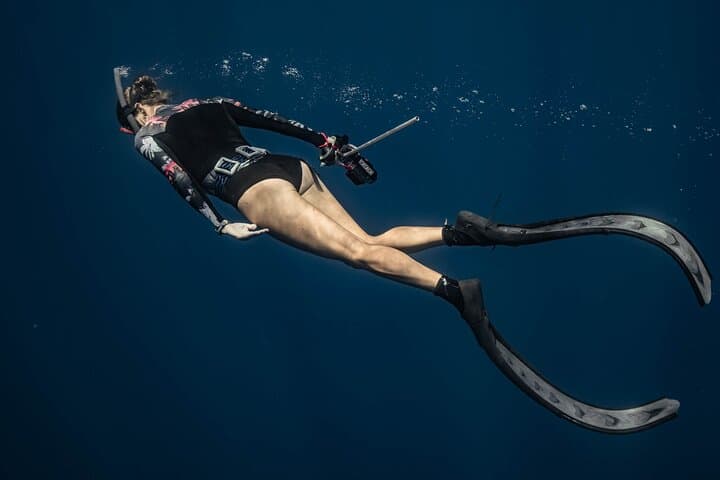
Practically: tours run about 3–4 hours, capped at six guests to reduce noise and wake. Mild open-ocean conditions mean good balance, basic swim ability with fins recommended, and the option to observe from the boat if you prefer. Bring reef-safe sunscreen, a wind layer, and a charged camera with a long lens; motion can be sudden and spectacular.
Because this is wildlife viewing, flexibility is essential — sightings aren’t guaranteed, but responsible operators minimize disturbance and maximize learning. For travelers who value close, small-group encounters and want to leave the ocean as they found it, a half-day sail off Moorea is a compact, memorable immersion in wild cetacean life.
moderate.
3–4 hours.
Moderate fitness; comfortable moving on a small boat and able to snorkel with fins if joining an in-water approach
No — whales are wild animals and sightings depend on migration patterns and daily movement; operators prioritize ethical approaches and will adapt the itinerary to maximize chances.
Yes — non-swimmers can remain on board and still enjoy observing whales and dolphins; in-water interactions are optional and require swimming competence.
Tours are limited to six guests to reduce disturbance and provide an intimate, educational experience with the naturalist guide.
Older children comfortable on boats and in the ocean can participate; consult the operator about age limits and safety provisions for minors.
Polynesian seafarers long navigated these channels; modern cetacean study here combines local knowledge with scientific surveys of migration and breeding.
Operators follow best-practice codes that limit approach distances and boat noise; use reef-safe products and minimal wake transit to reduce disturbance.
Mori Ora operates guided outdoor trips and adventures with an emphasis on safety, stewardship, and memorable experiences.
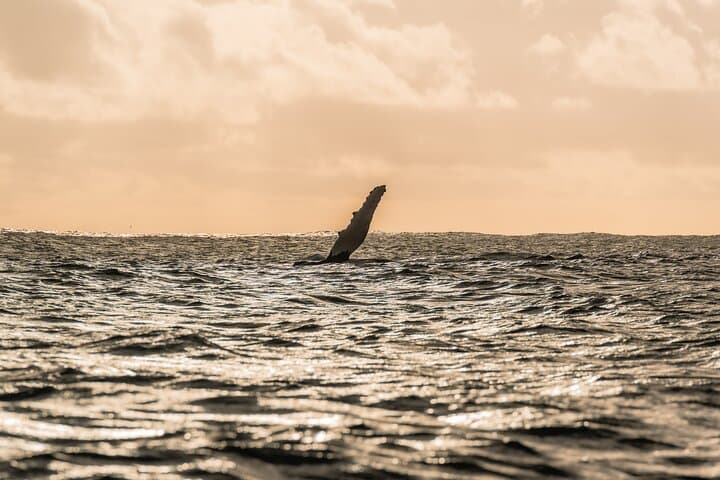
You step aboard a low-profile sailboat as the reef falls away and Moorea’s jagged volcanic ridges shrink on the horizon. The ocean ahead is a bright, moving pane; gulls wheel and the captain checks wind, charts, and the crew’s binoculars. The goal is simple: find and observe humpback whales with minimal disturbance.
You step aboard a low-profile sailboat as the reef falls away and Moorea’s jagged volcanic ridges shrink on the horizon. The ocean ahead is a bright, moving pane; gulls wheel and the captain checks wind, charts, and the crew’s binoculars. The goal is simple: find and observe humpback whales with minimal disturbance.
This stretch of the South Pacific, between Moorea and Maiao, sits on the edge of the Society Islands — geologically young, steep volcanic cores ringed by coral. Polynesian navigators have threaded these channels for centuries; modern whale research here builds on both indigenous knowledge and scientific surveys that track migration and breeding patterns.
Expect calls of long-billed dolphins and the flash of flying fish as you transit deeper water. Naturalist-guides describe behaviors you’ll likely see — solitary singers, cow-and-calf pairs, social “love-plays” — and explain how the crew prioritizes slow, deliberate approaches to avoid stressing animals.
Practically: tours run about 3–4 hours, capped at six guests to reduce noise and wake. Mild open-ocean conditions mean good balance, basic swim ability with fins recommended, and the option to observe from the boat if you prefer. Bring reef-safe sunscreen, a wind layer, and a charged camera with a long lens; motion can be sudden and spectacular.
Because this is wildlife viewing, flexibility is essential — sightings aren’t guaranteed, but responsible operators minimize disturbance and maximize learning. For travelers who value close, small-group encounters and want to leave the ocean as they found it, a half-day sail off Moorea is a compact, memorable immersion in wild cetacean life.