THE ADVENTURE COLLECTIVE® · Independent discovery and booking for outdoor travel

Travel by road from La Paz to Puerto Chale for a small-boat, marine-biologist-led gray whale encounter. Spend three focused hours on the water learning about whale biology, conservation, and photographing these coastal giants.
Travel by road from La Paz to Puerto Chale for a small-boat, marine-biologist-led gray whale encounter. Spend three focused hours on the water learning about whale biology, conservation, and photographing these coastal giants.
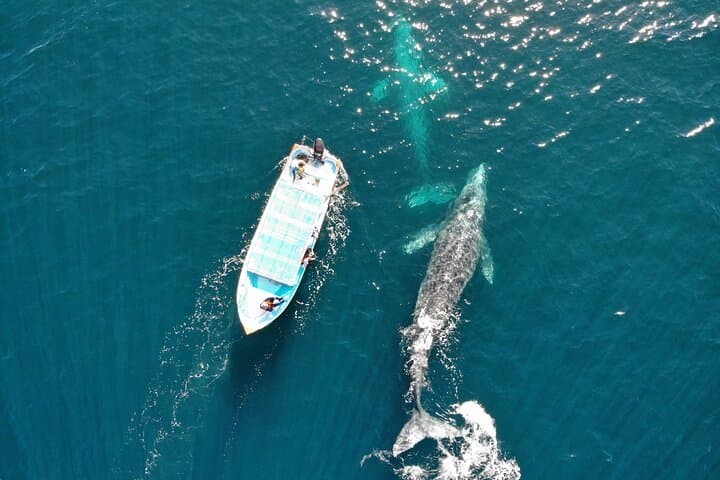
A low sun slices the Pacific horizon as your van winds away from La Paz toward the ragged coastline of Puerto Chale. Salt tang rides the morning breeze and the sea seems to be waiting—patient, curious—while a small boat with six seats rocks gently at the dock. A certified marine biologist steps aboard, checklist in hand, and the three-hour stretch of ocean ahead feels like a classroom where the students are giants.
Verified experiences and guided adventures in the surrounding area.
Operated by Freefall Academy · La Paz, Baja California Sur
A low sun slices the Pacific horizon as your van winds away from La Paz toward the ragged coastline of Puerto Chale. Salt tang rides the morning breeze and the sea seems to be waiting—patient, curious—while a small boat with six seats rocks gently at the dock. A certified marine biologist steps aboard, checklist in hand, and the three-hour stretch of ocean ahead feels like a classroom where the students are giants.
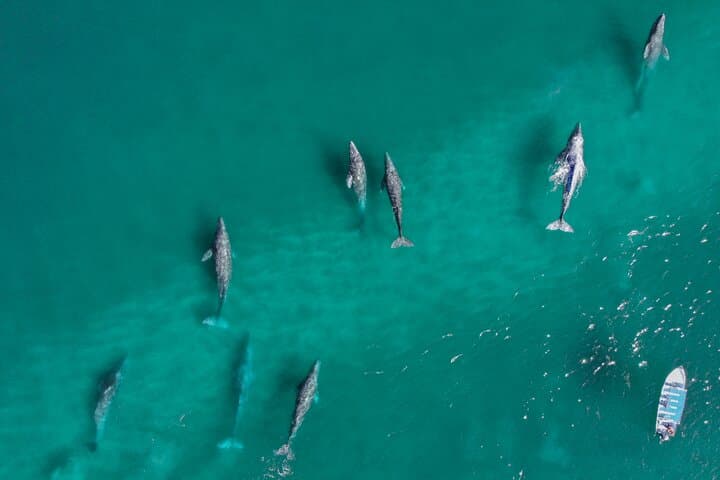
Gray whales migrate here each winter to calve and socialize in Baja’s protected lagoons and shallow coastal bays. The Baja Peninsula’s volcanic and sedimentary geology sculpts dramatic shorelines and long tidal flats that shape whale behavior; local fishing villages have long read the rhythms of these waters and now mix tourism with stewardship. The trip ends on shore with seafood caught by the captain’s family, a cultural touch that links you to local livelihoods.
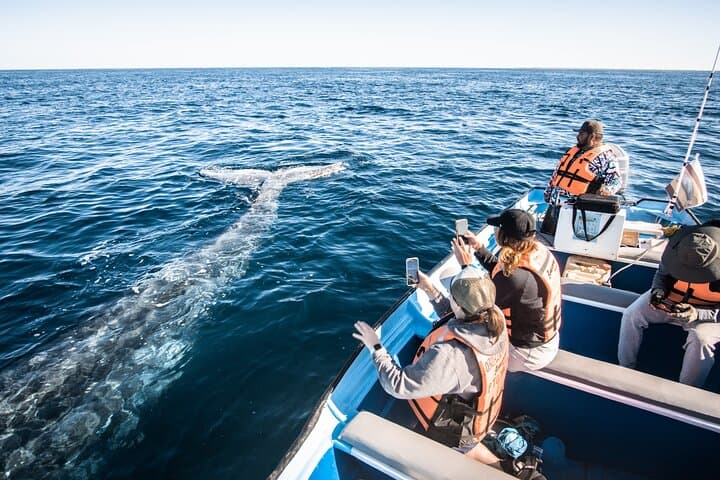
Practically: expect a full day—about 8 hours including roundtrip drive from La Paz and a 3-hour boat window. Tours are intentionally small for low disturbance; guide-led interpretation covers whale biology, behavior, and conservation guidelines. Bring sun protection, a windproof layer, and seasickness prevention if you’re prone to motion. Photography benefits from a telephoto lens or binoculars; keep movements slow and voices low near whales. The operator donates part of proceeds to MAREA and follows respectful encounter protocols—whales decide the distance. Bookings allow free cancellation up to 24 hours prior; the experience is best from late winter into early spring when calves are most common.
easy.
7–8 hours.
Suitable for most fitness levels; requires the ability to board a small boat and sit/stand for several hours.
Peak season runs in winter through early spring when northbound mothers and calves occupy Baja’s sheltered bays and coastal lagoons.
The guided boat time is about three hours within a full-day schedule that includes roughly 2–2.5 hours each way by road from La Paz.
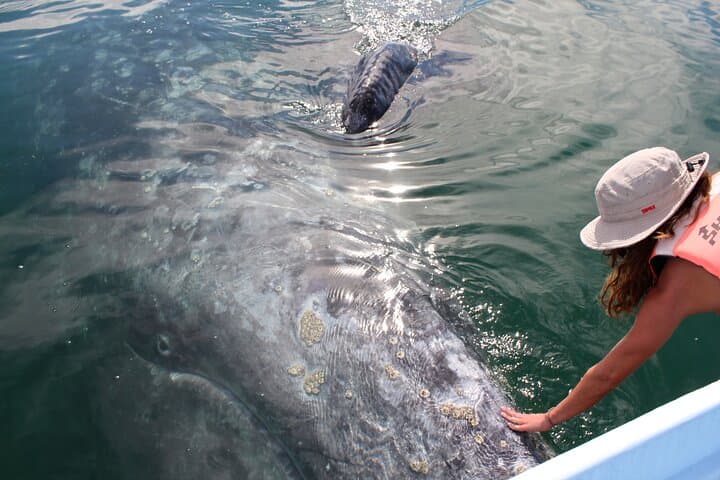
No—this operator follows a respectful approach; whales choose to approach, and the guide positions the boat for observation only when appropriate.
Yes—roundtrip transportation from La Paz is included in the booking.
Gray whales have migrated to Baja’s sheltered coastal waters for millennia to breed and rear calves; local fishing communities have adapted livelihoods around seasonal whale presence.
Tours follow low-impact viewing protocols and the operator donates part of proceeds to MAREA; minimizing disturbance to mothers and calves is the top priority.
Freefall Academy operates guided outdoor trips and adventures with an emphasis on safety, stewardship, and memorable experiences.
A low sun slices the Pacific horizon as your van winds away from La Paz toward the ragged coastline of Puerto Chale. Salt tang rides the morning breeze and the sea seems to be waiting—patient, curious—while a small boat with six seats rocks gently at the dock. A certified marine biologist steps aboard, checklist in hand, and the three-hour stretch of ocean ahead feels like a classroom where the students are giants.
A low sun slices the Pacific horizon as your van winds away from La Paz toward the ragged coastline of Puerto Chale. Salt tang rides the morning breeze and the sea seems to be waiting—patient, curious—while a small boat with six seats rocks gently at the dock. A certified marine biologist steps aboard, checklist in hand, and the three-hour stretch of ocean ahead feels like a classroom where the students are giants.
Gray whales migrate here each winter to calve and socialize in Baja’s protected lagoons and shallow coastal bays. The Baja Peninsula’s volcanic and sedimentary geology sculpts dramatic shorelines and long tidal flats that shape whale behavior; local fishing villages have long read the rhythms of these waters and now mix tourism with stewardship. The trip ends on shore with seafood caught by the captain’s family, a cultural touch that links you to local livelihoods.
Practically: expect a full day—about 8 hours including roundtrip drive from La Paz and a 3-hour boat window. Tours are intentionally small for low disturbance; guide-led interpretation covers whale biology, behavior, and conservation guidelines. Bring sun protection, a windproof layer, and seasickness prevention if you’re prone to motion. Photography benefits from a telephoto lens or binoculars; keep movements slow and voices low near whales. The operator donates part of proceeds to MAREA and follows respectful encounter protocols—whales decide the distance. Bookings allow free cancellation up to 24 hours prior; the experience is best from late winter into early spring when calves are most common.