THE ADVENTURE COLLECTIVE® · Independent discovery and booking for outdoor travel

Take a small‑group day trip from Rome to Pompeii and walk streets frozen by the 79 AD eruption. This practical guide covers what you’ll see on a two‑hour tour, travel time, terrain and essential prep.
Take a small‑group day trip from Rome to Pompeii and walk streets frozen by the 79 AD eruption. This practical guide covers what you’ll see on a two‑hour tour, travel time, terrain and essential prep.
You step out of the air‑conditioned minivan and the rumble of modern traffic slips behind you. The road drops toward a broad plain shadowed by Vesuvius; steam and dust from the archaeological park already scent the air. The two‑hour guided walk moves at a steady pace across ancient cobbles, past atriums, bakeries and frescoed houses where plaster still clings to walls like pages of a long‑closed book.
Verified experiences and guided adventures in the surrounding area.
Operated by Mamma Mia Italia · Pompei, Campania
You step out of the air‑conditioned minivan and the rumble of modern traffic slips behind you. The road drops toward a broad plain shadowed by Vesuvius; steam and dust from the archaeological park already scent the air. The two‑hour guided walk moves at a steady pace across ancient cobbles, past atriums, bakeries and frescoed houses where plaster still clings to walls like pages of a long‑closed book.
Pompeii’s streets freeze a Roman day in 79 AD, when Vesuvius buried the town under ash and pumice. The park spans more than 60 hectares of excavated settlement—houses, public baths, a forum and theaters—offering a cross‑section of urban life in the Roman Empire. Geologically, the site is a product of Plinian eruption deposits; the ash that entombed Pompeii has preserved organic shapes and building details that are rare in archaeology. Culturally, you’ll see graffiti, baker’s ovens and public notices that make civic life immediate.
Practically, expect at least 2 hours of on‑foot exploration on uneven, sometimes sun‑baked cobbles; most itineraries include hotel pickup in Rome and roughly 2–3 hours each way by road depending on traffic. Bring sturdy shoes, a refillable water bottle and layered clothing for breeze off the plain. There’s scheduled free time for lunch nearby; the site has limited shade and uneven ramps, so plan accordingly.
A small‑group format keeps the pace manageable and lets your guide point out details often missed on larger tours. For first‑time visitors, follow the guide’s route to see the forum, House of the Faun and the amphitheater without losing context.
moderate.
10 hours total (approx. including travel); 2 hours on‑site guided tour.
Able to walk 2 hours on uneven, mostly flat terrain and manage short periods of standing; suitable for most active travelers
Yes — the tour includes pickup and drop‑off from hotels or apartments in Rome as part of the full‑day itinerary.
Yes — entrance to the archaeological site is included in this tour’s price.
Expect about two hours of walking on uneven cobbles and short steps; the tour is labeled easy for most fitness levels but not recommended for travelers with significant mobility issues.
Yes — the itinerary includes free time for lunch after the guided tour; options nearby range from casual cafés to sit‑down restaurants.
Pompeii was overwhelmed by Mount Vesuvius in 79 AD; ash and pumice preserved homes and daily objects, creating one of the most informative snapshots of Roman urban life.
The site faces wear from tourism and weathering; visitors are asked to stick to pathways, avoid touching frescoes and support preservation by following onsite signage.
Mamma Mia Italia operates guided outdoor trips and adventures with an emphasis on safety, stewardship, and memorable experiences.


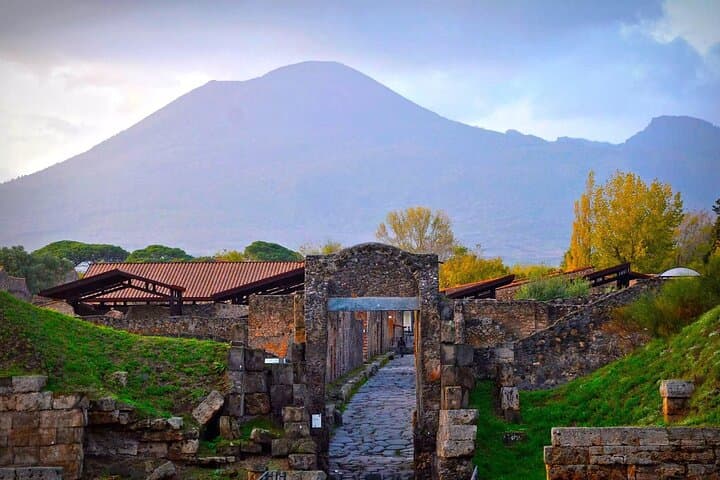
You step out of the air‑conditioned minivan and the rumble of modern traffic slips behind you. The road drops toward a broad plain shadowed by Vesuvius; steam and dust from the archaeological park already scent the air. The two‑hour guided walk moves at a steady pace across ancient cobbles, past atriums, bakeries and frescoed houses where plaster still clings to walls like pages of a long‑closed book.
You step out of the air‑conditioned minivan and the rumble of modern traffic slips behind you. The road drops toward a broad plain shadowed by Vesuvius; steam and dust from the archaeological park already scent the air. The two‑hour guided walk moves at a steady pace across ancient cobbles, past atriums, bakeries and frescoed houses where plaster still clings to walls like pages of a long‑closed book.
Pompeii’s streets freeze a Roman day in 79 AD, when Vesuvius buried the town under ash and pumice. The park spans more than 60 hectares of excavated settlement—houses, public baths, a forum and theaters—offering a cross‑section of urban life in the Roman Empire. Geologically, the site is a product of Plinian eruption deposits; the ash that entombed Pompeii has preserved organic shapes and building details that are rare in archaeology. Culturally, you’ll see graffiti, baker’s ovens and public notices that make civic life immediate.
Practically, expect at least 2 hours of on‑foot exploration on uneven, sometimes sun‑baked cobbles; most itineraries include hotel pickup in Rome and roughly 2–3 hours each way by road depending on traffic. Bring sturdy shoes, a refillable water bottle and layered clothing for breeze off the plain. There’s scheduled free time for lunch nearby; the site has limited shade and uneven ramps, so plan accordingly.
A small‑group format keeps the pace manageable and lets your guide point out details often missed on larger tours. For first‑time visitors, follow the guide’s route to see the forum, House of the Faun and the amphitheater without losing context.