THE ADVENTURE COLLECTIVE® · Independent discovery and booking for outdoor travel

Take a full-day small-group trip from Ho Chi Minh City to the less-touristy Ben Duoc section of the Cu Chi tunnels. Explore reconstructed wartime zones, short (optional) tunnel sections, a large memorial temple, and sample local food and tea.
Take a full-day small-group trip from Ho Chi Minh City to the less-touristy Ben Duoc section of the Cu Chi tunnels. Explore reconstructed wartime zones, short (optional) tunnel sections, a large memorial temple, and sample local food and tea.
You step out of an air-conditioned van into humid, flat country where rice fields edge narrow dirt tracks and the wind pushes at the palms. The drive from Ho Chi Minh City eases the city’s chaos away; in its place is a landscape that once concealed a subterranean world.
Verified experiences and guided adventures in the surrounding area.
Operated by Asiana Link Travel · Cu Chi, Ho Chi Minh
You step out of an air-conditioned van into humid, flat country where rice fields edge narrow dirt tracks and the wind pushes at the palms. The drive from Ho Chi Minh City eases the city’s chaos away; in its place is a landscape that once concealed a subterranean world.
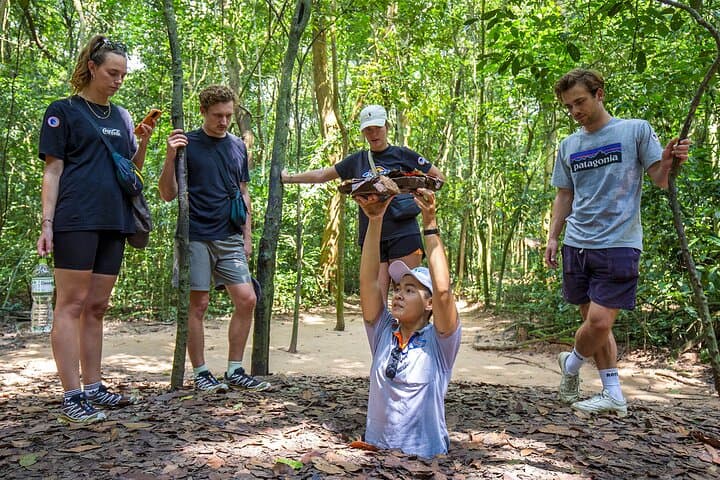
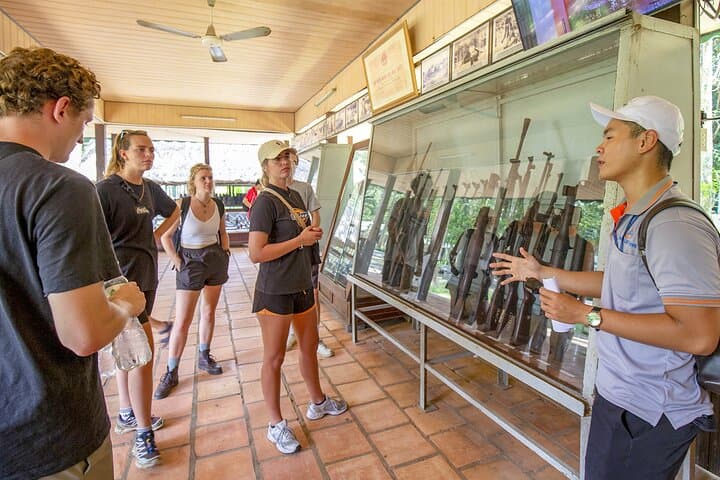
Ben Duoc and the larger Cu Chi complex offer a direct window into the wartime ingenuity of the Viet Cong. Over roughly 1.5–2 hours on site you move between above-ground reconstructions—mock villages, barracks and demonstration displays—and the real tunnels below: kitchens, meeting rooms and ammunition stores carved into packed lateritic soil. A memorial temple at Ben Duoc stands as one of Vietnam’s largest dedicated to the war’s fallen, its scale framing the human cost behind the artifacts.
Culturally, the area still reflects rural southern Vietnam—local lacquerware, roadside tea stalls and the simple tapioca dishes that sustained fighters. Geologically the tunnels follow compacted clay and laterite; narrow galleries and low chambers demand caution and respect.
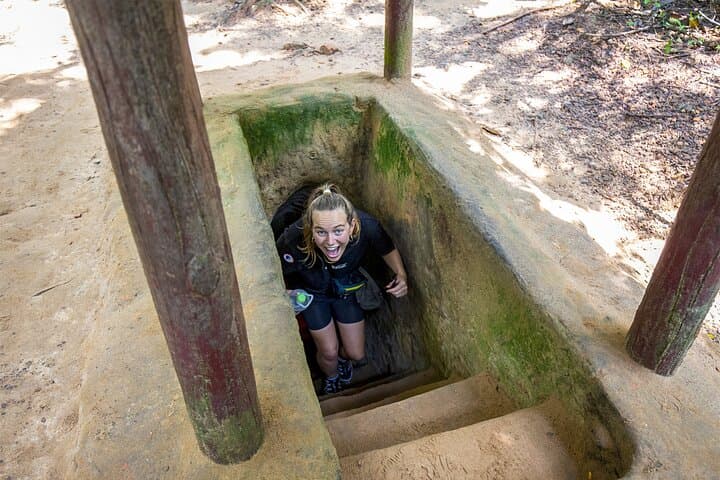
Practical guidance: expect a 7–8 hour day with hotel pickup, modest walking on uneven ground, and optional short tunnel crawls (20–100 m) that are tight and dark. Bring a hat, insect repellent and modest clothing for the temple. The tour includes lunch, bottled water and a Vietnamese-English guide; optional shooting at a range requires extra cash. Move deliberately through confined spaces, keep cameras steady in exhibits, and allow time at the memorial to reflect before the return to Saigon.
moderate.
7–8 hours.
Suitable for people who can walk 2–4 km on uneven ground and crouch or climb short steps; tunnels require stooping and brief crawling for some options.
The tour lasts about 7–8 hours with hotel pickup, air-conditioned transport, a Vietnamese-English guide, lunch, bottled water, entrance fees and a lacquerware stop; optional shooting costs extra.
Children can join but tunnel sections are narrow and low; operators typically offer shorter, more comfortable tunnel options for younger visitors—use discretion for small children.
No—the shooting range is optional and bullets are purchased on-site; ask the guide about safety rules and age restrictions before participating.
Not recommended for travelers with serious cardiovascular issues, mobility limitations, or pregnancy—tunnels can be tight and there’s standing or crouching involved.
Ben Duoc preserves how local people lived and resisted during 1961–1972; the Liberation Zone exhibits recreate daily life, while the temple memorializes the war dead.
Stay on marked paths, avoid touching artifacts, and support local guides—visitor behavior helps protect fragile tunnel sections and memorial grounds.
Asiana Link Travel operates guided outdoor trips and adventures with an emphasis on safety, stewardship, and memorable experiences.
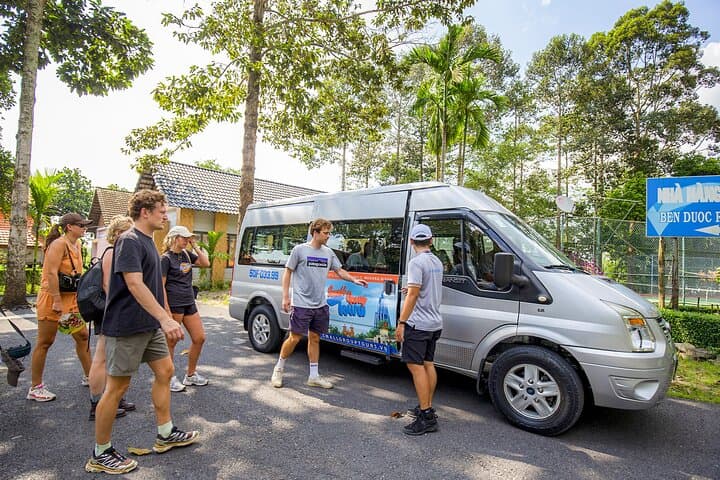
You step out of an air-conditioned van into humid, flat country where rice fields edge narrow dirt tracks and the wind pushes at the palms. The drive from Ho Chi Minh City eases the city’s chaos away; in its place is a landscape that once concealed a subterranean world.
You step out of an air-conditioned van into humid, flat country where rice fields edge narrow dirt tracks and the wind pushes at the palms. The drive from Ho Chi Minh City eases the city’s chaos away; in its place is a landscape that once concealed a subterranean world.
Ben Duoc and the larger Cu Chi complex offer a direct window into the wartime ingenuity of the Viet Cong. Over roughly 1.5–2 hours on site you move between above-ground reconstructions—mock villages, barracks and demonstration displays—and the real tunnels below: kitchens, meeting rooms and ammunition stores carved into packed lateritic soil. A memorial temple at Ben Duoc stands as one of Vietnam’s largest dedicated to the war’s fallen, its scale framing the human cost behind the artifacts.
Culturally, the area still reflects rural southern Vietnam—local lacquerware, roadside tea stalls and the simple tapioca dishes that sustained fighters. Geologically the tunnels follow compacted clay and laterite; narrow galleries and low chambers demand caution and respect.
Practical guidance: expect a 7–8 hour day with hotel pickup, modest walking on uneven ground, and optional short tunnel crawls (20–100 m) that are tight and dark. Bring a hat, insect repellent and modest clothing for the temple. The tour includes lunch, bottled water and a Vietnamese-English guide; optional shooting at a range requires extra cash. Move deliberately through confined spaces, keep cameras steady in exhibits, and allow time at the memorial to reflect before the return to Saigon.