THE ADVENTURE COLLECTIVE® · Independent discovery and booking for outdoor travel

Step close to active hives and follow Manuka honey from frame to jar on a 75-minute small-group tour in Tauherenikau. Learn beekeeping basics, sample award-winning honey, and see processing up close.
Step close to active hives and follow Manuka honey from frame to jar on a 75-minute small-group tour in Tauherenikau. Learn beekeeping basics, sample award-winning honey, and see processing up close.
You step out of the van into a patchwork of pasture and native bush; a steady hum threads the air as the apiary’s fleet of wooden hives lines a sunlit paddock. Protective suits are fitted, a quick safety talk is given, and the guide hands you a smoker — the day’s rhythm becomes one of slow, careful inspection and close observation.
Verified experiences and guided adventures in the surrounding area.
Operated by Greytown Honey · Tauherenikau, Wellington
You step out of the van into a patchwork of pasture and native bush; a steady hum threads the air as the apiary’s fleet of wooden hives lines a sunlit paddock. Protective suits are fitted, a quick safety talk is given, and the guide hands you a smoker — the day’s rhythm becomes one of slow, careful inspection and close observation.
Tauherenikau sits in the lower North Island’s rolling Wairarapa country, where volcanic loess soils and pockets of regenerating native forest support wide bands of mānuka and kānuka — the plants that give New Zealand mānuka honey its character. Bees here are both agricultural workers and cultural touchstones: mānuka was used traditionally by Māori for medicinal purposes long before commercial honey production began.
On this small-group visit you’ll inspect active frames, learn the roles of foragers, nurses and the queen, and follow harvested comb through extraction, filtration and jar-filling in the on-site processing room. The experience ends with a guided tasting of raw mānuka grades and a short walkthrough of product lines in the factory store.
Expect hands-on learning rather than heavy physical exertion: the tour runs about 75 minutes, with time outdoors near active hives and indoors in the processing area. Wear closed-toe shoes and bring sun protection; those with severe bee allergies should not attend. Book in advance and consider the optional botanical walk or make-your-own-honey add-ons if you want more time on site. The day blends close-up natural history with practical beekeeping craft—ideal for curious travelers who want to understand how a jar goes from hive to table.
easy.
1–1.5 hours.
Suitable for most fitness levels; participants should be able to stand and walk short distances on uneven ground.
Children are permitted but the experience is best for older kids who can follow safety instructions; infants in strollers are noted as accessible but check with the operator first.
The operator provides protective suits and advises that anyone with anaphylaxis or severe bee-sting allergy should not participate.
The tour is low-impact — short walks across the apiary and standing during demonstrations; it’s listed as suitable for all fitness levels.
Yes — the visit concludes in the factory store with tastings and the option to purchase jars and related products; there are also paid add-ons like making your own jar.
Mānuka has long been valued in Māori culture for its medicinal uses; commercial mānuka honey production expanded in the 20th century as interest in its properties grew.
Sustainable apiary practices and hive management are emphasized to protect local pollinators; visitors are asked to follow biosecurity and hygiene rules to reduce disease spread.
Greytown Honey operates guided outdoor trips and adventures with an emphasis on safety, stewardship, and memorable experiences.
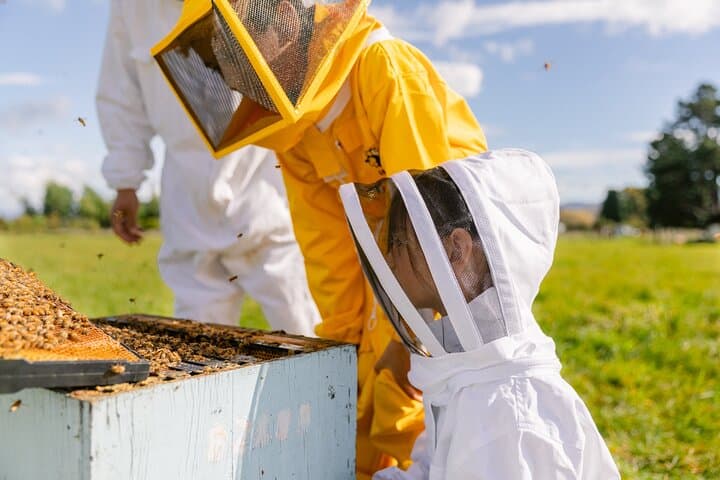

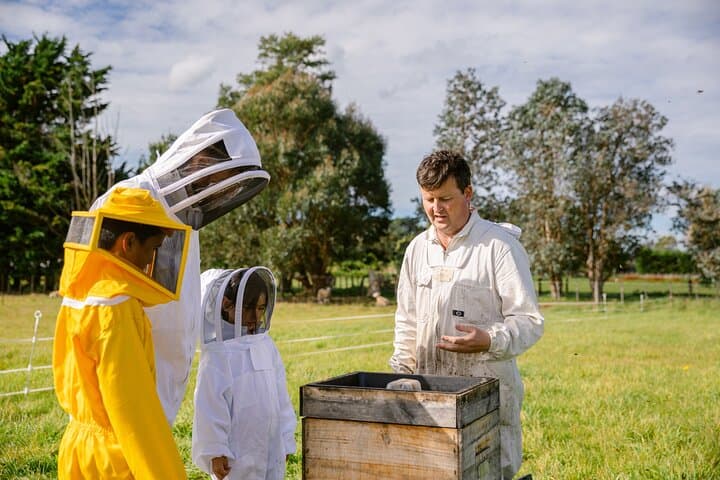

You step out of the van into a patchwork of pasture and native bush; a steady hum threads the air as the apiary’s fleet of wooden hives lines a sunlit paddock. Protective suits are fitted, a quick safety talk is given, and the guide hands you a smoker — the day’s rhythm becomes one of slow, careful inspection and close observation.
You step out of the van into a patchwork of pasture and native bush; a steady hum threads the air as the apiary’s fleet of wooden hives lines a sunlit paddock. Protective suits are fitted, a quick safety talk is given, and the guide hands you a smoker — the day’s rhythm becomes one of slow, careful inspection and close observation.
Tauherenikau sits in the lower North Island’s rolling Wairarapa country, where volcanic loess soils and pockets of regenerating native forest support wide bands of mānuka and kānuka — the plants that give New Zealand mānuka honey its character. Bees here are both agricultural workers and cultural touchstones: mānuka was used traditionally by Māori for medicinal purposes long before commercial honey production began.
On this small-group visit you’ll inspect active frames, learn the roles of foragers, nurses and the queen, and follow harvested comb through extraction, filtration and jar-filling in the on-site processing room. The experience ends with a guided tasting of raw mānuka grades and a short walkthrough of product lines in the factory store.
Expect hands-on learning rather than heavy physical exertion: the tour runs about 75 minutes, with time outdoors near active hives and indoors in the processing area. Wear closed-toe shoes and bring sun protection; those with severe bee allergies should not attend. Book in advance and consider the optional botanical walk or make-your-own-honey add-ons if you want more time on site. The day blends close-up natural history with practical beekeeping craft—ideal for curious travelers who want to understand how a jar goes from hive to table.