THE ADVENTURE COLLECTIVE® · Independent discovery and booking for outdoor travel

An eight-hour small-group tour that visits Angkor Wat, the Bayon faces of Angkor Thom and the jungle-wrapped Ta Prohm. Ideal for travelers who want a compact, guided introduction to Angkor’s main highlights with hotel pickup in Siem Reap.
An eight-hour small-group tour that visits Angkor Wat, the Bayon faces of Angkor Thom and the jungle-wrapped Ta Prohm. Ideal for travelers who want a compact, guided introduction to Angkor’s main highlights with hotel pickup in Siem Reap.
Dawn stretches pale over flooded rice paddies as a small group steps from an air-conditioned minivan into the wide plaza before Angkor Wat. The sandstone silhouette of the west-facing temple rises like a carved crown; humidity hangs in the air and the first stones still hold last night’s cool. Over the next eight hours the tour moves through sunlit causeways and shadowed galleries, from the carved bas-reliefs of Angkor Wat to the enigmatic faces of Bayon and the tree-strangled corridors of Ta Prohm.
Verified experiences and guided adventures in the surrounding area.
Operated by Tourme ANGKOR · Siem Reap, Siem Reap
Dawn stretches pale over flooded rice paddies as a small group steps from an air-conditioned minivan into the wide plaza before Angkor Wat. The sandstone silhouette of the west-facing temple rises like a carved crown; humidity hangs in the air and the first stones still hold last night’s cool. Over the next eight hours the tour moves through sunlit causeways and shadowed galleries, from the carved bas-reliefs of Angkor Wat to the enigmatic faces of Bayon and the tree-strangled corridors of Ta Prohm.
Built in the 12th century under King Suryavarman II, Angkor Wat began as a Hindu state temple and later took on Buddhist significance—its blocks of sandstone and beds of laterite reflect both religious change and centuries of tropical weathering. The site sits on low, flat terrain with shallow seasonal ponds; Ta Prohm’s roots grip the stone and seem to push the temple back toward jungle.
Travelers should expect uneven stone steps, short stretches of paved causeway, and humid heat; the small-group format keeps transit time low and gives more time at each ruin. Practical notes: purchase an Angkor Pass in Siem Reap, bring sun and mosquito protection, and wear respectful clothing that covers shoulders and knees. Midday is hottest; mornings and late afternoons offer better light and thinner crowds. Guides provide local context—Khmer history, temple iconography, and tips for photographing face towers—while also managing entrance logistics and a Khmer lunch stop. By day’s end the temples don’t feel like museum pieces but active places with weathered personalities: stones that remember kings, tree roots that insist on space, and passages that reward patient exploration.
moderate.
8 hours.
Light to moderate fitness; able to walk several kilometers over uneven stone and climb short, steep stairways.
No—Angkor Park passes are purchased separately at the official ticket center in Siem Reap; guides will coordinate timing so you can join the tour promptly.
High-traffic sites like Angkor Wat and Ta Prohm can be busy; small-group tours aim to minimize time spent queuing and recommend early starts for thinner crowds.
The tour notes exclude children under 5 for this small-group format; older children can participate but should be prepared for walking and heat.
Basic facilities and a Khmer lunch are included on the itinerary; public restrooms are available near major temples but amenities vary in cleanliness.
Angkor was the center of the Khmer Empire (9th–15th centuries); Angkor Wat was completed in the early 12th century and later converted from a Hindu to a Buddhist site.
Visitor pressure has accelerated erosion and damage; stick to marked paths, avoid climbing fragile carvings, and support licensed guides who promote responsible access.
Tourme ANGKOR operates guided outdoor trips and adventures with an emphasis on safety, stewardship, and memorable experiences.
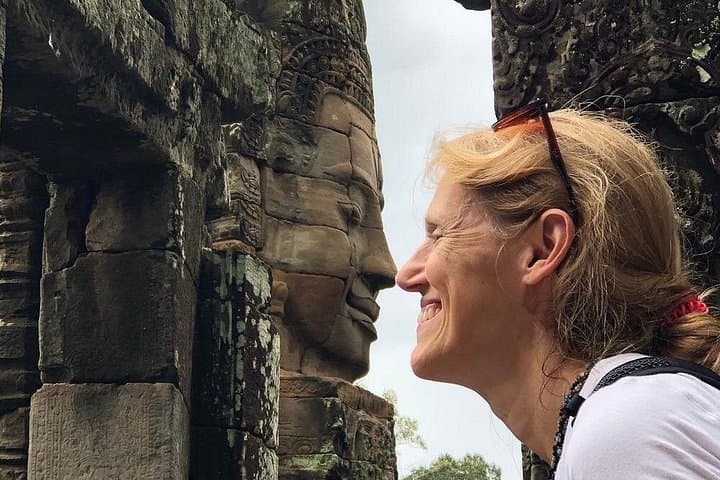
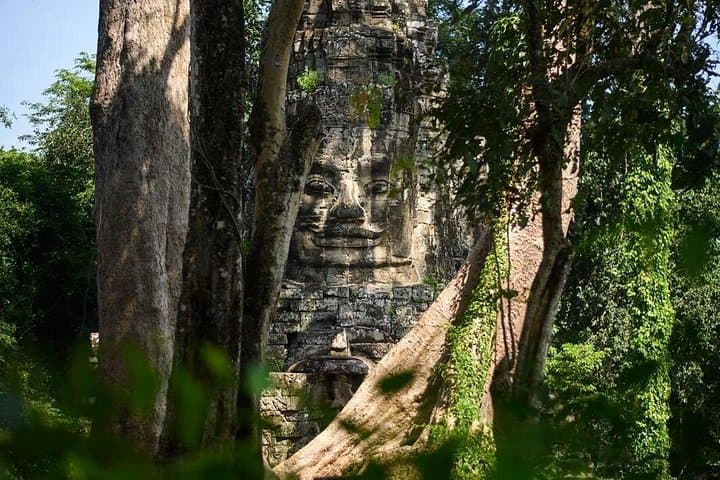
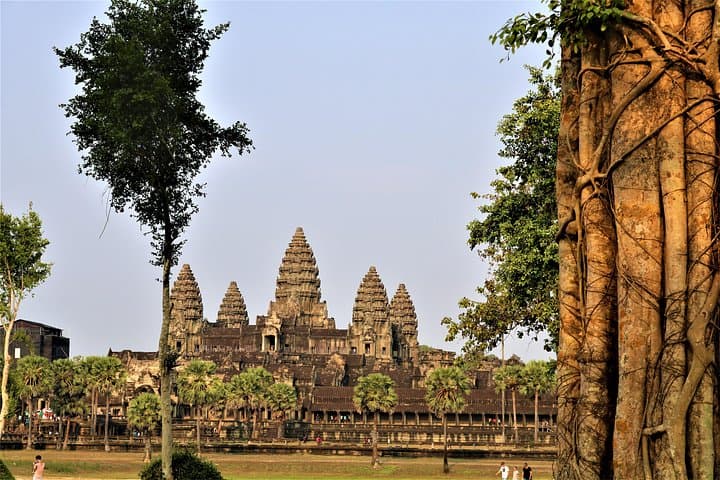
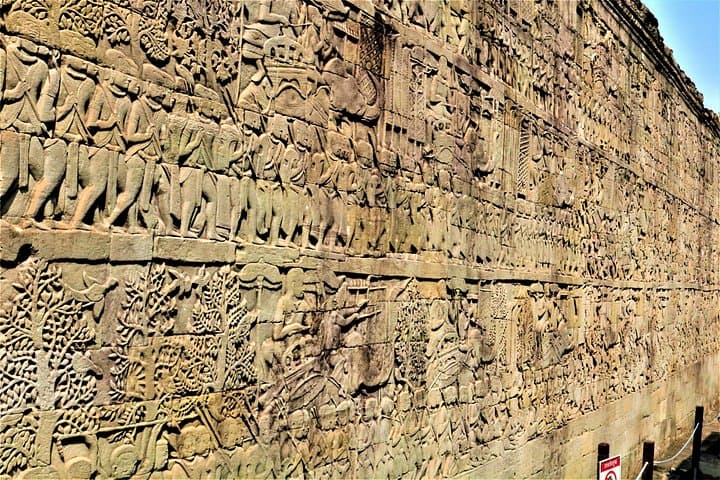
Dawn stretches pale over flooded rice paddies as a small group steps from an air-conditioned minivan into the wide plaza before Angkor Wat. The sandstone silhouette of the west-facing temple rises like a carved crown; humidity hangs in the air and the first stones still hold last night’s cool. Over the next eight hours the tour moves through sunlit causeways and shadowed galleries, from the carved bas-reliefs of Angkor Wat to the enigmatic faces of Bayon and the tree-strangled corridors of Ta Prohm.
Dawn stretches pale over flooded rice paddies as a small group steps from an air-conditioned minivan into the wide plaza before Angkor Wat. The sandstone silhouette of the west-facing temple rises like a carved crown; humidity hangs in the air and the first stones still hold last night’s cool. Over the next eight hours the tour moves through sunlit causeways and shadowed galleries, from the carved bas-reliefs of Angkor Wat to the enigmatic faces of Bayon and the tree-strangled corridors of Ta Prohm.
Built in the 12th century under King Suryavarman II, Angkor Wat began as a Hindu state temple and later took on Buddhist significance—its blocks of sandstone and beds of laterite reflect both religious change and centuries of tropical weathering. The site sits on low, flat terrain with shallow seasonal ponds; Ta Prohm’s roots grip the stone and seem to push the temple back toward jungle.
Travelers should expect uneven stone steps, short stretches of paved causeway, and humid heat; the small-group format keeps transit time low and gives more time at each ruin. Practical notes: purchase an Angkor Pass in Siem Reap, bring sun and mosquito protection, and wear respectful clothing that covers shoulders and knees. Midday is hottest; mornings and late afternoons offer better light and thinner crowds. Guides provide local context—Khmer history, temple iconography, and tips for photographing face towers—while also managing entrance logistics and a Khmer lunch stop. By day’s end the temples don’t feel like museum pieces but active places with weathered personalities: stones that remember kings, tree roots that insist on space, and passages that reward patient exploration.