THE ADVENTURE COLLECTIVE® · Independent discovery and booking for outdoor travel

Meet 20 traditional Alaskan huskies on a working homestead near Fairbanks. This two-hour visit combines hands-on dog care, stories of Arctic living, and a peek at spinning dog hair into yarn.
Meet 20 traditional Alaskan huskies on a working homestead near Fairbanks. This two-hour visit combines hands-on dog care, stories of Arctic living, and a peek at spinning dog hair into yarn.
A cold wind moves through the yard and the dogs answer with a chorus of eager barks — not menacing, but alive and insistent. You step off a gravel lane at an Alaskan homestead where twenty traditional huskies stretch, tumble and press toward the chain-link, noses and paws testing the air. Nearby, an Arctic oven tent hisses with the steady breath of a wood stove; inside an elder dog snoozes while handlers spin dog hair into coarse yarn by hand.
Verified experiences and guided adventures in the surrounding area.
Operated by Sluice Box Sled Dogs · Fairbanks, Alaska
A cold wind moves through the yard and the dogs answer with a chorus of eager barks — not menacing, but alive and insistent. You step off a gravel lane at an Alaskan homestead where twenty traditional huskies stretch, tumble and press toward the chain-link, noses and paws testing the air. Nearby, an Arctic oven tent hisses with the steady breath of a wood stove; inside an elder dog snoozes while handlers spin dog hair into coarse yarn by hand.
Interior Alaska’s landscape — black spruce, rivers cut through silt, and flatening tundra — shaped this way of life. Sled dogs were essential to Athabaskan and later frontier communities for transport, hunting, and mail; modern kennels carry that lineage into tourism and sport. You’ll hear stories of winter travel, learn basic care routines and, if the schedule allows, help prepare a simple meal for the team.
Expect hands-on moments (feeding, gentle handling), sensory details (dog hair, wet fur, wood smoke) and a clear look at how people adapt living with working dogs in cold seasons. The visit balances the playful chaos of a kennel with practical insight into mushing culture and homestead self-reliance.
Practical guidance: arrive layered and with closed-toe shoes; bring a camera and patience for dogs that may be boisterous and hairy. Children are welcome but must be supervised. The site is rural — plan transport and check weather cancellations. Two hours gives time to meet the dogs, warm in the tent, and leave with a better sense of Alaskan dog culture.
easy.
2 hours.
Suitable for all fitness levels — the visit is mostly standing and light activity.
Yes; children are welcome but must be supervised by an adult at all times due to excited dogs and yard hazards.
The kennel is a rural homestead with uneven ground; accessibility is limited—contact the operator to discuss accommodations.
Closed-toe shoes, layered clothing, and a warm outer layer are recommended; bring something you don’t mind getting fur or mud on.
Yes — you may help with basic tasks like feeding or gentle handling depending on the group and dog temperament, guided by staff.
Sled dogs have been central to Interior Alaska for Indigenous travel and early frontier logistics; modern kennels preserve those skills for sport and daily life.
Operators often manage kennels with low-impact practices and community stewardship; respect fenced areas and follow staff instructions to minimize stress on animals.
Sluice Box Sled Dogs operates guided outdoor trips and adventures with an emphasis on safety, stewardship, and memorable experiences.
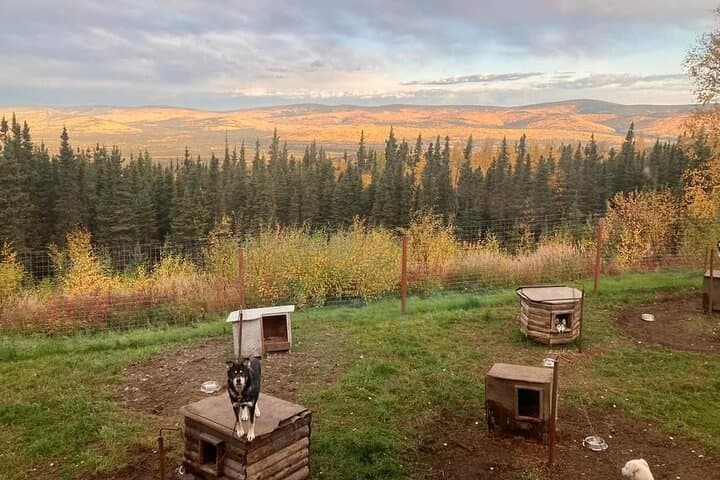
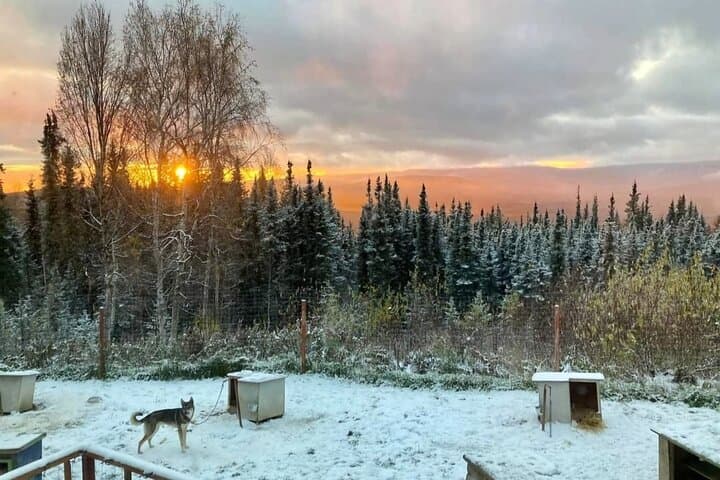
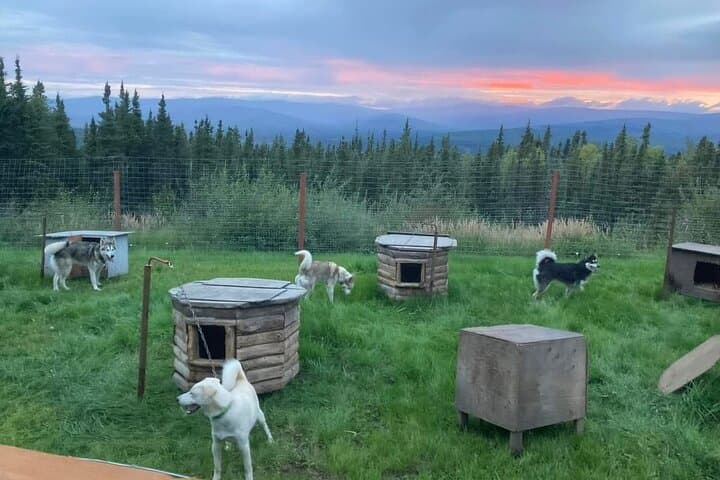
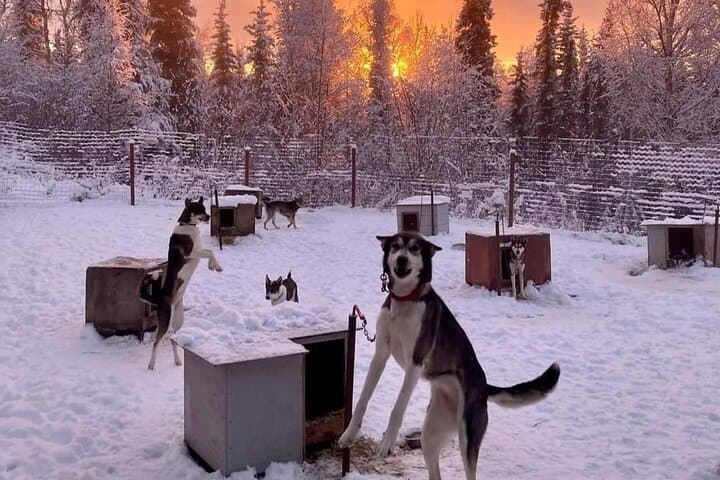
A cold wind moves through the yard and the dogs answer with a chorus of eager barks — not menacing, but alive and insistent. You step off a gravel lane at an Alaskan homestead where twenty traditional huskies stretch, tumble and press toward the chain-link, noses and paws testing the air. Nearby, an Arctic oven tent hisses with the steady breath of a wood stove; inside an elder dog snoozes while handlers spin dog hair into coarse yarn by hand.
A cold wind moves through the yard and the dogs answer with a chorus of eager barks — not menacing, but alive and insistent. You step off a gravel lane at an Alaskan homestead where twenty traditional huskies stretch, tumble and press toward the chain-link, noses and paws testing the air. Nearby, an Arctic oven tent hisses with the steady breath of a wood stove; inside an elder dog snoozes while handlers spin dog hair into coarse yarn by hand.
Interior Alaska’s landscape — black spruce, rivers cut through silt, and flatening tundra — shaped this way of life. Sled dogs were essential to Athabaskan and later frontier communities for transport, hunting, and mail; modern kennels carry that lineage into tourism and sport. You’ll hear stories of winter travel, learn basic care routines and, if the schedule allows, help prepare a simple meal for the team.
Expect hands-on moments (feeding, gentle handling), sensory details (dog hair, wet fur, wood smoke) and a clear look at how people adapt living with working dogs in cold seasons. The visit balances the playful chaos of a kennel with practical insight into mushing culture and homestead self-reliance.
Practical guidance: arrive layered and with closed-toe shoes; bring a camera and patience for dogs that may be boisterous and hairy. Children are welcome but must be supervised. The site is rural — plan transport and check weather cancellations. Two hours gives time to meet the dogs, warm in the tent, and leave with a better sense of Alaskan dog culture.