THE ADVENTURE COLLECTIVE® · Independent discovery and booking for outdoor travel

A relaxed four-day loop from Darwin through Kakadu, Katherine Gorge and Litchfield that balances short walks, wildlife cruises and refreshing waterholes. Ideal for travelers who want the Top End’s big sites without grueling hikes.
A relaxed four-day loop from Darwin through Kakadu, Katherine Gorge and Litchfield that balances short walks, wildlife cruises and refreshing waterholes. Ideal for travelers who want the Top End’s big sites without grueling hikes.
You wake before dawn in Darwin and the road already smells of eucalyptus and dust. The bus hums toward the floodplains as the first light fingers the escarpment, and by mid-morning the flat horizon has been replaced by pools of black water reflecting ancient stone.
Verified experiences and guided adventures in the surrounding area.
Operated by Adventure Tours Australia · Darwin, Northern Territory
You wake before dawn in Darwin and the road already smells of eucalyptus and dust. The bus hums toward the floodplains as the first light fingers the escarpment, and by mid-morning the flat horizon has been replaced by pools of black water reflecting ancient stone.
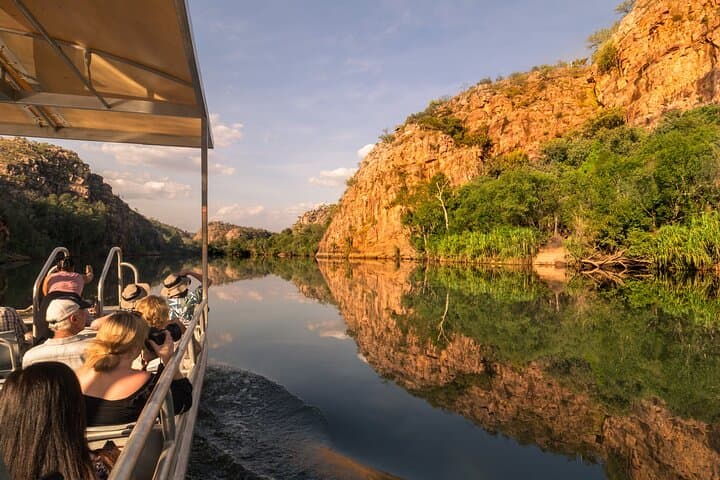
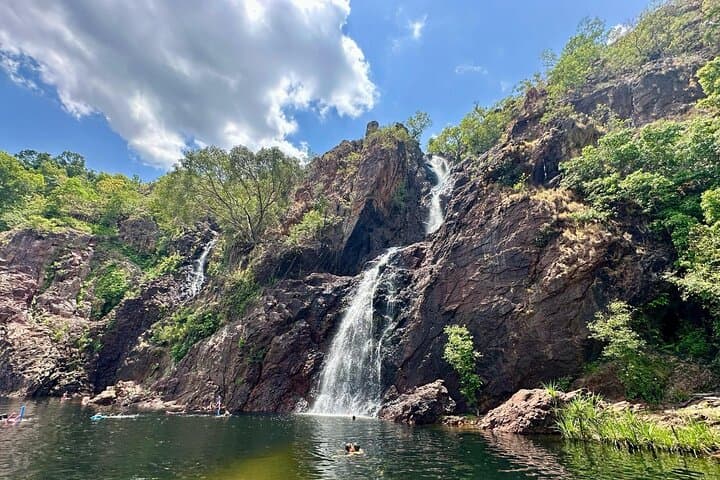
This four-day loop—Kakadu to Katherine then down to Litchfield—is paced for people who want to absorb the Top End rather than race it. Highlights arrive as deliberate chapters: a corroboree billabong cruise where saltwater crocodiles slip like dark logs through lilies; the short but steep climb at Ubirr, where rock art faces out over the Nardab Floodplains; a 1 km walk into Maguk’s paperbark-lined gorge and its cool, deep plunge pool; and the Katherine Gorge cruise, a two-hour passage through the sandstone clefts of Nitmiluk.
Geology here reads like a slow-motion drama. The Arnhem Land escarpment—weathered sandstone shelves carved by millennia of wet-season run-off—throws up cliffs and deep gorges that channel rivers into tranquil waterholes. Culturally the country is older than its visitors: Aboriginal custodians have painted and sung these floodplains for tens of thousands of years. Ubirr’s art panels are not museum pieces; they are living pages of a history that points to Arnhem Land across the East Alligator River.
Practicalities are straightforward. The tour runs from Darwin and includes campsite nights in permanent twin-share tents (beds, sheets and pillow provided); toilets and hot showers are available at camps. Luggage is limited to one soft bag of 10 kg; sleeping bag hire is available for AUD 20 if you can’t bring yours. Pickup is early—be ready between 6:30 and 7:00 a.m.—so expect long days and short nights.
Footwear and hydration matter. Many of the walks are short but uneven—Maguk is roughly a 1 km approach along a mostly dry riverbed; Ubirr’s lookout involves a steady ascent. Sun exposure is relentless in the dry season and the wet season will close roads and swell rivers, so plan by season. Bring a wide-brim hat, SPF 50 sunscreen, at least 1 litre of water per person (more on hot days), and insect repellent; mosquitoes are persistent at dusk.
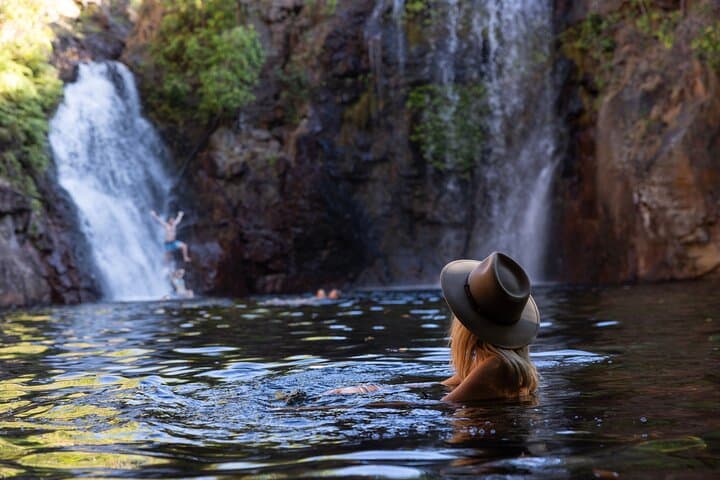
Wildlife is constant but cautious—waterbirds, agile wallabies in morning light, and of course saltwater crocodiles in deeper channels; heed guide instructions and signs. The itinerary balances activity with downtime: swims at Moline Rockhole and Edith Falls, a relaxed picnic at Litchfield’s Buley Rockholes, and evenings around a screened mess area where guides share landscape insights and local stories.
For photographers, timing is everything: sunrise on the floodplain and golden-hour from Ubirr deliver the clearest vistas. For travelers who want an immersive but low-impact Top End primer, this four-day route delivers the landscapes, cultural context and practical rhythms you need to appreciate a place that changes with each season.
moderate.
4 days (full days).
Moderate fitness required — short, uneven walks and some scrambling; able to manage 1–3 hours of light activity per day.
Pickup runs between 6:30 and 7:00 a.m.; be ready at your hotel 6:30 a.m. to avoid delays.
Yes—swims at approved sites like Maguk, Edith Falls and Buley Rockholes are included; never swim outside designated safe spots due to crocodile risk.
You stay in permanent twin-share tents with a bed, sheet and pillow provided; toilets and showers are available at each camp.
Each traveler is restricted to one soft bag up to 10 kg; sleeping bag hire is available for AUD 20 if needed.
The dry season (May–October) is the most reliable for road access and clear hiking; the wet season makes some roads and attractions inaccessible.
Yes—national park fees are included in the tour price.
The region holds ancient Aboriginal rock art (Ubirr panels) and is part of ancestral lands where Yolngu and Bininj-Mungguy peoples continue cultural custodianship.
Visitors should stick to marked trails and follow guide instructions to protect fragile rock art and seasonal wetlands; the dry-season visitation pressure is managed through park permits and infrastructure.
Adventure Tours Australia operates guided outdoor trips and adventures with an emphasis on safety, stewardship, and memorable experiences.
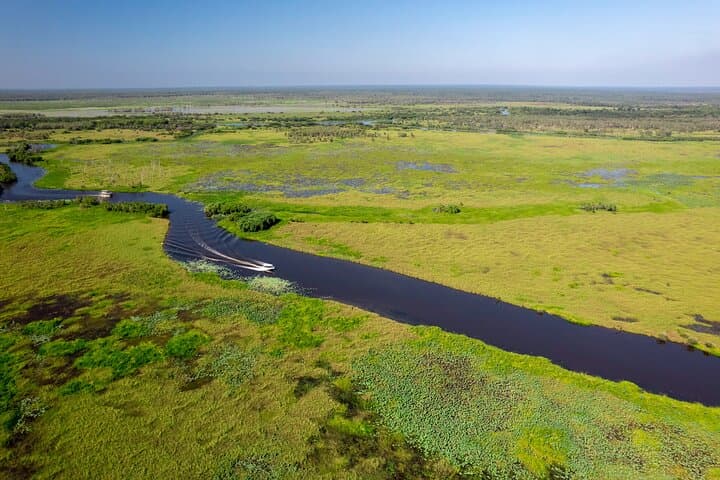
You wake before dawn in Darwin and the road already smells of eucalyptus and dust. The bus hums toward the floodplains as the first light fingers the escarpment, and by mid-morning the flat horizon has been replaced by pools of black water reflecting ancient stone.
You wake before dawn in Darwin and the road already smells of eucalyptus and dust. The bus hums toward the floodplains as the first light fingers the escarpment, and by mid-morning the flat horizon has been replaced by pools of black water reflecting ancient stone.
This four-day loop—Kakadu to Katherine then down to Litchfield—is paced for people who want to absorb the Top End rather than race it. Highlights arrive as deliberate chapters: a corroboree billabong cruise where saltwater crocodiles slip like dark logs through lilies; the short but steep climb at Ubirr, where rock art faces out over the Nardab Floodplains; a 1 km walk into Maguk’s paperbark-lined gorge and its cool, deep plunge pool; and the Katherine Gorge cruise, a two-hour passage through the sandstone clefts of Nitmiluk.
Geology here reads like a slow-motion drama. The Arnhem Land escarpment—weathered sandstone shelves carved by millennia of wet-season run-off—throws up cliffs and deep gorges that channel rivers into tranquil waterholes. Culturally the country is older than its visitors: Aboriginal custodians have painted and sung these floodplains for tens of thousands of years. Ubirr’s art panels are not museum pieces; they are living pages of a history that points to Arnhem Land across the East Alligator River.
Practicalities are straightforward. The tour runs from Darwin and includes campsite nights in permanent twin-share tents (beds, sheets and pillow provided); toilets and hot showers are available at camps. Luggage is limited to one soft bag of 10 kg; sleeping bag hire is available for AUD 20 if you can’t bring yours. Pickup is early—be ready between 6:30 and 7:00 a.m.—so expect long days and short nights.
Footwear and hydration matter. Many of the walks are short but uneven—Maguk is roughly a 1 km approach along a mostly dry riverbed; Ubirr’s lookout involves a steady ascent. Sun exposure is relentless in the dry season and the wet season will close roads and swell rivers, so plan by season. Bring a wide-brim hat, SPF 50 sunscreen, at least 1 litre of water per person (more on hot days), and insect repellent; mosquitoes are persistent at dusk.
Wildlife is constant but cautious—waterbirds, agile wallabies in morning light, and of course saltwater crocodiles in deeper channels; heed guide instructions and signs. The itinerary balances activity with downtime: swims at Moline Rockhole and Edith Falls, a relaxed picnic at Litchfield’s Buley Rockholes, and evenings around a screened mess area where guides share landscape insights and local stories.
For photographers, timing is everything: sunrise on the floodplain and golden-hour from Ubirr deliver the clearest vistas. For travelers who want an immersive but low-impact Top End primer, this four-day route delivers the landscapes, cultural context and practical rhythms you need to appreciate a place that changes with each season.