THE ADVENTURE COLLECTIVE® · Independent discovery and booking for outdoor travel

Float or paddle the Nam Khan River near Luang Prabang on a gentle 45‑minute journey past villages, limestone outcrops, and riverside life. Ideal for first‑time paddlers and families, this half‑day experience pairs safety briefings, tuk‑tuk transfers, and local insights for an easy, scenic water outing.
Float or paddle the Nam Khan River near Luang Prabang on a gentle 45‑minute journey past villages, limestone outcrops, and riverside life. Ideal for first‑time paddlers and families, this half‑day experience pairs safety briefings, tuk‑tuk transfers, and local insights for an easy, scenic water outing.
Late afternoon light gilds the low hills as the Nam Khan slips past stilted villages and temple roofs, the current nudging kayaks and tubes toward Nam Khan Gardens. On this river you trade speed for detail: water beetles scatter like punctuation, kingfishers flick above shallow riffles, and terraced rice slopes slow the horizon.
Verified experiences and guided adventures in the surrounding area.
Operated by Visit Vang Vieng / Visit Luang Prabang / Visit Pakse · Luang Prabang, Luang Prabang Province
Late afternoon light gilds the low hills as the Nam Khan slips past stilted villages and temple roofs, the current nudging kayaks and tubes toward Nam Khan Gardens. On this river you trade speed for detail: water beetles scatter like punctuation, kingfishers flick above shallow riffles, and terraced rice slopes slow the horizon.
The Nam Khan feeds into the Mekong and has long been part of Luang Prabang’s lifeblood — a working river where small boats carried goods and families have lived along the banks for generations. Geologically, the channel winds through limestone outcrops and alluvial flats, creating gentle rapids and wide calm pools that make it ideal for beginners.
Culturally, your float threads past villages where Lao daily life unfolds openly: longhouses, riverside tea stalls, and monks walking the banks. Guides often share local stories and point out features that reveal how the river shapes livelihoods.
Practically, expect a relaxed outing: tuk‑tuk transport upriver, basic safety briefing, and about 45 minutes of active paddling or drifting. Bring sun protection, secure footwear, and a small dry bag; staff supply lifejackets and paddles. Timing matters — lower water in the dry season exposes more rocks and increases eddies, while the rainy season raises the flow and cools the air.
This is an accessible way to experience Laos from the water: minimal skill required, impressive scenery, and an easy half‑day that fits around a longer stay in Luang Prabang. Pay attention to weather, follow your guide, and leave nothing but footprints on the bank.
moderate.
45–120 minutes.
Moderate fitness recommended—able to sit and paddle for ~45 minutes; tubing requires less exertion.
No—basic paddling instruction is provided; the trip suits first‑time paddlers and families, while tubing requires no skill.
Yes—operators supply personal flotation devices for all participants and a safety briefing before launch.
Children can join but infants must sit on an adult’s lap; check age and weight restrictions with the operator during booking.
Tours may be canceled for heavy rain or unsafe river conditions; operators will notify you and follow their cancellation policy.
The Nam Khan has long linked Luang Prabang villages and markets to the Mekong; many riverside communities maintain traditional stilt houses and boat culture.
Operators emphasize leave‑no‑trace practices; avoid single‑use plastics and support local guides who help manage visitor impact.
Visit Vang Vieng / Visit Luang Prabang / Visit Pakse operates guided outdoor trips and adventures with an emphasis on safety, stewardship, and memorable experiences.
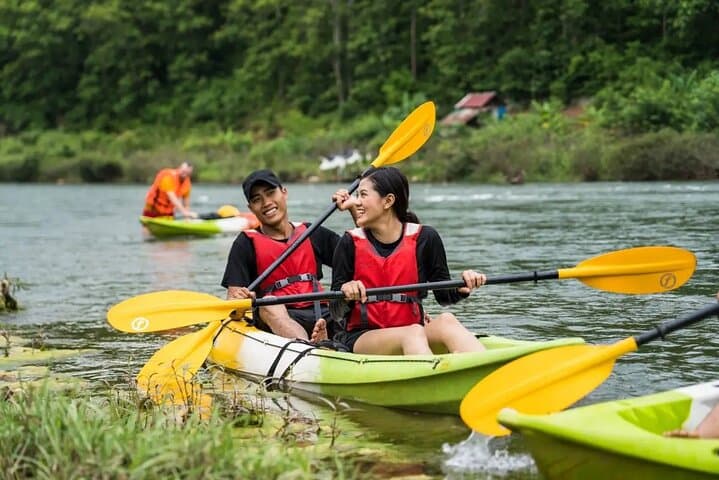
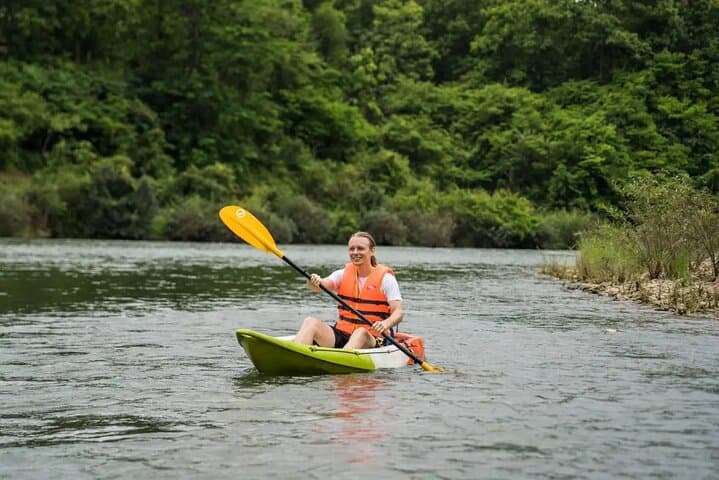
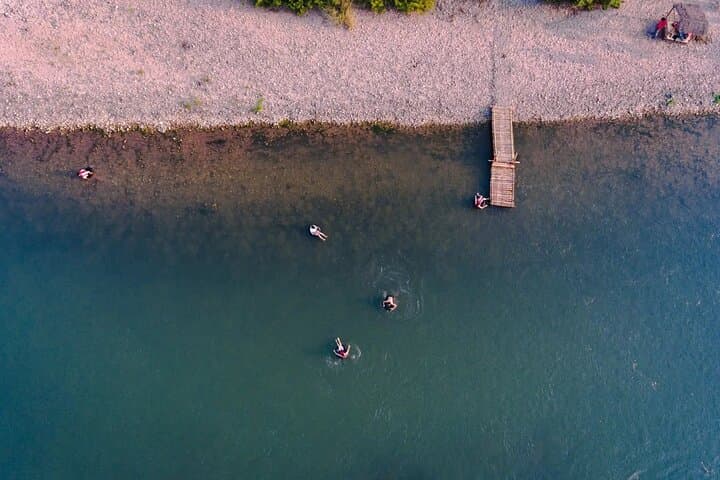
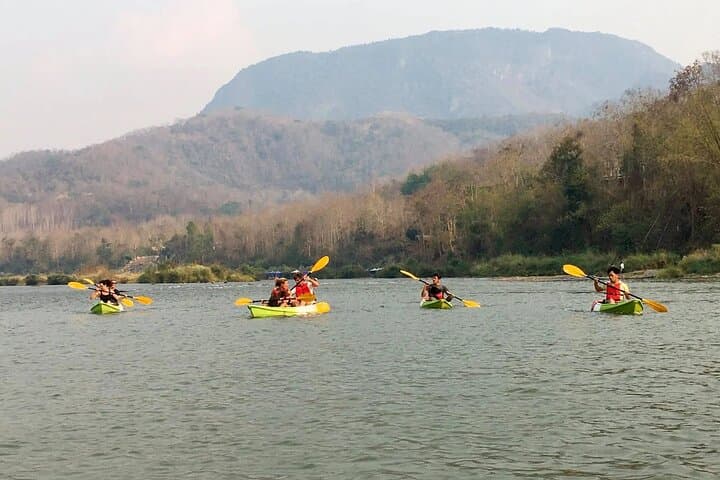
Late afternoon light gilds the low hills as the Nam Khan slips past stilted villages and temple roofs, the current nudging kayaks and tubes toward Nam Khan Gardens. On this river you trade speed for detail: water beetles scatter like punctuation, kingfishers flick above shallow riffles, and terraced rice slopes slow the horizon.
Late afternoon light gilds the low hills as the Nam Khan slips past stilted villages and temple roofs, the current nudging kayaks and tubes toward Nam Khan Gardens. On this river you trade speed for detail: water beetles scatter like punctuation, kingfishers flick above shallow riffles, and terraced rice slopes slow the horizon.
The Nam Khan feeds into the Mekong and has long been part of Luang Prabang’s lifeblood — a working river where small boats carried goods and families have lived along the banks for generations. Geologically, the channel winds through limestone outcrops and alluvial flats, creating gentle rapids and wide calm pools that make it ideal for beginners.
Culturally, your float threads past villages where Lao daily life unfolds openly: longhouses, riverside tea stalls, and monks walking the banks. Guides often share local stories and point out features that reveal how the river shapes livelihoods.
Practically, expect a relaxed outing: tuk‑tuk transport upriver, basic safety briefing, and about 45 minutes of active paddling or drifting. Bring sun protection, secure footwear, and a small dry bag; staff supply lifejackets and paddles. Timing matters — lower water in the dry season exposes more rocks and increases eddies, while the rainy season raises the flow and cools the air.
This is an accessible way to experience Laos from the water: minimal skill required, impressive scenery, and an easy half‑day that fits around a longer stay in Luang Prabang. Pay attention to weather, follow your guide, and leave nothing but footprints on the bank.