THE ADVENTURE COLLECTIVE® · Independent discovery and booking for outdoor travel

Cycle a measured route around Ikeda Reservoir on a Brompton slow-ride that combines retro streets, river viewpoints, and bridges crossing the Yoshino. This 3–4 hour tour mixes cultural stops with low-traffic rural lanes and easy climbs.
Cycle a measured route around Ikeda Reservoir on a Brompton slow-ride that combines retro streets, river viewpoints, and bridges crossing the Yoshino. This 3–4 hour tour mixes cultural stops with low-traffic rural lanes and easy climbs.
The tour opens with the soft clack of folding wheels on old pavement as riders push off from Awa-Ikeda. Low merchant houses line a retro shopping street; ornamental udatsu firewalls punctuate the facades while the Yoshino River looms ahead, its current daring the shoreline. Cyclists move at Brompton pace — measured, curious — and the reservoir on the river widens into a quiet glass when wind dies.
Verified experiences and guided adventures in the surrounding area.
Operated by BROMPTON SLOW CYCLING TOURS · Awa-Ikeda, Tokushima Prefecture
The tour opens with the soft clack of folding wheels on old pavement as riders push off from Awa-Ikeda. Low merchant houses line a retro shopping street; ornamental udatsu firewalls punctuate the facades while the Yoshino River looms ahead, its current daring the shoreline. Cyclists move at Brompton pace — measured, curious — and the reservoir on the river widens into a quiet glass when wind dies.
This corridor of river and town sits along the Median Tectonic Line, one of Japan’s major faults; the plain and surrounding hills tell a slow geological history of uplift and river carving. Awa-Ikeda grew as a trade hub — tobacco and sake once flowed through its streets — and the route threads that cultural memory with modern cycling: wire suspension bridges, a submersible bridge that disappears under flood, rice terraces high on the slopes.
Practically, expect 3–4 hours of mixed quiet road and low-traffic rural lanes, gentle rises, and short steeper pitches. The tour highlights include the mirror-like reservoir, the suspension bridge viewpoint, and stops through town to sample local crafts. Riders should have basic bike-handling skills and steady balance on narrow bridges. Carry water, a compact rain shell, and some cash for small shops. Check tide and weather forecasts — reservoir levels and the submersible bridge are seasonal actors — and confirm the manual booking in advance. The route rewards slow attention: birds that hunt the shallows, planks that thrum under folding wheels, and a calm that rides with you back to town.
moderate.
3–4 hours.
Moderate fitness; comfortable on a bike for a few hours with short climbs and the ability to ride on narrow rural lanes.
The tour includes use of a Brompton bicycle; confirm helmet provision with the operator—many tours provide helmets but you may bring your own.
Reservations are normally for two people or more and the tour requires manual confirmation; cancel at least 24 hours in advance for a full refund.
Riders with basic bike-handling skills and moderate fitness will be fine; inexperienced cyclists should disclose mobility concerns when booking.
Public transportation serves Awa-Ikeda (local trains and buses); the tour listing includes meeting details—arrive early to check equipment and briefing.
Awa-Ikeda developed as a regional trade center—tobacco and sake production shaped the town’s streets and merchant architecture.
Stick to roads and bridges, pack out all trash, and respect seasonal floodplain signs—river ecology and local agriculture depend on clean water and minimal disturbance.
BROMPTON SLOW CYCLING TOURS operates guided outdoor trips and adventures with an emphasis on safety, stewardship, and memorable experiences.
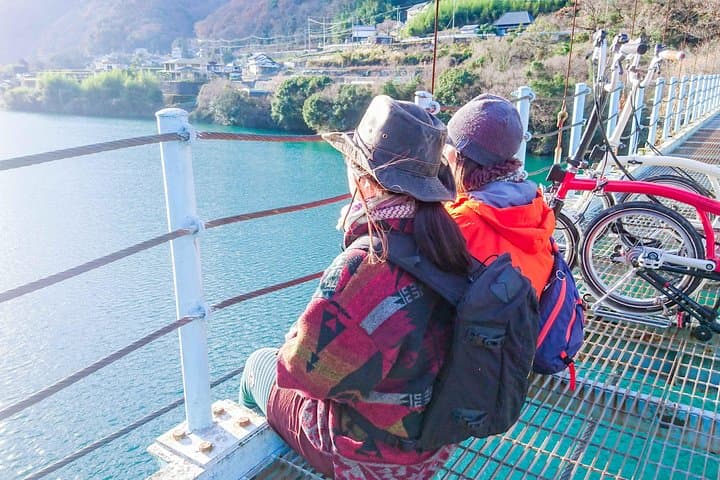


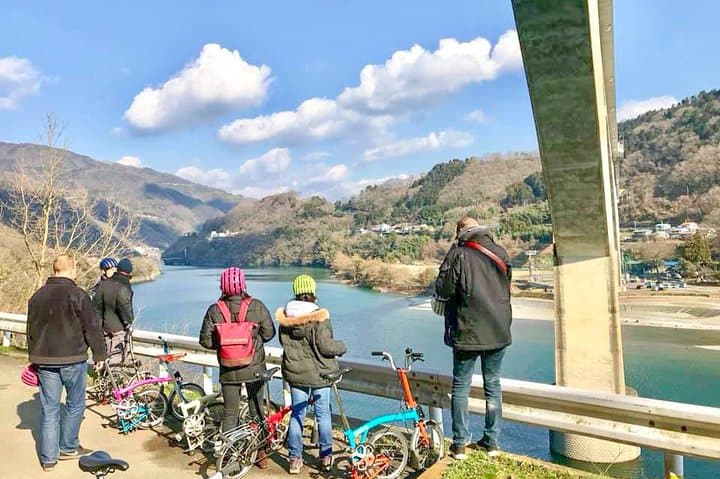
The tour opens with the soft clack of folding wheels on old pavement as riders push off from Awa-Ikeda. Low merchant houses line a retro shopping street; ornamental udatsu firewalls punctuate the facades while the Yoshino River looms ahead, its current daring the shoreline. Cyclists move at Brompton pace — measured, curious — and the reservoir on the river widens into a quiet glass when wind dies.
The tour opens with the soft clack of folding wheels on old pavement as riders push off from Awa-Ikeda. Low merchant houses line a retro shopping street; ornamental udatsu firewalls punctuate the facades while the Yoshino River looms ahead, its current daring the shoreline. Cyclists move at Brompton pace — measured, curious — and the reservoir on the river widens into a quiet glass when wind dies.
This corridor of river and town sits along the Median Tectonic Line, one of Japan’s major faults; the plain and surrounding hills tell a slow geological history of uplift and river carving. Awa-Ikeda grew as a trade hub — tobacco and sake once flowed through its streets — and the route threads that cultural memory with modern cycling: wire suspension bridges, a submersible bridge that disappears under flood, rice terraces high on the slopes.
Practically, expect 3–4 hours of mixed quiet road and low-traffic rural lanes, gentle rises, and short steeper pitches. The tour highlights include the mirror-like reservoir, the suspension bridge viewpoint, and stops through town to sample local crafts. Riders should have basic bike-handling skills and steady balance on narrow bridges. Carry water, a compact rain shell, and some cash for small shops. Check tide and weather forecasts — reservoir levels and the submersible bridge are seasonal actors — and confirm the manual booking in advance. The route rewards slow attention: birds that hunt the shallows, planks that thrum under folding wheels, and a calm that rides with you back to town.