THE ADVENTURE COLLECTIVE® · Independent discovery and booking for outdoor travel

Board an overnight sleeper train from Cairo to Luxor and wake in the Nile valley to three days of pharaonic monuments. This focused 2-night itinerary covers the Valley of the Kings, Hatshepsut’s mortuary temple, Karnak and Luxor Temple with private transfers and an Egyptologist guide.
Board an overnight sleeper train from Cairo to Luxor and wake in the Nile valley to three days of pharaonic monuments. This focused 2-night itinerary covers the Valley of the Kings, Hatshepsut’s mortuary temple, Karnak and Luxor Temple with private transfers and an Egyptologist guide.
The sleeper train slides out of Cairo after dusk, private transfer steering you through the city's sodium glow toward the station. In the carriage the world compresses to a dim corridor of bunks and the occasional metallic clack of track; by morning the Nile valley unfurls — a ribbon of green between ochre fields and low desert — and Luxor's sandstone monuments rise like a deliberate reminder of time.
Verified experiences and guided adventures in the surrounding area.
Operated by Best Of Egypt Tours · Luxor, Luxor Governorate
The sleeper train slides out of Cairo after dusk, private transfer steering you through the city's sodium glow toward the station. In the carriage the world compresses to a dim corridor of bunks and the occasional metallic clack of track; by morning the Nile valley unfurls — a ribbon of green between ochre fields and low desert — and Luxor's sandstone monuments rise like a deliberate reminder of time.
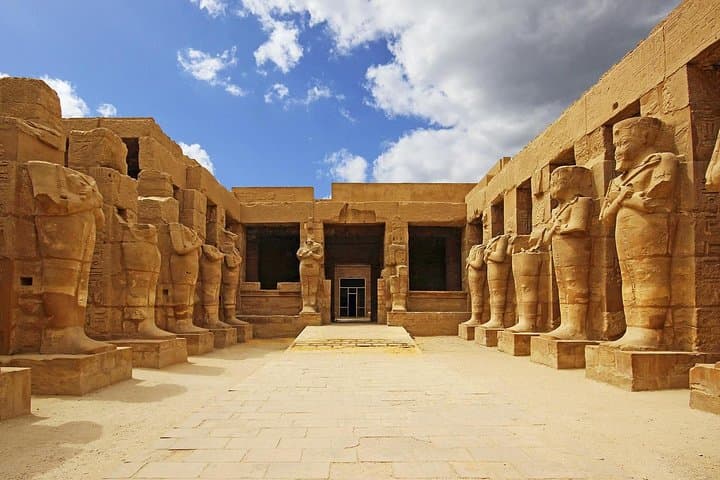
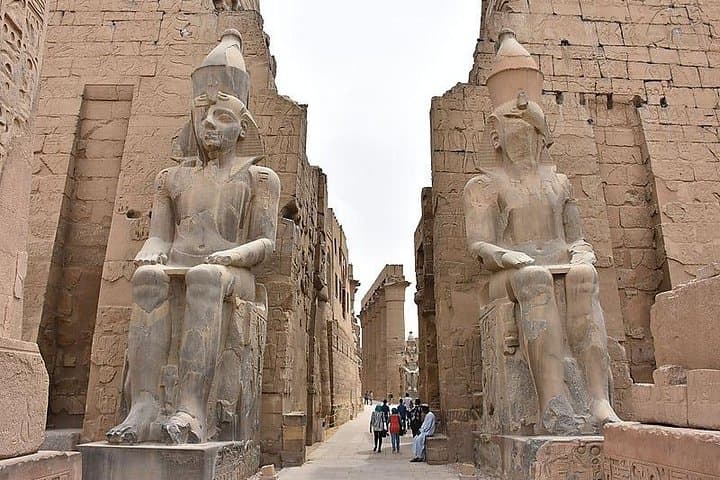
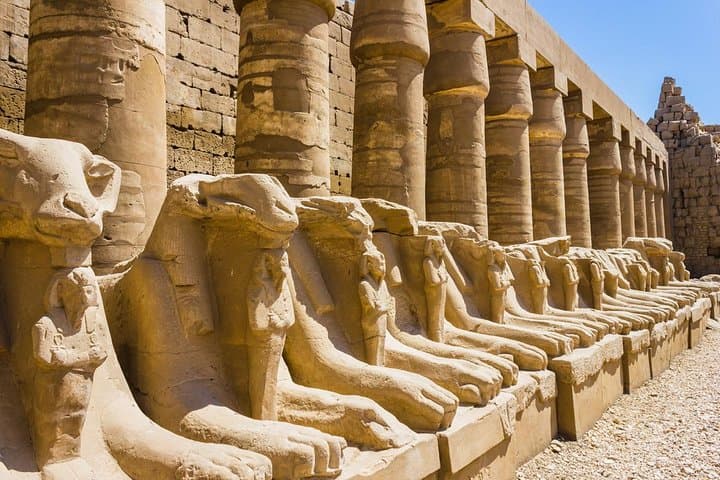
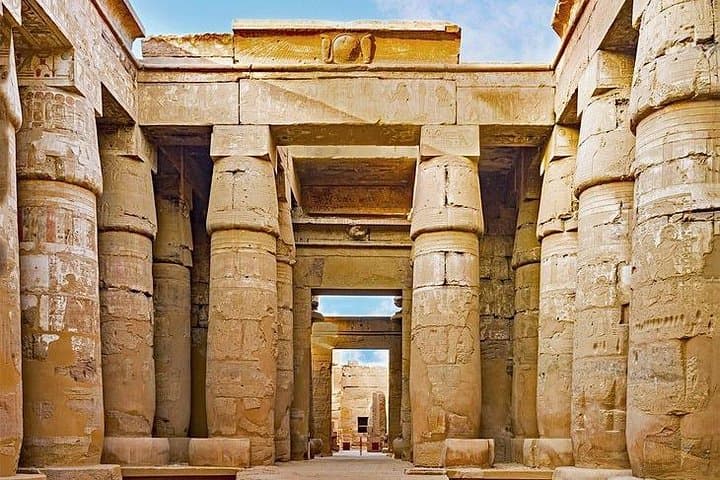
This short itinerary concentrates on Thebes, the ancient capital where pharaohs carved their passage into stone. Expect visits to the Valley of the Kings — a compact necropolis cut into limestone where tomb corridors run cool and dark — and the terraced Mortuary Temple of Hatshepsut with its clean, geometric tiers. On the east bank, Karnak’s forest of columns and Luxor Temple’s open courtyards show successive dynasties expanding the same sacred complex. The Colossi of Memnon stand as weathered gatekeepers to the West Bank.
Geologically the valley sits on folded Mesozoic limestone and Pliocene deposits; wind and Nile-borne sands have polished reliefs for millennia. Culturally, local guides (Egyptologists on most tours) bring inscriptions and ritual scenes to life; markets near the Nile offer contemporary counterpoints of spices and linen.
Practical guidance: bring sun protection and water — Luxor gets intensely hot from late spring through early fall — and comfortable walking shoes for 1–3 km of site walking per stop. Nights on the sleeper are restful but compact; pack light and keep valuables on you. Aim for early starts at Karnak to avoid peak midday heat and crowds and budget time for ticket lines at major sites.
easy.
48–72 hours.
Suitable for travelers who can walk on uneven surfaces for several hours and climb short temple steps
The overnight sleeper typically departs in the evening and arrives the next morning, approximately 10–12 hours depending on schedule.
Major site admissions (Valley of the Kings, Karnak, Luxor Temple) are often not included — confirm with your operator; guides usually handle ticket purchase on the day.
The operator lists wheelchair-accessible options, but access at ancient sites can be limited by stairs and uneven surfaces; check specific arrangements before booking.
Most operators or hotels offer luggage storage; the tour also provides hotel pickup/drop-off and usually coordinates baggage handling between stations and hotels.
Luxor sits on the ancient city of Thebes, a political and religious capital for pharaonic Egypt where successive rulers built and expanded temple precincts for over a thousand years.
Visitor impact is concentrated on fragile painted tombs and temple surfaces; follow guide instructions, avoid touching reliefs, and use established walkways to reduce erosion.
Best Of Egypt Tours operates guided outdoor trips and adventures with an emphasis on safety, stewardship, and memorable experiences.
The sleeper train slides out of Cairo after dusk, private transfer steering you through the city's sodium glow toward the station. In the carriage the world compresses to a dim corridor of bunks and the occasional metallic clack of track; by morning the Nile valley unfurls — a ribbon of green between ochre fields and low desert — and Luxor's sandstone monuments rise like a deliberate reminder of time.
The sleeper train slides out of Cairo after dusk, private transfer steering you through the city's sodium glow toward the station. In the carriage the world compresses to a dim corridor of bunks and the occasional metallic clack of track; by morning the Nile valley unfurls — a ribbon of green between ochre fields and low desert — and Luxor's sandstone monuments rise like a deliberate reminder of time.
This short itinerary concentrates on Thebes, the ancient capital where pharaohs carved their passage into stone. Expect visits to the Valley of the Kings — a compact necropolis cut into limestone where tomb corridors run cool and dark — and the terraced Mortuary Temple of Hatshepsut with its clean, geometric tiers. On the east bank, Karnak’s forest of columns and Luxor Temple’s open courtyards show successive dynasties expanding the same sacred complex. The Colossi of Memnon stand as weathered gatekeepers to the West Bank.
Geologically the valley sits on folded Mesozoic limestone and Pliocene deposits; wind and Nile-borne sands have polished reliefs for millennia. Culturally, local guides (Egyptologists on most tours) bring inscriptions and ritual scenes to life; markets near the Nile offer contemporary counterpoints of spices and linen.
Practical guidance: bring sun protection and water — Luxor gets intensely hot from late spring through early fall — and comfortable walking shoes for 1–3 km of site walking per stop. Nights on the sleeper are restful but compact; pack light and keep valuables on you. Aim for early starts at Karnak to avoid peak midday heat and crowds and budget time for ticket lines at major sites.