THE ADVENTURE COLLECTIVE® · Independent discovery and booking for outdoor travel

Leave Cairo by sleeper train and wake to the Nile and the temples of Luxor. This compact tour pairs Karnak and the Valley of the Kings with a visit to Dendera’s Temple of Hathor for an efficient cultural deep-dive.
Leave Cairo by sleeper train and wake to the Nile and the temples of Luxor. This compact tour pairs Karnak and the Valley of the Kings with a visit to Dendera’s Temple of Hathor for an efficient cultural deep-dive.
Night drifts past your carriage window as the sleeper train slips south from Cairo — a mobile blur of phosphorescent roads and desert silhouette. By dawn the Nile appears in ribboned light and, within hours, the stone giants of Luxor rise out of the flat plain like deliberate monuments to patience.
Verified experiences and guided adventures in the surrounding area.
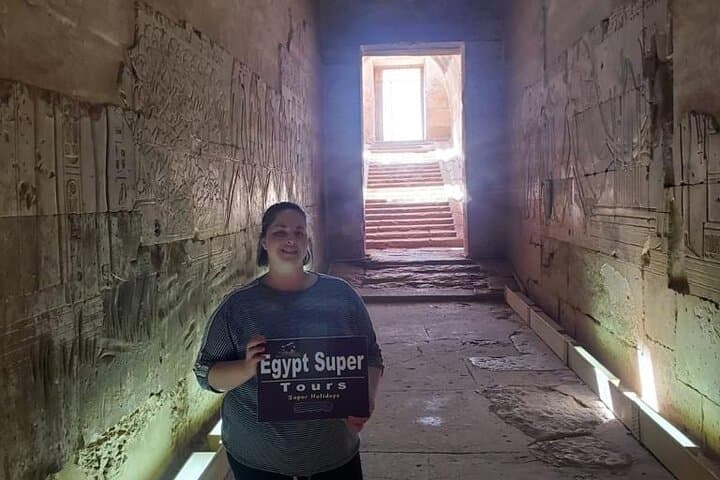
Operated by Egypt Super Tours · Luxor, Luxor Governorate
Night drifts past your carriage window as the sleeper train slips south from Cairo — a mobile blur of phosphorescent roads and desert silhouette. By dawn the Nile appears in ribboned light and, within hours, the stone giants of Luxor rise out of the flat plain like deliberate monuments to patience.
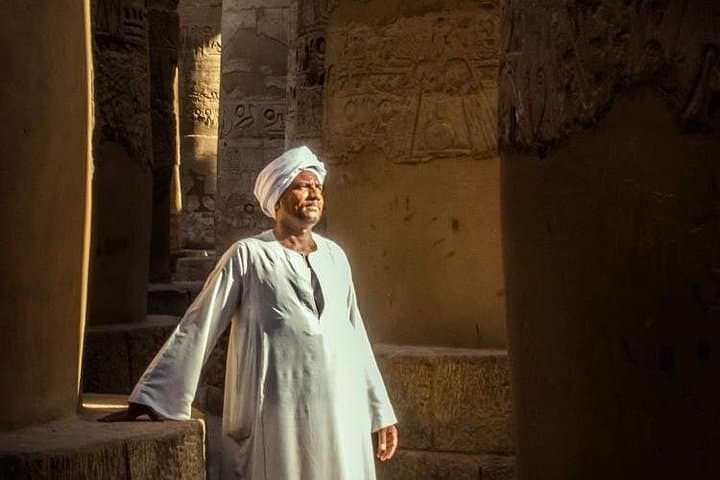
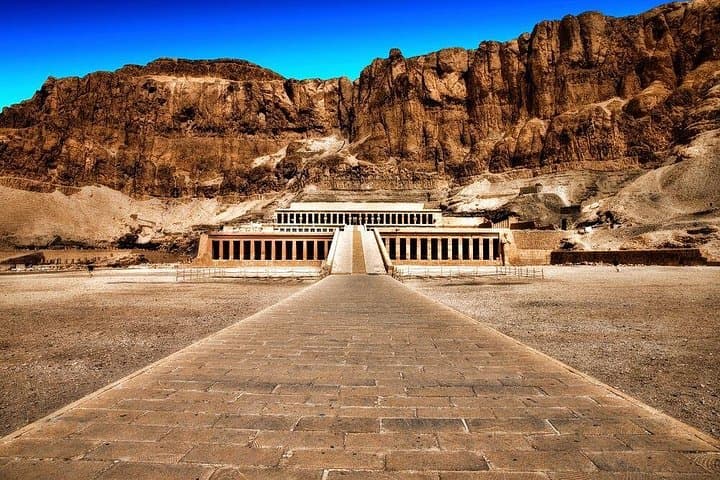
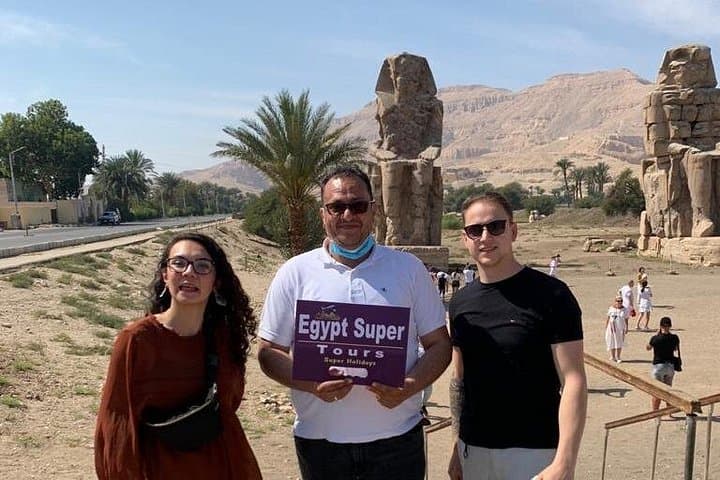
This short private itinerary stitches together Luxor’s two banks: Karnak’s pillar forest and Luxor Temple on the east, the Colossi of Memnon, Hatshepsut’s terraced mortuary temple and the painted tombs of the Valley of the Kings to the west, plus the separate, well-preserved Temple of Hathor at Dendera. Geologically simple — limestone and Nile-alluvium — the area’s cliffs and sands shaped where pharaohs carved their afterlives. Culturally, you’re walking through the heart of ancient Thebes, where ritual processions and solar theology dictated city life for millennia.
Expect guided, museum-grade narration from an Egyptologist, but also practical rhythms: 10-hour overnight rail segments, early-morning starts to avoid the heat, short walks on uneven stone, and fenced-off tomb interiors where photography and low light preserve pigments.
Bring hydration, sun protection, and sturdy footwear; pace is moderate but involves repeated standing and steps. Entrance fees and train tickets are handled on booking but note that passport copies are required for sleeper tickets and some sites enforce cashless or card payments.
For travelers wanting concentrated exposure to Luxor’s highlights with the convenience of overnight rail, this tour condenses centuries into two efficient, sensory-rich days.
easy.
3–4 days.
Suitable for travelers in average fitness; ability to walk on uneven stone and climb short stairways is required.
Entrance fees to archaeological sites are typically not included; you’ll need to pay on arrival—card payment is accepted at many sites, but carry some local currency for smaller purchases.
Egypt’s sleeper trains provide reclining couchettes with dinner and breakfast included; comfort is basic but efficient for overnight travel between Cairo and Luxor.
Yes — the tour is rated easy, but expect walking on uneven surfaces and limited shade; request infant seats if needed and notify organizers of mobility concerns.
English-speaking Egyptologist guides are included; other languages may be available for an extra charge if requested in advance.
Luxor sits on the site of ancient Thebes, a political and religious capital where pharaohs built temples and rock-cut tombs between the Middle Kingdom and New Kingdom eras.
Visitor pressure threatens delicate pigments and reliefs; follow site rules, avoid touching surfaces, and use designated walkways to reduce wear.
Egypt Super Tours operates guided outdoor trips and adventures with an emphasis on safety, stewardship, and memorable experiences.
Night drifts past your carriage window as the sleeper train slips south from Cairo — a mobile blur of phosphorescent roads and desert silhouette. By dawn the Nile appears in ribboned light and, within hours, the stone giants of Luxor rise out of the flat plain like deliberate monuments to patience.
Night drifts past your carriage window as the sleeper train slips south from Cairo — a mobile blur of phosphorescent roads and desert silhouette. By dawn the Nile appears in ribboned light and, within hours, the stone giants of Luxor rise out of the flat plain like deliberate monuments to patience.
This short private itinerary stitches together Luxor’s two banks: Karnak’s pillar forest and Luxor Temple on the east, the Colossi of Memnon, Hatshepsut’s terraced mortuary temple and the painted tombs of the Valley of the Kings to the west, plus the separate, well-preserved Temple of Hathor at Dendera. Geologically simple — limestone and Nile-alluvium — the area’s cliffs and sands shaped where pharaohs carved their afterlives. Culturally, you’re walking through the heart of ancient Thebes, where ritual processions and solar theology dictated city life for millennia.
Expect guided, museum-grade narration from an Egyptologist, but also practical rhythms: 10-hour overnight rail segments, early-morning starts to avoid the heat, short walks on uneven stone, and fenced-off tomb interiors where photography and low light preserve pigments.
Bring hydration, sun protection, and sturdy footwear; pace is moderate but involves repeated standing and steps. Entrance fees and train tickets are handled on booking but note that passport copies are required for sleeper tickets and some sites enforce cashless or card payments.
For travelers wanting concentrated exposure to Luxor’s highlights with the convenience of overnight rail, this tour condenses centuries into two efficient, sensory-rich days.