THE ADVENTURE COLLECTIVE® · Independent discovery and booking for outdoor travel

Walk through Cape Town’s recorded and reclaimed past with a self-guided audio tour that links personal genealogy to public sites — from the Slave Lodge to St George’s Cathedral. Download the audio, plan an hour, and prepare to meet difficult history on everyday streets.
Walk through Cape Town’s recorded and reclaimed past with a self-guided audio tour that links personal genealogy to public sites — from the Slave Lodge to St George’s Cathedral. Download the audio, plan an hour, and prepare to meet difficult history on everyday streets.
You start on the cool flagstones outside the Iziko Slave Lodge, headset in place, the city pressing close — shopfronts, buses, and Table Mountain’s sandstone flank watching from the north.
Verified experiences and guided adventures in the surrounding area.
Operated by VoiceMap Audio Tours · Cape Town, Western Cape
You start on the cool flagstones outside the Iziko Slave Lodge, headset in place, the city pressing close — shopfronts, buses, and Table Mountain’s sandstone flank watching from the north.
The audio voice leads you through a compact circuit: the Company’s Garden, St George’s Cathedral, the Castle of Good Hope and the old slave burial sites that sit under busy streets today. The narrative threads personal genealogy with visible markers of empire — the Dutch East India Company’s 17th- and 18th-century infrastructure, imported labor from East Africa, Madagascar and the Indian Ocean islands, and the public spaces where punishment and burial once took place.
Geology and urban fabric shape the walk: wear-level sandstone steps, paved colonial squares and narrow alleys that funnel sound and history. Cultural context is central — many of the memorials are recent acts of recovery, part of community efforts to name those erased from official records.
Practical guidance: the tour runs 60–75 minutes and covers roughly 3–4 km of mostly flat, paved city center streets. Download the VoiceMap file over Wi‑Fi before you leave to use offline maps and geodata. Plan for daylight; some points are best read while you stand and reflect rather than rush past.
Respect is part of the experience — these are contested sites with living descendants and ongoing conversations about memory and restitution. Carry water, keep headphones at a level that lets you stay aware of traffic, and allow time afterward to visit the Iziko exhibitions or the District Six Museum for deeper context.
easy.
60–75 minutes.
Suitable for most fitness levels; basic urban mobility for 3–4 km of walking
You receive a coupon code at purchase to download the tour in the VoiceMap app (Android/iOS); download over Wi‑Fi for offline use.
Much of the city centre is paved but includes steps and uneven stones; accessibility may be limited at some points—contact local accessibility resources if in doubt.
Yes — the VoiceMap app allows you to pause and resume so you can spend longer at particular sites or take breaks.
This product is sold with lifetime access to the audio, and bookings are final; check the booking terms before purchase.
Cape Town’s slave history is tied to the Dutch East India Company’s 17th‑century refreshment station; enslaved people were brought from across the Indian Ocean and integrated under colonial labor systems that shaped the city’s early layout.
Many of the sites are protected as cultural heritage and subject to active community-led interpretation; responsible visiting means leaving monuments unchanged, following signage and supporting local museums.
VoiceMap Audio Tours operates guided outdoor trips and adventures with an emphasis on safety, stewardship, and memorable experiences.

You start on the cool flagstones outside the Iziko Slave Lodge, headset in place, the city pressing close — shopfronts, buses, and Table Mountain’s sandstone flank watching from the north.
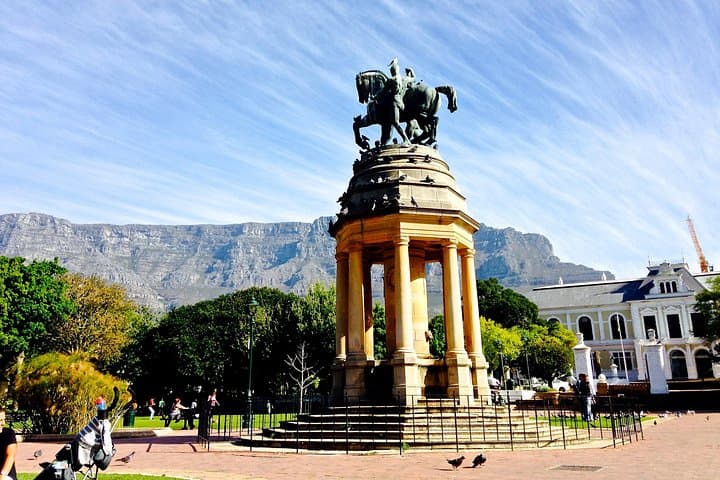
You start on the cool flagstones outside the Iziko Slave Lodge, headset in place, the city pressing close — shopfronts, buses, and Table Mountain’s sandstone flank watching from the north.
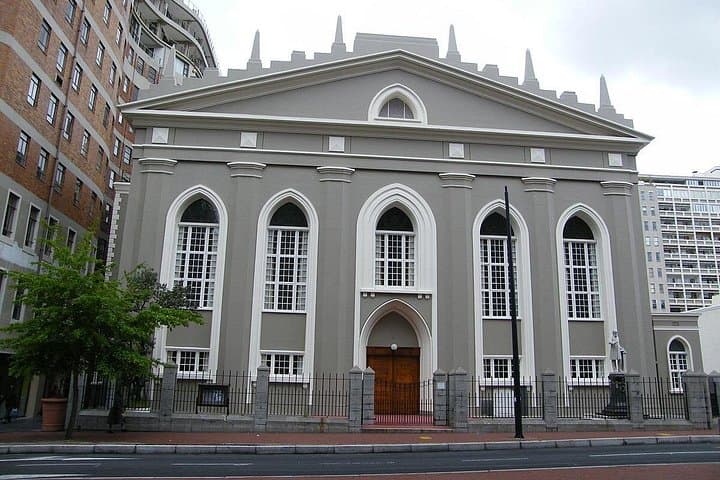
The audio voice leads you through a compact circuit: the Company’s Garden, St George’s Cathedral, the Castle of Good Hope and the old slave burial sites that sit under busy streets today. The narrative threads personal genealogy with visible markers of empire — the Dutch East India Company’s 17th- and 18th-century infrastructure, imported labor from East Africa, Madagascar and the Indian Ocean islands, and the public spaces where punishment and burial once took place.
Geology and urban fabric shape the walk: wear-level sandstone steps, paved colonial squares and narrow alleys that funnel sound and history. Cultural context is central — many of the memorials are recent acts of recovery, part of community efforts to name those erased from official records.
Practical guidance: the tour runs 60–75 minutes and covers roughly 3–4 km of mostly flat, paved city center streets. Download the VoiceMap file over Wi‑Fi before you leave to use offline maps and geodata. Plan for daylight; some points are best read while you stand and reflect rather than rush past.
Respect is part of the experience — these are contested sites with living descendants and ongoing conversations about memory and restitution. Carry water, keep headphones at a level that lets you stay aware of traffic, and allow time afterward to visit the Iziko exhibitions or the District Six Museum for deeper context.