THE ADVENTURE COLLECTIVE® · Independent discovery and booking for outdoor travel

Descend into one of Europe’s largest salt caverns at Slănic Prahova. This guided tour from Bucharest combines a dramatic underground landscape with mining history and balneal air—perfect for day-trippers wanting an unusual geological experience.
Descend into one of Europe’s largest salt caverns at Slănic Prahova. This guided tour from Bucharest combines a dramatic underground landscape with mining history and balneal air—perfect for day-trippers wanting an unusual geological experience.
You step down concrete stairs and the daylight thins until the ceiling opens to a room the size of a cathedral—light catches on salt-frosted walls and a quiet, cool air moves like a slow ocean.
Verified experiences and guided adventures in the surrounding area.
Operated by day travel · Slănic, Prahova County
You step down concrete stairs and the daylight thins until the ceiling opens to a room the size of a cathedral—light catches on salt-frosted walls and a quiet, cool air moves like a slow ocean.
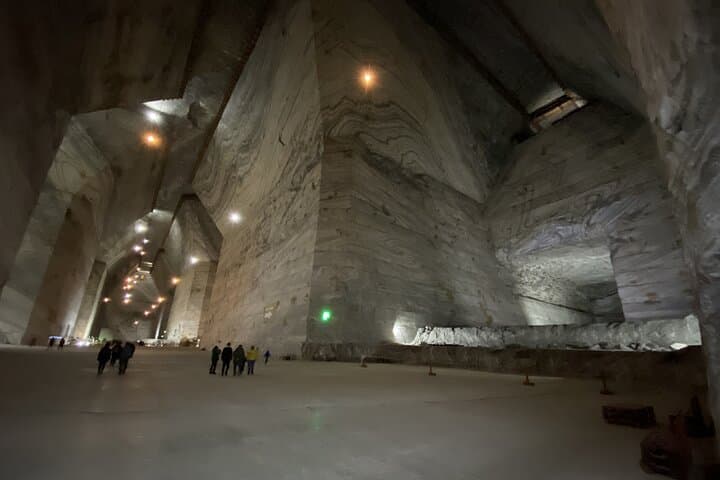
The Unirea chamber at Slănic Prahova is the product of industrial patience: since the 19th century miners removed roughly 2.9 million cubic meters of salt, creating 14 trapezoidal halls, vaulted ceilings up to 55–70 m, and a depth surpassing 200 m. Geologically it's a massive halite deposit, mechanically excavated and left to age into enormous, echoing cavities. Cultural traces are visible too: mining equipment, rescue gear and a small museum narrate the human story behind the void.
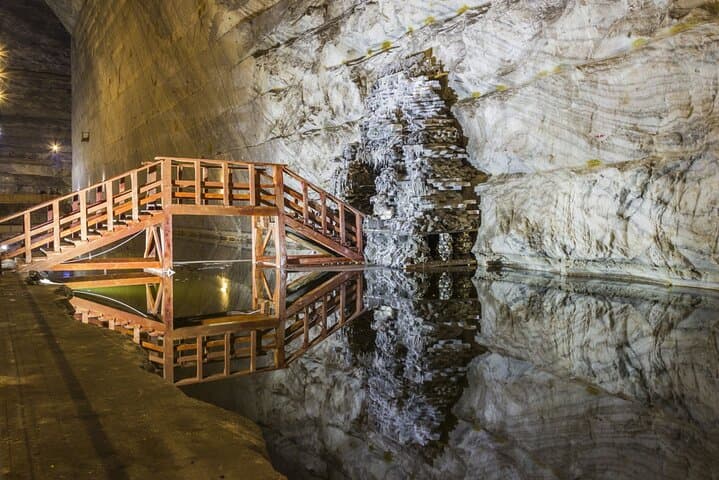
Inside, the mine reads like a landscape of salt — a wooden bridge crosses a brackish lake, a slender waterfall threads down a salt face, and massive pillars stand as the engineered bones that keep the roof from moving. The air is dry, cool (around 12°C), and noticeably saline; people have come here for balneal benefits since the mid-1800s.
Practical guidance: tours from Bucharest run about seven hours round-trip including transport; expect light walking on flat, damp surfaces and long stair sections. Wear sturdy, closed shoes with good grip, bring a light jacket, and plan for low lighting in places. Respect posted routes—salt crusts and exhibition spaces are fragile and managed for both safety and conservation. If you have respiratory issues, pregnancy, or spinal concerns, consult health guidance before booking. Arrive with camera batteries warmed up—the scale is what makes this visit memorable.
easy.
7 hours (round-trip from Bucharest).
Light fitness required: short walks, standing, and stair negotiation; suitable for most healthy travelers.
The transfer from Bucharest is roughly 100 km and typically takes about 2–2.5 hours each way depending on traffic.
Yes—most parts are accessible with staircases and flat paths, but those with mobility limitations, spinal issues, or severe heart conditions should avoid the visit.
Yes—personal photography is generally permitted; use no flash near exhibits if signage requests it to protect displays.
The microclimate is often described as saline and stable in temperature; some visitors report relief from mild respiratory symptoms, but consult a physician for medical advice.
Slănic’s Unirea Mine has been a tourist and balneal destination since the mid-1800s after large-scale salt extraction revealed vast underground chambers.
Visitor movement is controlled to protect salt formations and exhibitions; follow guidelines to minimize humidity and physical contact that accelerate salt erosion.
day travel operates guided outdoor trips and adventures with an emphasis on safety, stewardship, and memorable experiences.
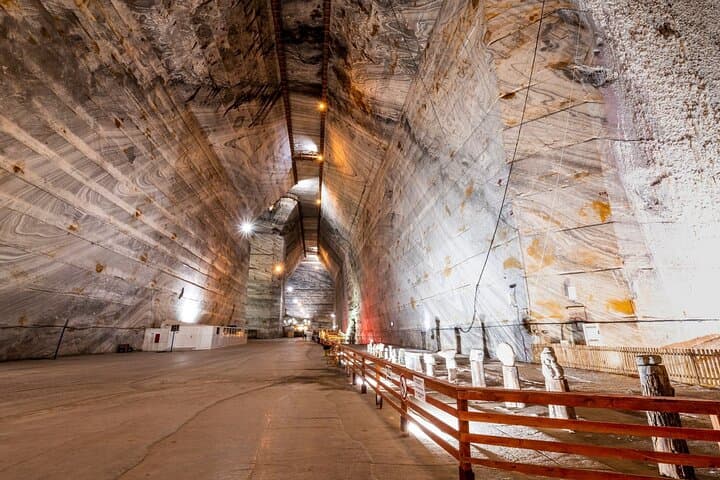
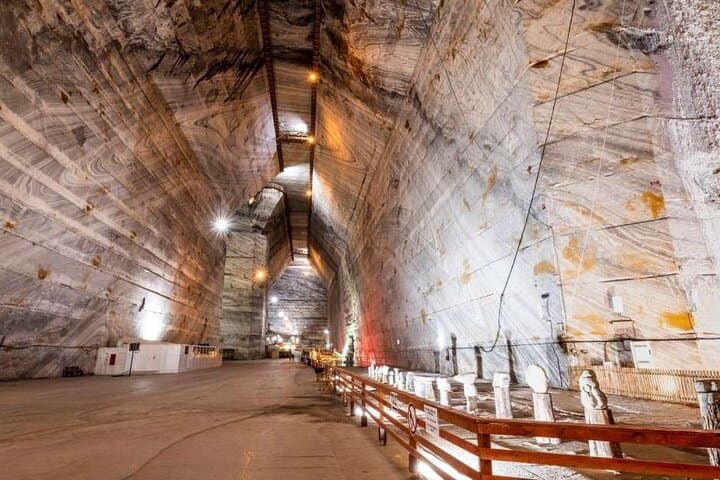
You step down concrete stairs and the daylight thins until the ceiling opens to a room the size of a cathedral—light catches on salt-frosted walls and a quiet, cool air moves like a slow ocean.
You step down concrete stairs and the daylight thins until the ceiling opens to a room the size of a cathedral—light catches on salt-frosted walls and a quiet, cool air moves like a slow ocean.
The Unirea chamber at Slănic Prahova is the product of industrial patience: since the 19th century miners removed roughly 2.9 million cubic meters of salt, creating 14 trapezoidal halls, vaulted ceilings up to 55–70 m, and a depth surpassing 200 m. Geologically it's a massive halite deposit, mechanically excavated and left to age into enormous, echoing cavities. Cultural traces are visible too: mining equipment, rescue gear and a small museum narrate the human story behind the void.
Inside, the mine reads like a landscape of salt — a wooden bridge crosses a brackish lake, a slender waterfall threads down a salt face, and massive pillars stand as the engineered bones that keep the roof from moving. The air is dry, cool (around 12°C), and noticeably saline; people have come here for balneal benefits since the mid-1800s.
Practical guidance: tours from Bucharest run about seven hours round-trip including transport; expect light walking on flat, damp surfaces and long stair sections. Wear sturdy, closed shoes with good grip, bring a light jacket, and plan for low lighting in places. Respect posted routes—salt crusts and exhibition spaces are fragile and managed for both safety and conservation. If you have respiratory issues, pregnancy, or spinal concerns, consult health guidance before booking. Arrive with camera batteries warmed up—the scale is what makes this visit memorable.