THE ADVENTURE COLLECTIVE® · Independent discovery and booking for outdoor travel

Ride a high-speed elevator to the 94th floor and step onto 360 CHICAGO for sweeping views of Lake Michigan and the city grid. This guide covers what to expect, how to plan your visit, and practical tips for getting the most from a time-specific observation-deck ticket.
Ride a high-speed elevator to the 94th floor and step onto 360 CHICAGO for sweeping views of Lake Michigan and the city grid. This guide covers what to expect, how to plan your visit, and practical tips for getting the most from a time-specific observation-deck ticket.
Glass and concrete fall away beneath you as the elevator rockets to the 94th floor, and the city opens like a map under your feet. From 360 CHICAGO, the shoreline of Lake Michigan dares you to look past the promenade while the grid of downtown pulls your eye along streets and river bends toward the lake.
Verified experiences and guided adventures in the surrounding area.
Operated by 360 CHICAGO Observation Deck (Formally John Hancock Center) · Chicago, Illinois
Glass and concrete fall away beneath you as the elevator rockets to the 94th floor, and the city opens like a map under your feet. From 360 CHICAGO, the shoreline of Lake Michigan dares you to look past the promenade while the grid of downtown pulls your eye along streets and river bends toward the lake.
The John Hancock Center, completed in the late 1960s and officially 875 North Michigan Avenue, helped define Chicago’s modern skyline and remains an icon of structural expressionism. The observatory sits where urban planning, commerce, and lakefront leisure intersect; exhibits in the concourse trace neighborhood development and the city’s push to connect shoreline and street.
Geology is subtle here: glacially scoured lakefront plains meet the engineered elevations of reclaimed parkland, while wind off the lake sculpts how buildings are oriented and how views read across water and masonry. The CloudWalk and rotating Magnicity app add context to sightlines, and the optional CloudBar gives a social, late-afternoon vantage when the light shifts.
Practical notes: allow 60–240 minutes depending on crowds and upgrades; arrive early or at sunset for the best light. Tickets are mobile and time-specific—plan for a 30-minute window around your slot. Security is light but expect wait times for TILT and peak-hour queues. Use public transit or a short walk from the Magnificent Mile; bring a camera, a light layer for wind, and patience—the city’s rhythm changes by hour, and views reward timing.
easy.
1–4 hours.
Suitable for all physical fitness levels; mostly standing and elevator access
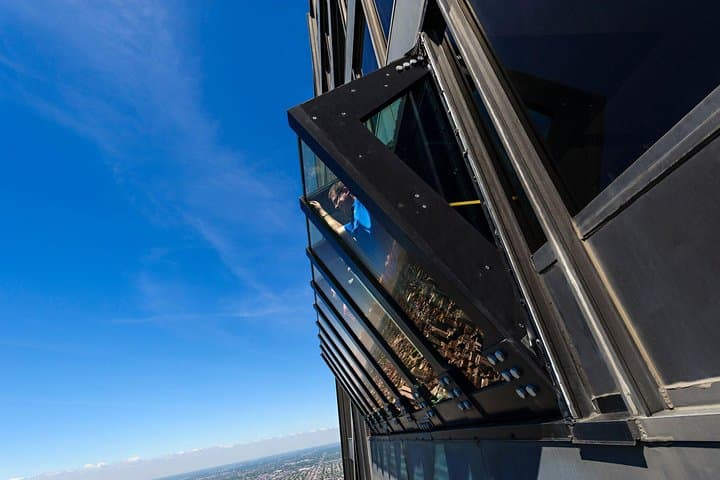
No, TILT is a separate attraction and must be purchased onsite or as an upgrade; it offers outward-tilting glass panels for downward views.
Tickets are non-refundable for bad weather or low visibility but can be rescheduled for up to a year if not redeemed—cancel at least 24 hours for a full refund per policy.
Yes, 360 CHICAGO is wheelchair and stroller accessible with elevator access and accessible facilities.
Early morning offers calmer light and fewer crowds; sunset provides dramatic color but higher visitor density—plan accordingly.
The John Hancock Center, completed in the late 1960s as 875 North Michigan Avenue, became a defining presence on the Magnificent Mile and helped popularize high-rise mixed-use design in Chicago.
Heavy visitation and light pollution affect the shoreline and skyline views; minimize waste, use public transit, and follow site guidance to reduce impact.
360 CHICAGO Observation Deck (Formally John Hancock Center) operates guided outdoor trips and adventures with an emphasis on safety, stewardship, and memorable experiences.


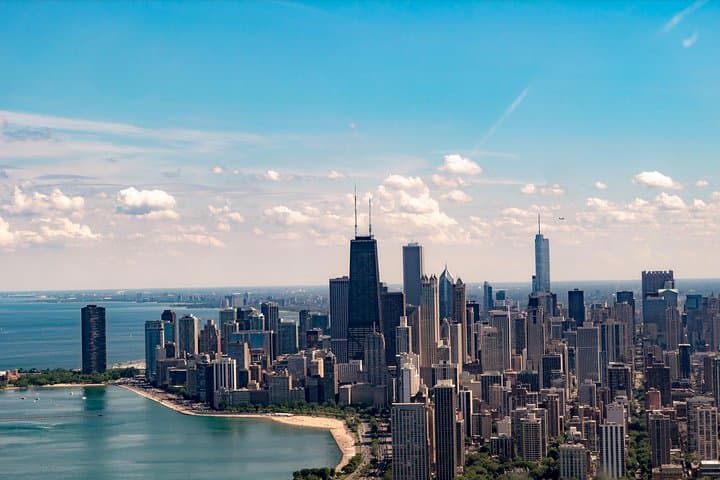
Glass and concrete fall away beneath you as the elevator rockets to the 94th floor, and the city opens like a map under your feet. From 360 CHICAGO, the shoreline of Lake Michigan dares you to look past the promenade while the grid of downtown pulls your eye along streets and river bends toward the lake.
Glass and concrete fall away beneath you as the elevator rockets to the 94th floor, and the city opens like a map under your feet. From 360 CHICAGO, the shoreline of Lake Michigan dares you to look past the promenade while the grid of downtown pulls your eye along streets and river bends toward the lake.
The John Hancock Center, completed in the late 1960s and officially 875 North Michigan Avenue, helped define Chicago’s modern skyline and remains an icon of structural expressionism. The observatory sits where urban planning, commerce, and lakefront leisure intersect; exhibits in the concourse trace neighborhood development and the city’s push to connect shoreline and street.
Geology is subtle here: glacially scoured lakefront plains meet the engineered elevations of reclaimed parkland, while wind off the lake sculpts how buildings are oriented and how views read across water and masonry. The CloudWalk and rotating Magnicity app add context to sightlines, and the optional CloudBar gives a social, late-afternoon vantage when the light shifts.
Practical notes: allow 60–240 minutes depending on crowds and upgrades; arrive early or at sunset for the best light. Tickets are mobile and time-specific—plan for a 30-minute window around your slot. Security is light but expect wait times for TILT and peak-hour queues. Use public transit or a short walk from the Magnificent Mile; bring a camera, a light layer for wind, and patience—the city’s rhythm changes by hour, and views reward timing.