THE ADVENTURE COLLECTIVE® · Independent discovery and booking for outdoor travel

Ride a 70-second elevator to 902 feet and take in a 360-degree sweep from Mt. Rainier to the San Juans. This downtown Seattle observatory pairs quick access with long-range views — ideal for tight schedules and anyone wanting a clear orientation to the region.
Ride a 70-second elevator to 902 feet and take in a 360-degree sweep from Mt. Rainier to the San Juans. This downtown Seattle observatory pairs quick access with long-range views — ideal for tight schedules and anyone wanting a clear orientation to the region.
The elevator hums, the city compresses, and in 70 seconds guests rise 73 floors to a vantage point that makes Seattle feel both intimate and vast.
Verified experiences and guided adventures in the surrounding area.
Operated by Sky View Observatory · Seattle, Washington
The elevator hums, the city compresses, and in 70 seconds guests rise 73 floors to a vantage point that makes Seattle feel both intimate and vast.
From 902 feet, Sky View Observatory at Columbia Center offers a full-circle portrait of the Pacific Northwest: Mount Rainier sits like a watchful neighbor, the Olympic Range folds into the horizon, and Elliott Bay stretches dark and restless below, daring you to trace the shipping channels. Wall murals and infographics orient visitors to peaks, islands, and neighborhoods, turning a skyline into a map you can read with your eyes.
Columbia Center itself dates to the late 1980s and is a modern marker in downtown Seattle’s commercial core; the observatory capitalizes on that history by placing urban growth beside older geological forces — the Cascade volcanoes and glacially carved waterways. Culture here is civic and maritime: ferries, markets, and coffeehouses form the human foreground to the geological backdrop.
Practicalities matter: tickets include short-stay options and modest cafe vouchers, and the space is wheelchair accessible with stroller-friendly routes. Peak light arrives at sunrise and sunset, when snow-capped peaks silhouette against shifting color; midday offers the clearest long-range visibility. Plan 60–120 minutes, bring a camera and a light jacket — wind and glass can cool the air at height. Public transit and parking are available nearby, and the observatory’s digital tools help pre-select views to prioritize. For a compact Seattle experience that pairs citycraft with mountain-scale sightlines, Sky View is efficient, elevated, and unmistakably Pacific Northwest.
easy.
1–2 hours.
Suitable for all fitness levels; minimal walking and elevator access make it accessible to most visitors
Most visitors spend 60–90 minutes, which allows for the elevator ride, a full rotation of views, and time in the exhibits or cafe.
Yes — the facility and routes are wheelchair and stroller accessible, and staff can assist with access if needed.
Yes — sunset is a popular time; book an early slot and arrive before golden hour to secure the best vantage points.
Yes — a cafe and gift shop operate at the observatory, and many ticket options include a small voucher for purchases.
Columbia Center opened in the late 1980s as one of Seattle’s tallest commercial towers; the observatory appeals to visitors seeking a quick, high-altitude orientation to the region.
Light pollution and glass reflections affect birds; minimizing flash photography and following staff guidance helps reduce impacts. Visitor volume is managed through timed tickets to limit overcrowding.
Sky View Observatory operates guided outdoor trips and adventures with an emphasis on safety, stewardship, and memorable experiences.
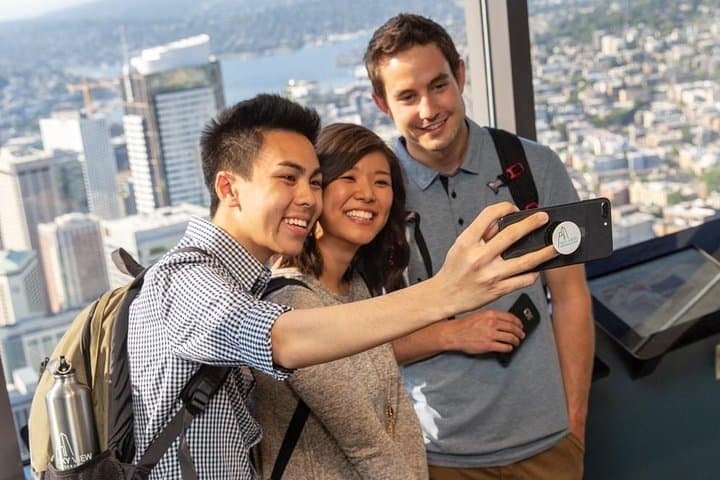
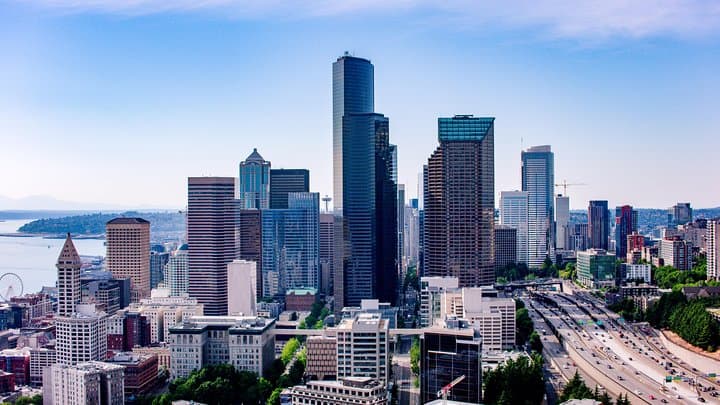
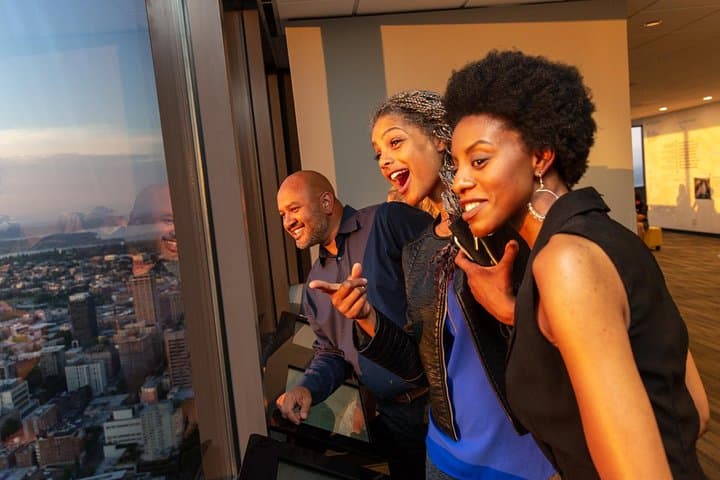
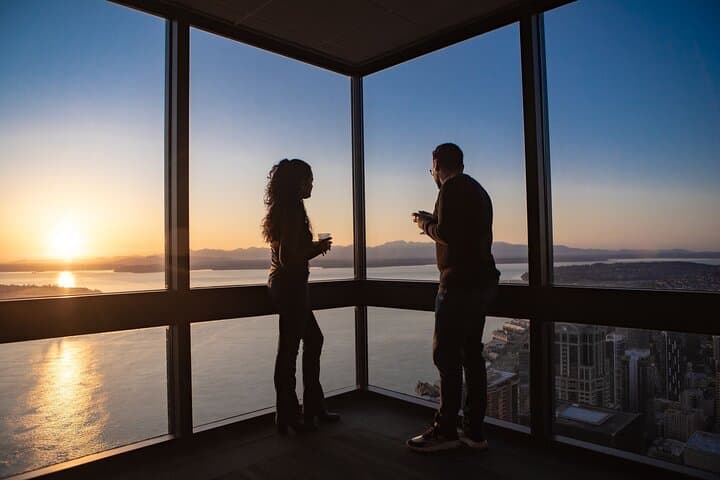
The elevator hums, the city compresses, and in 70 seconds guests rise 73 floors to a vantage point that makes Seattle feel both intimate and vast.
The elevator hums, the city compresses, and in 70 seconds guests rise 73 floors to a vantage point that makes Seattle feel both intimate and vast.
From 902 feet, Sky View Observatory at Columbia Center offers a full-circle portrait of the Pacific Northwest: Mount Rainier sits like a watchful neighbor, the Olympic Range folds into the horizon, and Elliott Bay stretches dark and restless below, daring you to trace the shipping channels. Wall murals and infographics orient visitors to peaks, islands, and neighborhoods, turning a skyline into a map you can read with your eyes.
Columbia Center itself dates to the late 1980s and is a modern marker in downtown Seattle’s commercial core; the observatory capitalizes on that history by placing urban growth beside older geological forces — the Cascade volcanoes and glacially carved waterways. Culture here is civic and maritime: ferries, markets, and coffeehouses form the human foreground to the geological backdrop.
Practicalities matter: tickets include short-stay options and modest cafe vouchers, and the space is wheelchair accessible with stroller-friendly routes. Peak light arrives at sunrise and sunset, when snow-capped peaks silhouette against shifting color; midday offers the clearest long-range visibility. Plan 60–120 minutes, bring a camera and a light jacket — wind and glass can cool the air at height. Public transit and parking are available nearby, and the observatory’s digital tools help pre-select views to prioritize. For a compact Seattle experience that pairs citycraft with mountain-scale sightlines, Sky View is efficient, elevated, and unmistakably Pacific Northwest.