THE ADVENTURE COLLECTIVE® · Independent discovery and booking for outdoor travel

Walk Skopje’s compact center with a guide and move from the Stone Bridge to the Old Bazaar and Kale Fortress in about two hours. Learn layered history, sample local flavors, and take in city views with minimal walking.
Walk Skopje’s compact center with a guide and move from the Stone Bridge to the Old Bazaar and Kale Fortress in about two hours. Learn layered history, sample local flavors, and take in city views with minimal walking.
You step off the busy boulevard and the city shifts—cobblestones underfoot, the Vardar River running low and daring you to cross toward the old quarter. In two hours a local guide threads you through plazas, domes and Ottoman brickwork; every stop is a small, stacked chapter of history.
Verified experiences and guided adventures in the surrounding area.
Operated by Opatrip.com Macedonia · Skopje, Skopje
You step off the busy boulevard and the city shifts—cobblestones underfoot, the Vardar River running low and daring you to cross toward the old quarter. In two hours a local guide threads you through plazas, domes and Ottoman brickwork; every stop is a small, stacked chapter of history.
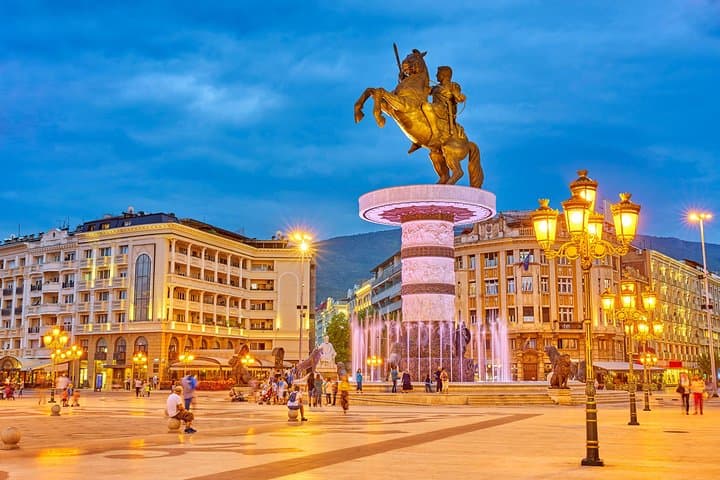
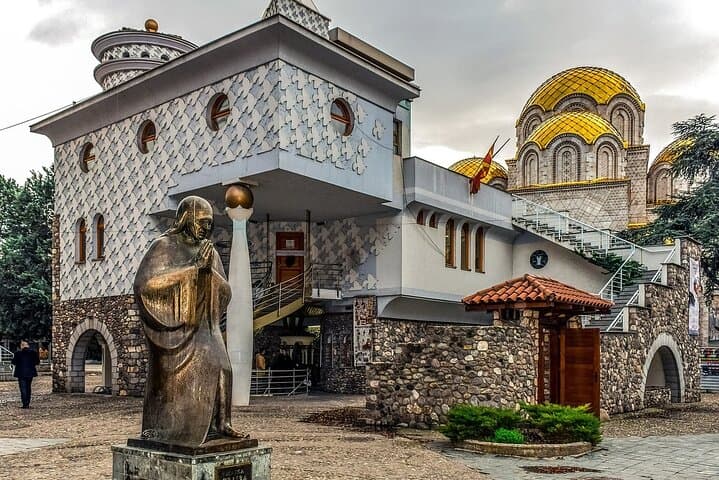
Skopje’s layers are visible: Roman Scupi stones reused in the Fortress (Kale), Ottoman hammams and mosques concentrated in the Old Bazaar, and 20th‑century neoclassical façades around Macedonia Square. The Stone Bridge—an iconic span between the river and the bazaar—dates to the Ottoman period and serves as the city’s symbolic spine. Culture here moves in short radii: markets selling ajvar and burek, craftsmen in narrow lanes, and references to Mother Teresa, the city’s most famous native.
The walk itself is low‑impact: roughly 1.5–3 km of mostly paved streets with a handful of steps at Kale and uneven stones in the bazaar, and only modest elevation gain (under 60 m) if you climb to the fortress for the panoramic view.
Practical guidance: bring comfortable, closed shoes for cobbles, a refillable water bottle, and a lightweight jacket for breezes off the Vardar. Midday can be hot in summer—aim for morning or late afternoon for softer light and smaller crowds. Allow time to linger in the bazaar if you want regional snacks or a quick museum stop; the guide’s stories are best absorbed when you pause. This tour is an efficient, walkable primer to Skopje’s history and present—ideal for first‑time visitors who want context as well as scenery.
easy.
2 hours.
Suitable for all fitness levels; involves 1.5–3 km of walking on paved and cobbled streets with minimal elevation gain.
The scheduled duration is about two hours, covering roughly 1.5–3 km with multiple short stops; expect some uneven surfaces and a small climb to Kale.
The tour is labeled easy and suitable for most fitness levels, but the Old Bazaar has cobbles and Kale includes steps—wheelchair access is limited in some areas.
Guides typically speak English; check the booking page or ask the operator if you need another language.
Tours may run in light rain—bring a rain layer; operators generally allow cancellation for heavy weather with notice per their policy.
Skopje grew from the Roman city of Scupi; Ottoman builders reshaped much of the bazaar and the Stone Bridge became a central city link during that era.
Support small local businesses in the bazaar, avoid littering historic sites, and follow guidance to preserve fragile stonework at Kale.
Opatrip.com Macedonia operates guided outdoor trips and adventures with an emphasis on safety, stewardship, and memorable experiences.

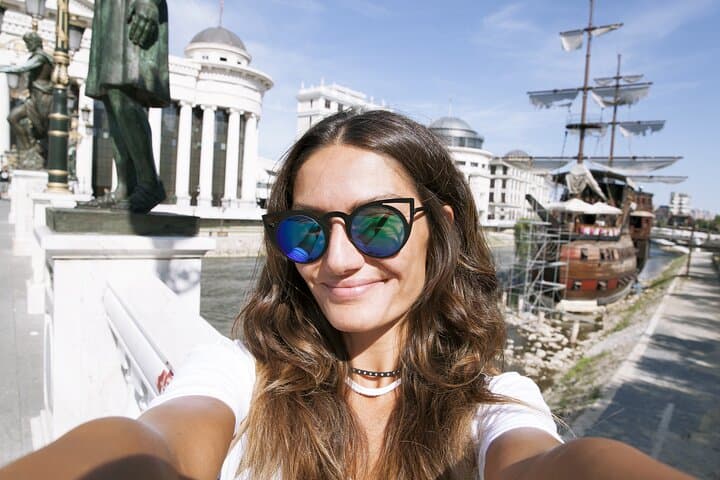
You step off the busy boulevard and the city shifts—cobblestones underfoot, the Vardar River running low and daring you to cross toward the old quarter. In two hours a local guide threads you through plazas, domes and Ottoman brickwork; every stop is a small, stacked chapter of history.
You step off the busy boulevard and the city shifts—cobblestones underfoot, the Vardar River running low and daring you to cross toward the old quarter. In two hours a local guide threads you through plazas, domes and Ottoman brickwork; every stop is a small, stacked chapter of history.
Skopje’s layers are visible: Roman Scupi stones reused in the Fortress (Kale), Ottoman hammams and mosques concentrated in the Old Bazaar, and 20th‑century neoclassical façades around Macedonia Square. The Stone Bridge—an iconic span between the river and the bazaar—dates to the Ottoman period and serves as the city’s symbolic spine. Culture here moves in short radii: markets selling ajvar and burek, craftsmen in narrow lanes, and references to Mother Teresa, the city’s most famous native.
The walk itself is low‑impact: roughly 1.5–3 km of mostly paved streets with a handful of steps at Kale and uneven stones in the bazaar, and only modest elevation gain (under 60 m) if you climb to the fortress for the panoramic view.
Practical guidance: bring comfortable, closed shoes for cobbles, a refillable water bottle, and a lightweight jacket for breezes off the Vardar. Midday can be hot in summer—aim for morning or late afternoon for softer light and smaller crowds. Allow time to linger in the bazaar if you want regional snacks or a quick museum stop; the guide’s stories are best absorbed when you pause. This tour is an efficient, walkable primer to Skopje’s history and present—ideal for first‑time visitors who want context as well as scenery.