THE ADVENTURE COLLECTIVE® · Independent discovery and booking for outdoor travel

Leave Queenstown for a four-hour 4WD into Skippers Canyon—where narrow cliff roads, hand-cut mining relics and the whitewater Shotover River create a dramatic half-day adventure. Expect short walks, a picnic at Skippers School, and landscape views that reward sensible footwear and a steady camera.
Leave Queenstown for a four-hour 4WD into Skippers Canyon—where narrow cliff roads, hand-cut mining relics and the whitewater Shotover River create a dramatic half-day adventure. Expect short walks, a picnic at Skippers School, and landscape views that reward sensible footwear and a steady camera.
You start in Queenstown, the lake at your back and the mountains pressing the skyline, then the 4WD tucks onto narrow ribbon of road and the town’s noise peels away. The vehicle climbs, hairpins carved into schist and gravel, and the Shotover River below begins to hurry — daring you to look down. Short walks break the drive: a hand-cut track to a viewpoint, a wooden clearing at Skippers School where a picnic appears like a small, civilized island in the raw canyon.
Verified experiences and guided adventures in the surrounding area.
Operated by Queenstown Heritage Tours · Queenstown, Otago
You start in Queenstown, the lake at your back and the mountains pressing the skyline, then the 4WD tucks onto narrow ribbon of road and the town’s noise peels away. The vehicle climbs, hairpins carved into schist and gravel, and the Shotover River below begins to hurry — daring you to look down. Short walks break the drive: a hand-cut track to a viewpoint, a wooden clearing at Skippers School where a picnic appears like a small, civilized island in the raw canyon.
Skippers Canyon is landscape with an attitude. It was reshaped by the 1860s gold rush when prospectors and contractors hacked roads into steep faces, dynamiting benches and hauling stone by hand. The raw geology—grey schist veined with quartz—creates cliffs and narrow gorges that channel the Shotover River into whitewater runs. Those river currents did more than carve rock; they pushed the miners farther into the hills and seeded a history of grit, sluices and collapsed shafts you can still glimpse among the scrub.
Culturally the canyon sits on land historically travelled by Ngāi Tahu and later transformed by European mining settlements. Small relics—rusted gear, stone foundations—dot the slopes; your guide frames those artifacts as both human endeavor and warning. The road itself is an artifact: single-lane, steep, and often cut perilously close to the drop. It’s part engineering oddity, part theatrical stage for the views.
Practically, this is a four-hour loop: roughly 32 km of driving from Queenstown into the canyon with multiple photo stops and a 30-minute break at Skippers School for homemade tea and cheese. Most of the route is unsealed and narrow; drivers experienced with local conditions pilot the vehicle, and groups are intentionally small to manage stops and safety. Weather changes fast up here—wind, sun, and sudden squalls are all part of the rhythm—so layers matter.
Bring sensible outdoor footwear for the short walks, a windproof layer, and a camera with wide-angle capability; the gorge rewards scale shots. If you’re prone to motion sickness, take precautions—some sections are twisty and exposed. Respect private property and fragile remnants: the canyon’s ecology is recovering from historical disturbance and benefits from low-impact visits.
End the tour back in Queenstown with a clearer sense of the land’s appetite—how the river and miners each shaped the canyon—and, if you time it right, an afternoon light that turns the cliffs copper. This half-day is equal parts geology lesson, photo run, and a practical reminder that some landscapes demand careful travel and a good pair of shoes.
easy.
4 hours.
Suitable for most fitness levels; able to handle short uneven walks and standing during photo stops.
The tour lasts about 4 hours, includes hotel pickup/drop-off, a local guide, air-conditioned vehicle transport, and a picnic with homemade cheese and refreshments at Skippers School.
The tour uses experienced drivers and 4WD vehicles; the historic road is narrow and unsealed and is not recommended for casual self-drive in standard cars.
Walks are brief and suitable for most visitors—paths are uneven but low-grade; sensible shoes are advised.
Yes; the tour is labeled suitable for all fitness levels, but young children should be supervised near cliff edges and river viewpoints.
A light jacket, sensible footwear, sunscreen, a camera, and any personal medication; the operator also recommends being ready at reception for pickup.
Full refund if canceled at least 24 hours before departure; tours may be canceled due to bad weather or insufficient travelers.
Skippers Canyon was thrust into modern form during the 1860s Otago gold rush; miners and contractors hand-cut roads and benches into steep schist to access gold-bearing terraces.
The canyon’s vegetation and historical sites are sensitive—stay on paths, avoid disturbing relics, and don’t feed wildlife to support ecological recovery.
Queenstown Heritage Tours operates guided outdoor trips and adventures with an emphasis on safety, stewardship, and memorable experiences.
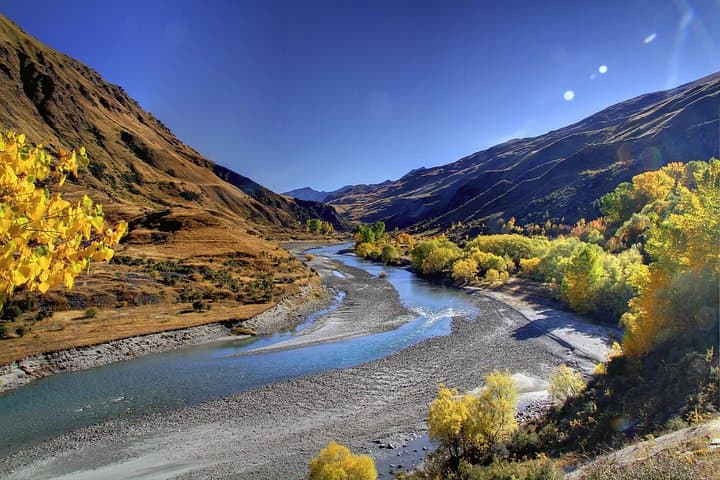
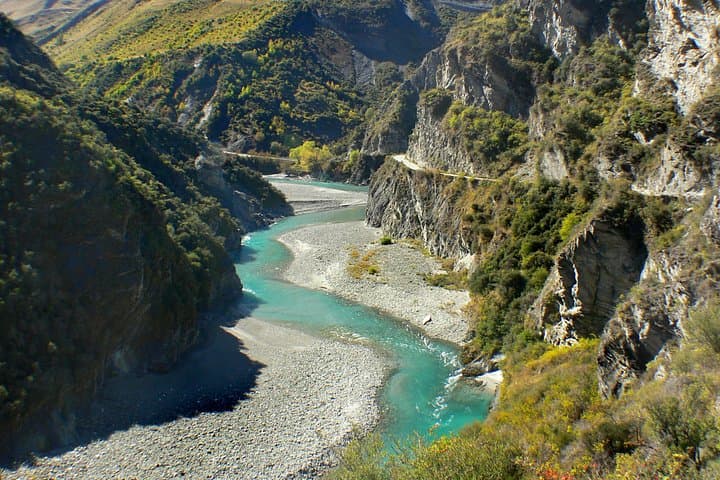
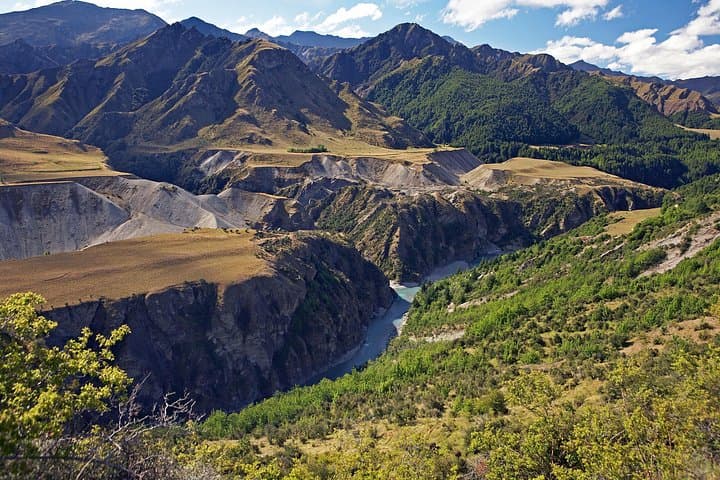
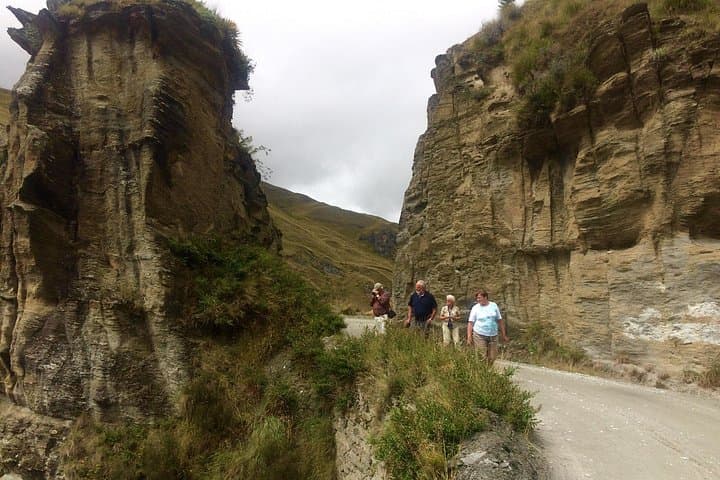
You start in Queenstown, the lake at your back and the mountains pressing the skyline, then the 4WD tucks onto narrow ribbon of road and the town’s noise peels away. The vehicle climbs, hairpins carved into schist and gravel, and the Shotover River below begins to hurry — daring you to look down. Short walks break the drive: a hand-cut track to a viewpoint, a wooden clearing at Skippers School where a picnic appears like a small, civilized island in the raw canyon.
You start in Queenstown, the lake at your back and the mountains pressing the skyline, then the 4WD tucks onto narrow ribbon of road and the town’s noise peels away. The vehicle climbs, hairpins carved into schist and gravel, and the Shotover River below begins to hurry — daring you to look down. Short walks break the drive: a hand-cut track to a viewpoint, a wooden clearing at Skippers School where a picnic appears like a small, civilized island in the raw canyon.
Skippers Canyon is landscape with an attitude. It was reshaped by the 1860s gold rush when prospectors and contractors hacked roads into steep faces, dynamiting benches and hauling stone by hand. The raw geology—grey schist veined with quartz—creates cliffs and narrow gorges that channel the Shotover River into whitewater runs. Those river currents did more than carve rock; they pushed the miners farther into the hills and seeded a history of grit, sluices and collapsed shafts you can still glimpse among the scrub.
Culturally the canyon sits on land historically travelled by Ngāi Tahu and later transformed by European mining settlements. Small relics—rusted gear, stone foundations—dot the slopes; your guide frames those artifacts as both human endeavor and warning. The road itself is an artifact: single-lane, steep, and often cut perilously close to the drop. It’s part engineering oddity, part theatrical stage for the views.
Practically, this is a four-hour loop: roughly 32 km of driving from Queenstown into the canyon with multiple photo stops and a 30-minute break at Skippers School for homemade tea and cheese. Most of the route is unsealed and narrow; drivers experienced with local conditions pilot the vehicle, and groups are intentionally small to manage stops and safety. Weather changes fast up here—wind, sun, and sudden squalls are all part of the rhythm—so layers matter.
Bring sensible outdoor footwear for the short walks, a windproof layer, and a camera with wide-angle capability; the gorge rewards scale shots. If you’re prone to motion sickness, take precautions—some sections are twisty and exposed. Respect private property and fragile remnants: the canyon’s ecology is recovering from historical disturbance and benefits from low-impact visits.
End the tour back in Queenstown with a clearer sense of the land’s appetite—how the river and miners each shaped the canyon—and, if you time it right, an afternoon light that turns the cliffs copper. This half-day is equal parts geology lesson, photo run, and a practical reminder that some landscapes demand careful travel and a good pair of shoes.