THE ADVENTURE COLLECTIVE® · Independent discovery and booking for outdoor travel

A private two-day circuit from Aurangabad that opens Ajanta’s painted caves, Ellora’s monolithic masterpieces and the Mughal-era Bibi Ka Maqbara with skip-the-line entry and a private AC car. Ideal for travelers seeking concentrated cultural and architectural exploration with minimal logistics.
A private two-day circuit from Aurangabad that opens Ajanta’s painted caves, Ellora’s monolithic masterpieces and the Mughal-era Bibi Ka Maqbara with skip-the-line entry and a private AC car. Ideal for travelers seeking concentrated cultural and architectural exploration with minimal logistics.
You arrive before sunrise, the private AC car cutting through the early light as the road rises toward Ajanta’s horseshoe gorge. At the viewing point the cliff faces hold their secret—panels of ochre and lapis still lit by the soft morning sun. Inside the caves, painted panels and carved stupas command a hush; the air and stone seem to remember the hands that shaped them.
Verified experiences and guided adventures in the surrounding area.
Operated by Heritage of India · Aurangabad, Maharashtra
You arrive before sunrise, the private AC car cutting through the early light as the road rises toward Ajanta’s horseshoe gorge. At the viewing point the cliff faces hold their secret—panels of ochre and lapis still lit by the soft morning sun. Inside the caves, painted panels and carved stupas command a hush; the air and stone seem to remember the hands that shaped them.
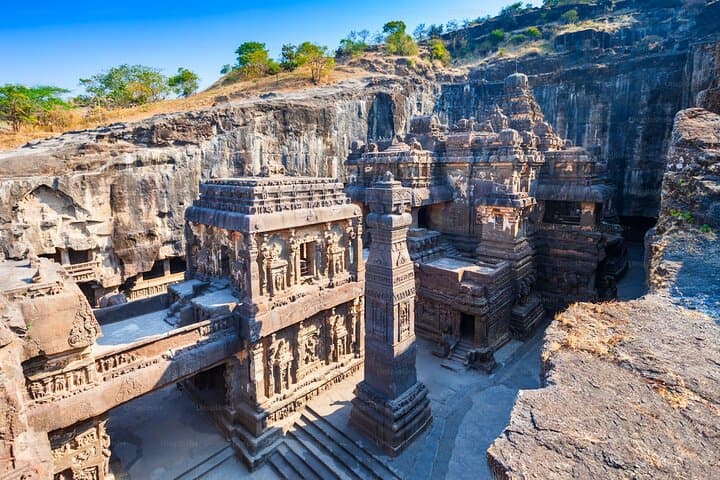
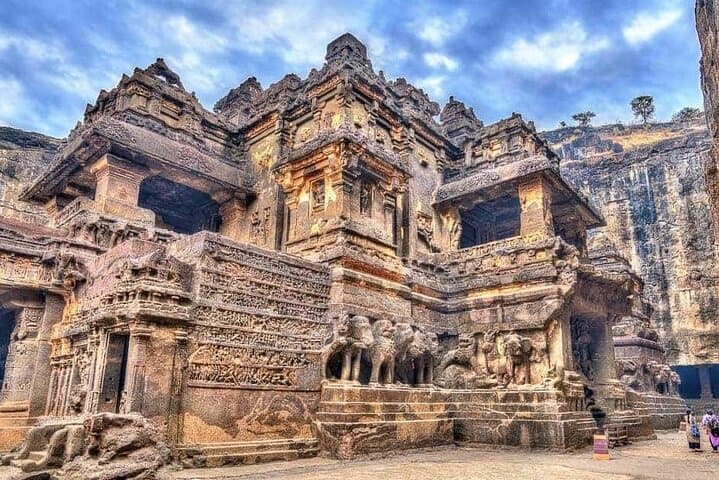
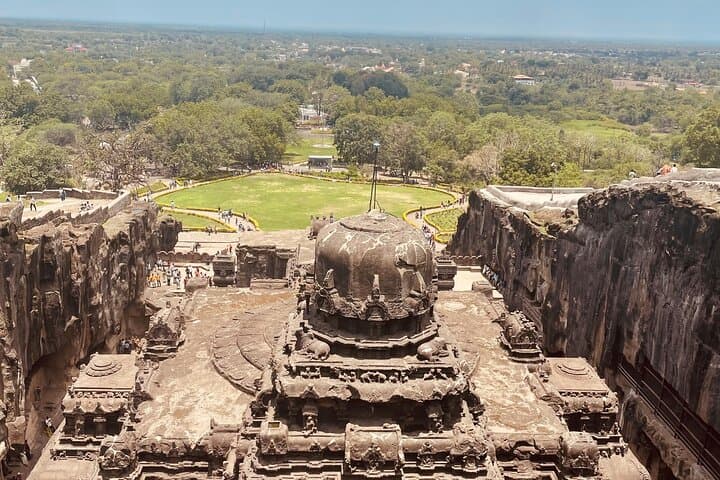
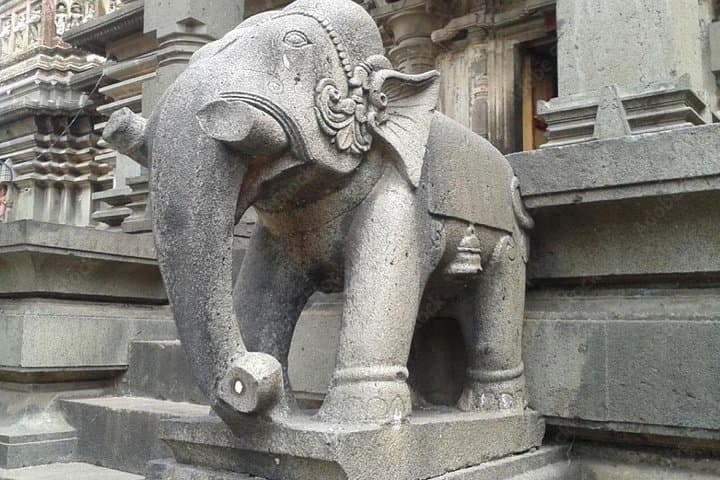
Ajanta’s 30 rock-cut caves date to as early as the 2nd century BCE and are set into a gorge formed by a tributary of the Waghora River. Ellora’s 34 caves, carved between the 6th and 10th centuries CE, range religiously and stylistically—Hindu, Buddhist and Jain—with the monolithic Kailasa Temple the clearest display of ancient engineering. Bibi Ka Maqbara, Aurangabad’s 17th-century mausoleum, offers Mughal-era symmetry and gardens that contrast with the raw rockwork of the caves. ASI manages visitor access; local guides can decode iconography and construction techniques.
Practical guidance: the tour covers long days with uneven steps and narrow passages—expect walking on carved stone, occasional steep inclines and heat. Start early to avoid the sun and crowds, wear sturdy closed shoes and sun protection, and bring a reusable water bottle (one complimentary bottle is often included). Photography is allowed in many areas but flash and touching frescoes are prohibited. If you prefer context, hire an ASI-approved guide on-site to unpack dates, inscriptions and sculptural programs. This private, skip-the-line option keeps logistics simple so you can focus on the scale and detail of some of India’s most accomplished rock-cut monuments.
moderate.
2 days (approx. 8–10 hours per day).
Suitable for travelers with moderate fitness who can manage uneven stone steps and sustained walking.
Yes — this private tour includes entrance fees to Ajanta, Ellora and Bibi Ka Maqbara as stated in the inclusions.
Yes — ASI-approved guides are available on-site at Ajanta and Ellora and can be hired directly for detailed interpretations.
The tour involves a lot of walking and stone steps; it’s suitable for children and older travelers with moderate mobility but not recommended for those with serious mobility or heart issues.
The provided driver typically speaks English and Hindi, per the tour inclusions; confirm any additional language needs before booking.
Ajanta’s painted murals span centuries and record Buddhist monastic life, while Ellora reflects a multi-faith carving tradition culminating in the single-rock Kailasa Temple.
Sites are managed by the Archaeological Survey of India with strict visitor rules to protect pigment, plaster and carved surfaces; follow signposted routes and avoid touching artwork.
Heritage of India operates guided outdoor trips and adventures with an emphasis on safety, stewardship, and memorable experiences.
You arrive before sunrise, the private AC car cutting through the early light as the road rises toward Ajanta’s horseshoe gorge. At the viewing point the cliff faces hold their secret—panels of ochre and lapis still lit by the soft morning sun. Inside the caves, painted panels and carved stupas command a hush; the air and stone seem to remember the hands that shaped them.
You arrive before sunrise, the private AC car cutting through the early light as the road rises toward Ajanta’s horseshoe gorge. At the viewing point the cliff faces hold their secret—panels of ochre and lapis still lit by the soft morning sun. Inside the caves, painted panels and carved stupas command a hush; the air and stone seem to remember the hands that shaped them.
Ajanta’s 30 rock-cut caves date to as early as the 2nd century BCE and are set into a gorge formed by a tributary of the Waghora River. Ellora’s 34 caves, carved between the 6th and 10th centuries CE, range religiously and stylistically—Hindu, Buddhist and Jain—with the monolithic Kailasa Temple the clearest display of ancient engineering. Bibi Ka Maqbara, Aurangabad’s 17th-century mausoleum, offers Mughal-era symmetry and gardens that contrast with the raw rockwork of the caves. ASI manages visitor access; local guides can decode iconography and construction techniques.
Practical guidance: the tour covers long days with uneven steps and narrow passages—expect walking on carved stone, occasional steep inclines and heat. Start early to avoid the sun and crowds, wear sturdy closed shoes and sun protection, and bring a reusable water bottle (one complimentary bottle is often included). Photography is allowed in many areas but flash and touching frescoes are prohibited. If you prefer context, hire an ASI-approved guide on-site to unpack dates, inscriptions and sculptural programs. This private, skip-the-line option keeps logistics simple so you can focus on the scale and detail of some of India’s most accomplished rock-cut monuments.