THE ADVENTURE COLLECTIVE® · Independent discovery and booking for outdoor travel

Skip the ticket line and head up Mount Vesuvius for a short, dramatic climb to the crater rim. This practical guide covers what to expect on the trail, historical context, and essential tips before you go.
Skip the ticket line and head up Mount Vesuvius for a short, dramatic climb to the crater rim. This practical guide covers what to expect on the trail, historical context, and essential tips before you go.
You step out of the shuttle’s hum into a scrubbed wind that tastes faintly of sulfur; the cone of Mount Vesuvius looms, dark against a blue Campanian sky. The path from the main car park climbs in short, sharp pitches over compacted volcanic rock and fine ash, and the crater soon opens overhead — a raw, steam‑tinged bowl that seems to breathe.
Verified experiences and guided adventures in the surrounding area.
Operated by Taxi Naples · Naples, Campania
You step out of the shuttle’s hum into a scrubbed wind that tastes faintly of sulfur; the cone of Mount Vesuvius looms, dark against a blue Campanian sky. The path from the main car park climbs in short, sharp pitches over compacted volcanic rock and fine ash, and the crater soon opens overhead — a raw, steam‑tinged bowl that seems to breathe.
Vesuvius is the region’s defining geology: a stratovolcano whose 79 AD eruption buried Pompeii and Herculaneum and reshaped the coastline. The trail follows lava- and ash‑deposited slopes cut by centuries of smaller eruptions, offering views back toward the Bay of Naples and across olive terraces that speak to local agricultural traditions.
Expect a short but focused walk: roughly 1 km one-way from the upper lot to the crater rim with about 120–200 m of elevation gain on loose, sometimes steep terrain. The rim trail delivers wide exposures and photographic angles into the smoking caldera and across Naples; the park enforces path limits for safety and conservation. Cultural context is visible in roadside archaeological markers and the mountain’s role in Campanian identity — guides often point out ancient Roman quarry scars and pastoral land use below.
Practical guidance: bring layered wind protection, sturdy grippy footwear, and at least 1–2 liters of water; afternoons can be hot and windy, mornings cooler. Public transport reaches the park edge but the upper access road may require a transfer or walk. Check park opening status — access closes for volcanic alerts and bad weather — and allow 2–4 hours for transit, hike, time at the rim, and return.
moderate.
3–4 hours.
Moderate — comfortable walking ability for short uphill sections and standing at exposed viewpoints.
Yes — this skip‑the‑line ticket grants access to the park entrance and reduces wait time at busier times; mobile or paper tickets are accepted.
Portions are stroller‑accessible near the lower visitor areas, but the final ascent to the crater rim is steep and on loose terrain and is not suitable for strollers; children should be supervised.
Public transport options and private shuttles serve the park edge; many visitors take a train to Ercolano or Pompeii and a connecting bus or shuttle to the park entrance, then walk or transfer to the upper lot.
Yes — the park closes segments or the whole site during volcanic alerts, bad weather, or safety operations; always check official park notices before heading up.
Mount Vesuvius’ AD 79 eruption buried nearby Roman towns; the volcano’s activity has shaped local settlement patterns and agricultural terraces over millennia.
Vesuvius National Park manages foot traffic to protect fragile volcanic soils and endemic plants; stick to marked trails and pack out waste to limit erosion and habitat disturbance.
Taxi Naples operates guided outdoor trips and adventures with an emphasis on safety, stewardship, and memorable experiences.
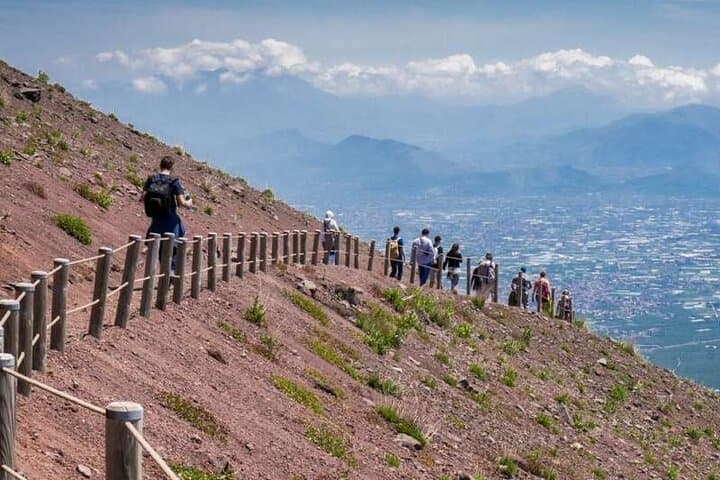
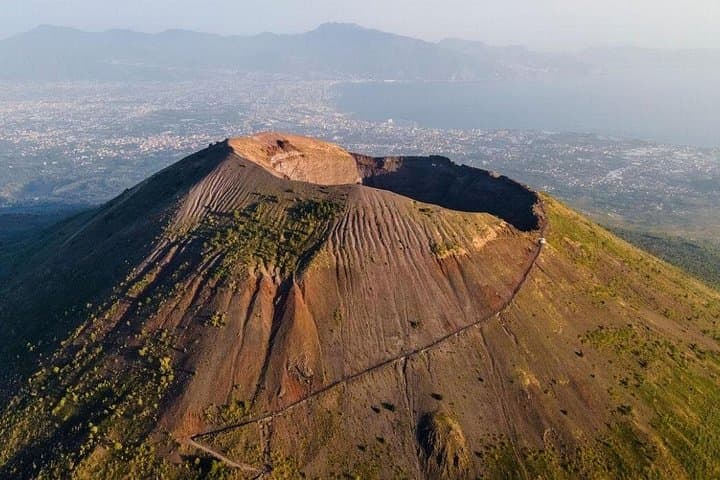
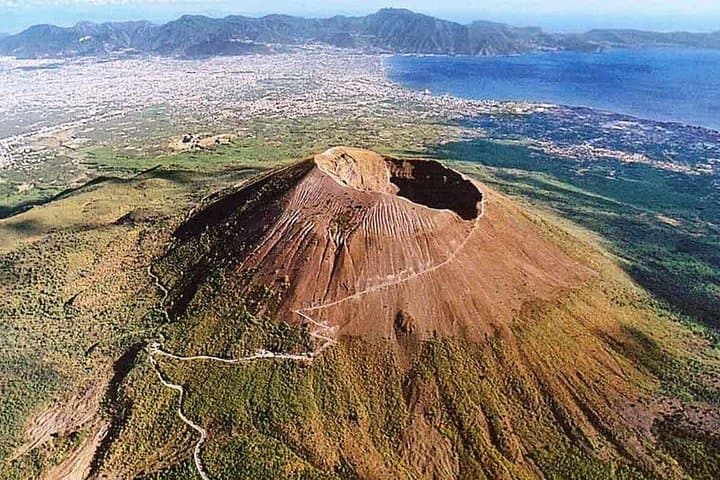

You step out of the shuttle’s hum into a scrubbed wind that tastes faintly of sulfur; the cone of Mount Vesuvius looms, dark against a blue Campanian sky. The path from the main car park climbs in short, sharp pitches over compacted volcanic rock and fine ash, and the crater soon opens overhead — a raw, steam‑tinged bowl that seems to breathe.
You step out of the shuttle’s hum into a scrubbed wind that tastes faintly of sulfur; the cone of Mount Vesuvius looms, dark against a blue Campanian sky. The path from the main car park climbs in short, sharp pitches over compacted volcanic rock and fine ash, and the crater soon opens overhead — a raw, steam‑tinged bowl that seems to breathe.
Vesuvius is the region’s defining geology: a stratovolcano whose 79 AD eruption buried Pompeii and Herculaneum and reshaped the coastline. The trail follows lava- and ash‑deposited slopes cut by centuries of smaller eruptions, offering views back toward the Bay of Naples and across olive terraces that speak to local agricultural traditions.
Expect a short but focused walk: roughly 1 km one-way from the upper lot to the crater rim with about 120–200 m of elevation gain on loose, sometimes steep terrain. The rim trail delivers wide exposures and photographic angles into the smoking caldera and across Naples; the park enforces path limits for safety and conservation. Cultural context is visible in roadside archaeological markers and the mountain’s role in Campanian identity — guides often point out ancient Roman quarry scars and pastoral land use below.
Practical guidance: bring layered wind protection, sturdy grippy footwear, and at least 1–2 liters of water; afternoons can be hot and windy, mornings cooler. Public transport reaches the park edge but the upper access road may require a transfer or walk. Check park opening status — access closes for volcanic alerts and bad weather — and allow 2–4 hours for transit, hike, time at the rim, and return.