THE ADVENTURE COLLECTIVE® · Independent discovery and booking for outdoor travel

Bypass the queues and move straight into one of Paris’s most commanding monuments. This fast‑track ticket gets you to Napoleon’s tomb and the Musée de l’Armée so you can spend time with the artifacts, not the line.
Bypass the queues and move straight into one of Paris’s most commanding monuments. This fast‑track ticket gets you to Napoleon’s tomb and the Musée de l’Armée so you can spend time with the artifacts, not the line.
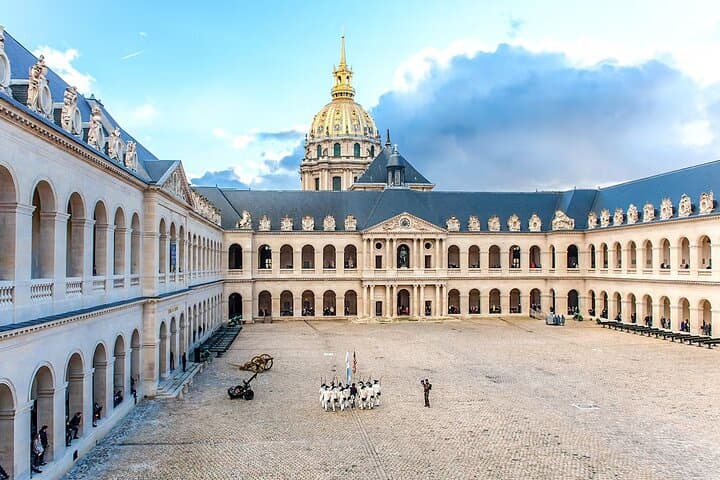
You step out of the Metro at Varenne and the square opens: a low horizon of gilded dome and stone courtyards, the air carrying the faint clink of tourist footsteps and distant traffic. The Dôme des Invalides rises ahead, its gold leaf catching midday light, while cannon-lined courtyards pace the approach like quiet guardians.
Verified experiences and guided adventures in the surrounding area.
Operated by Trip Knox Ltd · Paris, Île-de-France
You step out of the Metro at Varenne and the square opens: a low horizon of gilded dome and stone courtyards, the air carrying the faint clink of tourist footsteps and distant traffic. The Dôme des Invalides rises ahead, its gold leaf catching midday light, while cannon-lined courtyards pace the approach like quiet guardians.
Built in the late 17th century by Louis XIV as a home for wounded soldiers, the Invalides complex now folds military history into Parisian life. Geology here is subtle—limestone façades weathered to warm honey tones—and the buildings reflect centuries of architectural adaptation from Baroque grandeur to 19th‑century funerary monument. Culture collides with history: marble sarcophagi, uniforms, and relief maps that chart campaigns that shaped Europe.
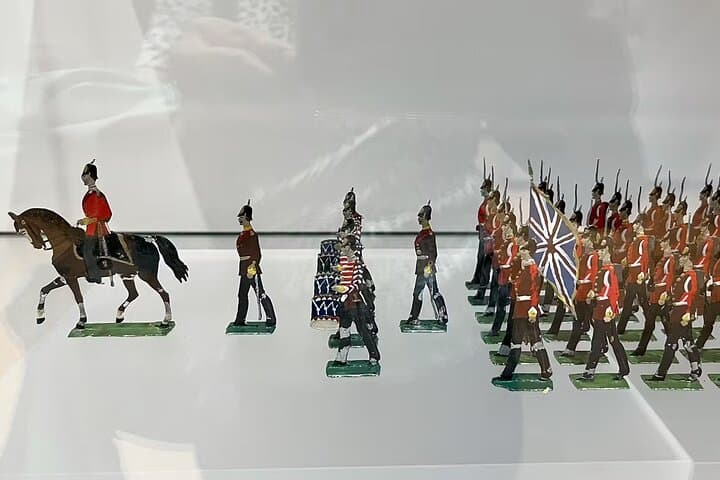
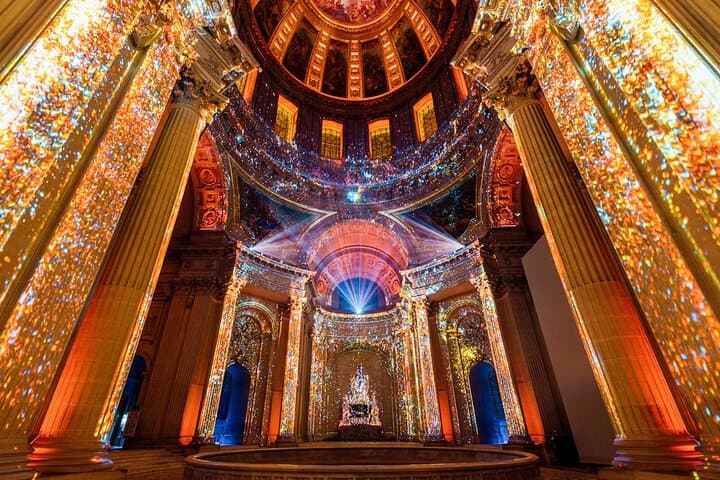
Inside, the tomb of Napoleon dominates the Dôme’s central space: bronze and porphyry, deliberate and heavy with ceremony. The Musée de l’Armée lays out weaponry, uniforms, and immersive exhibits across vaulted galleries; smaller collections—the Museum of Relief Maps and the Museum of the Order of Liberation—reward curious detours.
Practicalities: skip-the-line tickets save queue time, but plan 1–3 hours to move through at a steady pace. Peak windows are late morning and late afternoon; consider starting with the dome to catch light on the sarcophagus, then walk the galleries. Bags may be checked and security is strict—travel light. Rest breaks are plentiful: the courtyards offer benches and snowball-busy pigeons. For photographers, natural light is strong in the dome but flash and tripods are restricted. Take comfortable shoes, a water bottle, and a printed or mobile ticket ready for quick entry—then let the stones and displays do the rest.
easy.
1–3 hours.
Suitable for all fitness levels; expect standing and walking on hard surfaces.
Tickets provide fast‑track museum entry but you still pass through standard security screening on site.
Major areas including the Musée de l’Armée and the Dôme are accessible, though some historic stairways may require alternate routes—ask staff for assistance.
Yes; this ticket includes access to the Dôme (Napoleon’s tomb), the Army Museum, the Museum of Relief Maps, and the Museum of the Order of Liberation as listed.
This is a skip‑the‑line admission ticket only; guided tours are not included unless explicitly stated at booking.
The Hôtel national des Invalides was commissioned by Louis XIV in 1670 as a veterans’ hospital and later became the burial site for Napoleon Bonaparte in 1840.
The site manages visitor flow to protect delicate interiors and conservation labs monitor humidity and light to preserve uniforms, fabrics, and metals.
Trip Knox Ltd operates guided outdoor trips and adventures with an emphasis on safety, stewardship, and memorable experiences.
You step out of the Metro at Varenne and the square opens: a low horizon of gilded dome and stone courtyards, the air carrying the faint clink of tourist footsteps and distant traffic. The Dôme des Invalides rises ahead, its gold leaf catching midday light, while cannon-lined courtyards pace the approach like quiet guardians.
You step out of the Metro at Varenne and the square opens: a low horizon of gilded dome and stone courtyards, the air carrying the faint clink of tourist footsteps and distant traffic. The Dôme des Invalides rises ahead, its gold leaf catching midday light, while cannon-lined courtyards pace the approach like quiet guardians.
Built in the late 17th century by Louis XIV as a home for wounded soldiers, the Invalides complex now folds military history into Parisian life. Geology here is subtle—limestone façades weathered to warm honey tones—and the buildings reflect centuries of architectural adaptation from Baroque grandeur to 19th‑century funerary monument. Culture collides with history: marble sarcophagi, uniforms, and relief maps that chart campaigns that shaped Europe.
Inside, the tomb of Napoleon dominates the Dôme’s central space: bronze and porphyry, deliberate and heavy with ceremony. The Musée de l’Armée lays out weaponry, uniforms, and immersive exhibits across vaulted galleries; smaller collections—the Museum of Relief Maps and the Museum of the Order of Liberation—reward curious detours.
Practicalities: skip-the-line tickets save queue time, but plan 1–3 hours to move through at a steady pace. Peak windows are late morning and late afternoon; consider starting with the dome to catch light on the sarcophagus, then walk the galleries. Bags may be checked and security is strict—travel light. Rest breaks are plentiful: the courtyards offer benches and snowball-busy pigeons. For photographers, natural light is strong in the dome but flash and tripods are restricted. Take comfortable shoes, a water bottle, and a printed or mobile ticket ready for quick entry—then let the stones and displays do the rest.