THE ADVENTURE COLLECTIVE® · Independent discovery and booking for outdoor travel

Step into streets frozen by the eruption of Vesuvius and follow an archaeology-trained guide through Pompeii’s forum, baths, and houses. This skip-the-line half-day tour pairs expert narration with efficient access so you spend more time exploring and less time waiting.
Step into streets frozen by the eruption of Vesuvius and follow an archaeology-trained guide through Pompeii’s forum, baths, and houses. This skip-the-line half-day tour pairs expert narration with efficient access so you spend more time exploring and less time waiting.
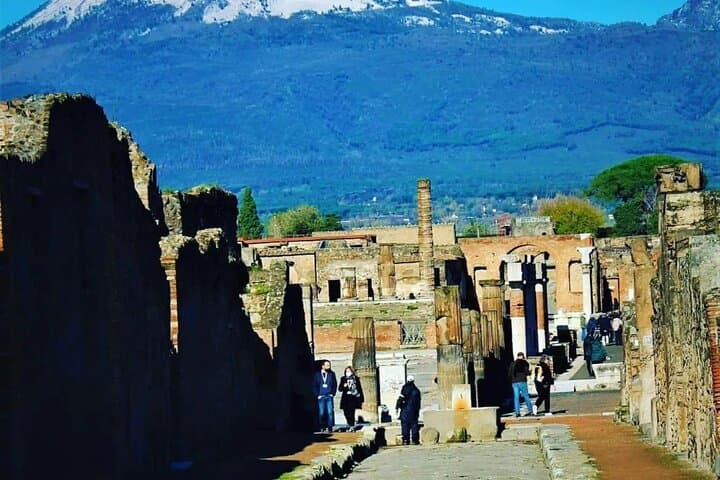
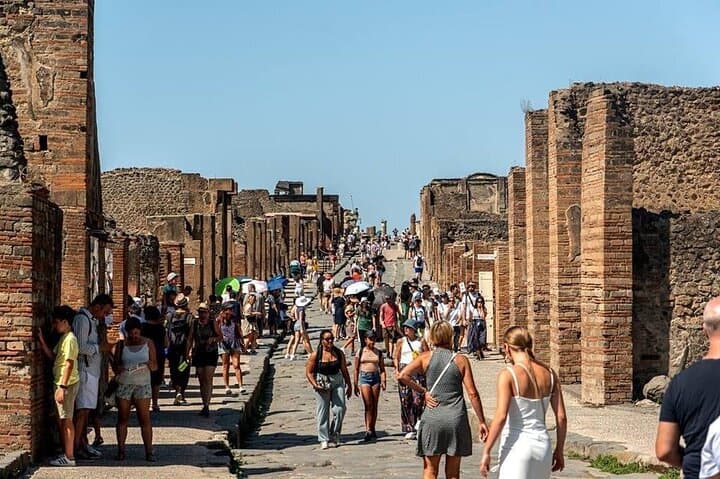
You step through Porta Marina and the city opens like a map of ordinary life paused in ash: narrow streets rimmed with stone shops, mosaicked thresholds, and the occasional oven blackened from a day’s commerce. Mount Vesuvius keeps watch on the horizon, its bulk a geological punctuation to the human stories underfoot.
Verified experiences and guided adventures in the surrounding area.
Operated by Karmela Tour · Pompeii, Campania
You step through Porta Marina and the city opens like a map of ordinary life paused in ash: narrow streets rimmed with stone shops, mosaicked thresholds, and the occasional oven blackened from a day’s commerce. Mount Vesuvius keeps watch on the horizon, its bulk a geological punctuation to the human stories underfoot.
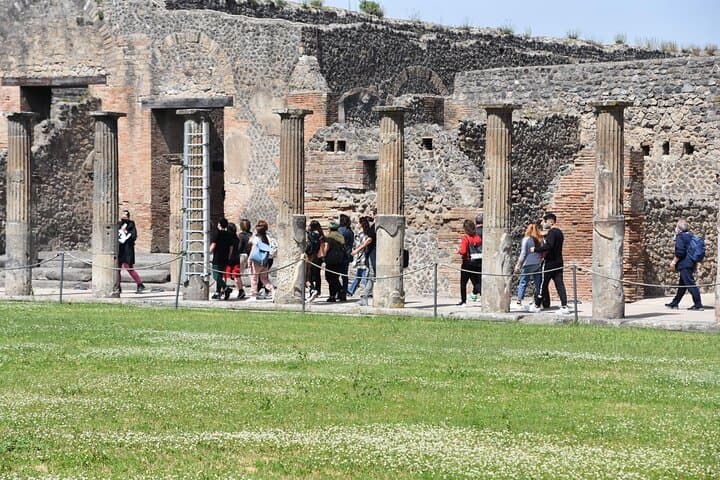
Pompeii fell under volcanic ash in 79 AD, an event recorded by Pliny the Younger and slowly revealed again after excavations began in 1748 under Charles III. The compact site preserves Roman urban planning—forums, thermal baths, theaters, and insulae—because volcanic pumice and pyroclastic flow smothered organic decay and sealed painted plaster and household items for centuries.
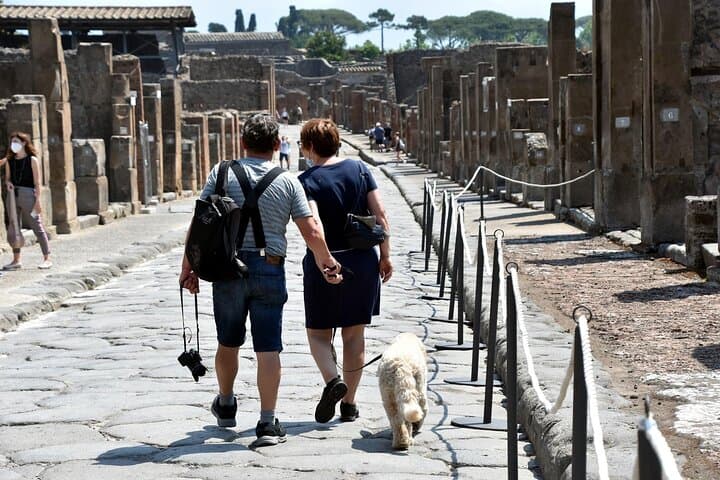
A guided two-hour walk with an archaeology-trained local turns ruins into routine: you’ll read inscriptions, stand in an atrium, and watch a guide point out construction techniques, social cues in frescoes, and the traces of daily commerce at thermopolia. The route is largely flat but surfaced in ancient basalt and repaired walkways; shaded sections alternate with open squares where sun and wind accentuate the exposed stone.
Plan practically: the skip-the-line ticket saves waiting at peak times, the tour is wheelchair-accessible on designated routes, and early morning slots cut heat and crowds. Bring sturdy shoes, a refillable water bottle, sun protection, and respect conservation rules—no touching frescoes or climbing structures. With clear context from an expert guide, two hours here is less a checklist and more a focused excavation of life before the eruption—compact, vivid, and deeply human.
easy.
2 hours.
Able to walk on uneven ground and stand for periods; suitable for most fitness levels
The tour lasts approximately two hours, covering major highlights like the forum, baths, and selected houses.
Yes—the booking includes skip-the-line admission so your guide can enter with the group without waiting in the main ticket line.
Portions of Pompeii are wheelchair accessible via designated routes; notify the operator of accessibility needs when booking.
Full refunds are available if you cancel at least 24 hours before the scheduled departure time.
Pompeii was buried during Vesuvius’s eruption in 79 AD; large-scale excavations began in 1748 under Bourbon rule and continue to reveal new contexts.
Ongoing conservation balances public access with preservation—follow site rules and stick to paths to limit wear on fragile structures.
Karmela Tour operates guided outdoor trips and adventures with an emphasis on safety, stewardship, and memorable experiences.
You step through Porta Marina and the city opens like a map of ordinary life paused in ash: narrow streets rimmed with stone shops, mosaicked thresholds, and the occasional oven blackened from a day’s commerce. Mount Vesuvius keeps watch on the horizon, its bulk a geological punctuation to the human stories underfoot.
You step through Porta Marina and the city opens like a map of ordinary life paused in ash: narrow streets rimmed with stone shops, mosaicked thresholds, and the occasional oven blackened from a day’s commerce. Mount Vesuvius keeps watch on the horizon, its bulk a geological punctuation to the human stories underfoot.
Pompeii fell under volcanic ash in 79 AD, an event recorded by Pliny the Younger and slowly revealed again after excavations began in 1748 under Charles III. The compact site preserves Roman urban planning—forums, thermal baths, theaters, and insulae—because volcanic pumice and pyroclastic flow smothered organic decay and sealed painted plaster and household items for centuries.
A guided two-hour walk with an archaeology-trained local turns ruins into routine: you’ll read inscriptions, stand in an atrium, and watch a guide point out construction techniques, social cues in frescoes, and the traces of daily commerce at thermopolia. The route is largely flat but surfaced in ancient basalt and repaired walkways; shaded sections alternate with open squares where sun and wind accentuate the exposed stone.
Plan practically: the skip-the-line ticket saves waiting at peak times, the tour is wheelchair-accessible on designated routes, and early morning slots cut heat and crowds. Bring sturdy shoes, a refillable water bottle, sun protection, and respect conservation rules—no touching frescoes or climbing structures. With clear context from an expert guide, two hours here is less a checklist and more a focused excavation of life before the eruption—compact, vivid, and deeply human.