THE ADVENTURE COLLECTIVE® · Independent discovery and booking for outdoor travel

Climb the Old Post Office tower for one of the clearest views of the National Mall, then skip the admission line at the National Archives to see America’s founding documents. This three-hour guided walk pairs skyline perspective with civic history.
Climb the Old Post Office tower for one of the clearest views of the National Mall, then skip the admission line at the National Archives to see America’s founding documents. This three-hour guided walk pairs skyline perspective with civic history.
Morning light breaks across Pennsylvania Avenue and the city wakes in a measured rhythm—polished steps on flagstones, the Old Post Office tower rising like an earnest lookout over the Mall. Standing next to the Benjamin Franklin statue, a guide in orange points the group toward the tower elevators; from the observatory deck the Washington Monument fixes the horizon and the city rearranges itself into streets and stories below.
Verified experiences and guided adventures in the surrounding area.
Operated by DC by Foot · Washington, District of Columbia
Morning light breaks across Pennsylvania Avenue and the city wakes in a measured rhythm—polished steps on flagstones, the Old Post Office tower rising like an earnest lookout over the Mall. Standing next to the Benjamin Franklin statue, a guide in orange points the group toward the tower elevators; from the observatory deck the Washington Monument fixes the horizon and the city rearranges itself into streets and stories below.
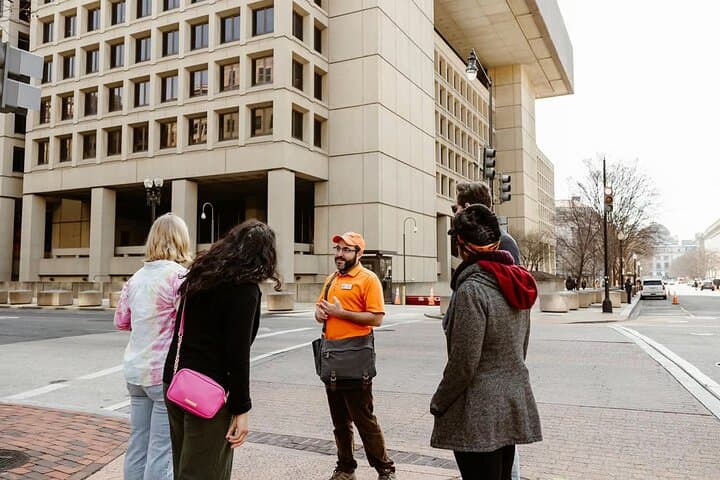
Pennsylvania Avenue has been the stage for inaugurations, protests and parades since the early republic; the Old Post Office, completed at the turn of the 20th century, survived demolition and redevelopment to become one of the best viewpoints in DC. Nearby, the J. Edgar Hoover Building—home to the FBI since the 1970s—offers a lesson in Brutalist federal architecture and the tensions of modern government design. The Navy Memorial and the Lone Sailor statue provide quieter, often-overlooked corners of civic memory.
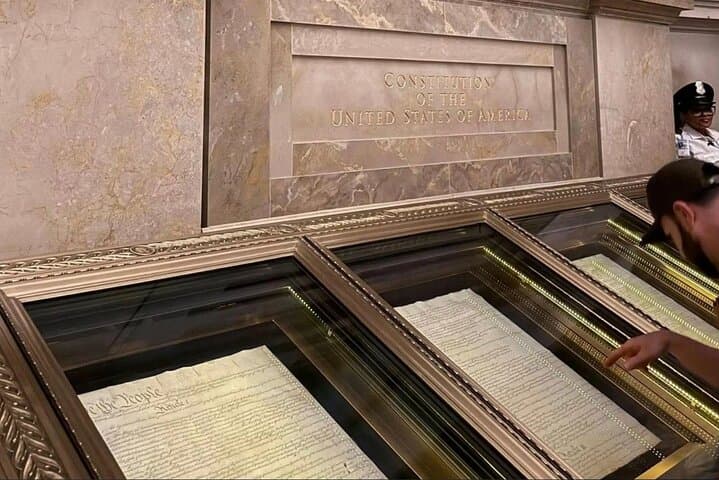
The National Archives, opened in the 1930s, houses the Declaration of Independence, the Bill of Rights and the Constitution; skip-the-line access shortens the wait but not the reverence. Expect a mix of urban walking on paved sidewalks, short stair or elevator access to the tower, and security screening before entering archival spaces.
Practical tips: arrive 10 minutes early, carry a government ID for admittance, pack a small bag (large luggage is restricted) and wear comfortable walking shoes. Bring a water bottle and layers—DC weather shifts quickly—and plan this three-hour loop for a morning slot to avoid afternoon crowds and hottest temperatures.
easy.
3 hours.
Suitable for most fitness levels; requires short periods of standing and moderate walking on paved city terrain.
Meet next to the Benjamin Franklin statue in front of the Old Post Office Pavilion at Pennsylvania Ave NW and 12th Street NW; look for the guide in orange.
Yes—this tour notes wheelchair accessibility, including accessible routes and elevator access to the observatory where possible.
Photography rules vary by exhibit; flash and tripods are typically prohibited and some documents may be off-limits—follow archival signage and staff instructions.
Shared tours are small-group experiences, often capped at around five participants to maintain guide interaction and manage access to sites.
Pennsylvania Avenue has hosted presidential inaugurations and civic demonstrations for two centuries; the Old Post Office, completed in 1899, survived demolition debates and is now a prime vantage point.
The National Archives follows strict conservation protocols to protect original documents; visitors are asked to avoid food, drink and flash photography to preserve exhibits.
DC by Foot operates guided outdoor trips and adventures with an emphasis on safety, stewardship, and memorable experiences.
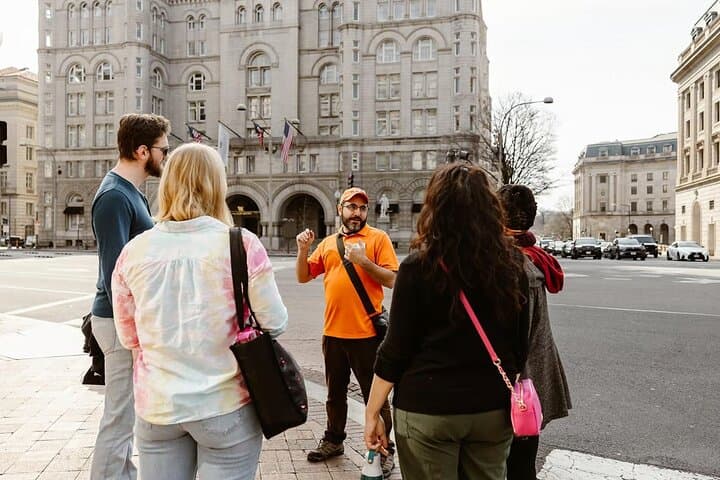
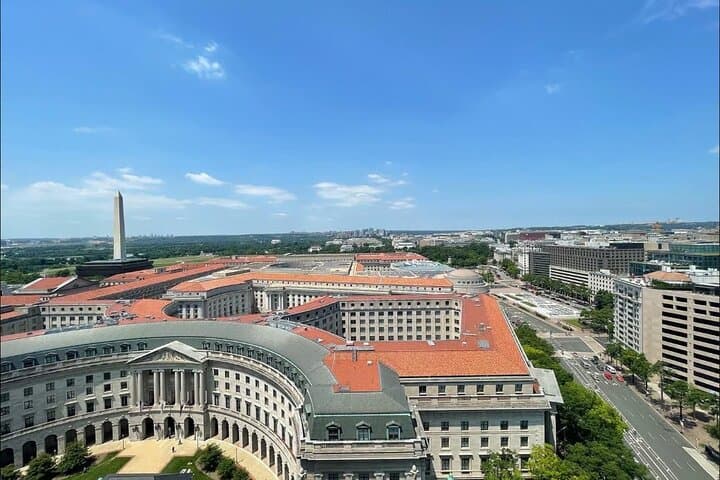
Morning light breaks across Pennsylvania Avenue and the city wakes in a measured rhythm—polished steps on flagstones, the Old Post Office tower rising like an earnest lookout over the Mall. Standing next to the Benjamin Franklin statue, a guide in orange points the group toward the tower elevators; from the observatory deck the Washington Monument fixes the horizon and the city rearranges itself into streets and stories below.
Morning light breaks across Pennsylvania Avenue and the city wakes in a measured rhythm—polished steps on flagstones, the Old Post Office tower rising like an earnest lookout over the Mall. Standing next to the Benjamin Franklin statue, a guide in orange points the group toward the tower elevators; from the observatory deck the Washington Monument fixes the horizon and the city rearranges itself into streets and stories below.
Pennsylvania Avenue has been the stage for inaugurations, protests and parades since the early republic; the Old Post Office, completed at the turn of the 20th century, survived demolition and redevelopment to become one of the best viewpoints in DC. Nearby, the J. Edgar Hoover Building—home to the FBI since the 1970s—offers a lesson in Brutalist federal architecture and the tensions of modern government design. The Navy Memorial and the Lone Sailor statue provide quieter, often-overlooked corners of civic memory.
The National Archives, opened in the 1930s, houses the Declaration of Independence, the Bill of Rights and the Constitution; skip-the-line access shortens the wait but not the reverence. Expect a mix of urban walking on paved sidewalks, short stair or elevator access to the tower, and security screening before entering archival spaces.
Practical tips: arrive 10 minutes early, carry a government ID for admittance, pack a small bag (large luggage is restricted) and wear comfortable walking shoes. Bring a water bottle and layers—DC weather shifts quickly—and plan this three-hour loop for a morning slot to avoid afternoon crowds and hottest temperatures.