THE ADVENTURE COLLECTIVE® · Independent discovery and booking for outdoor travel

Skip the lines at the Natural History Museum, follow an app-based audio route past giant skeletons and geological displays, then clear your head with a Hyde Park walk. This two-hour combo gives you curated museum highlights plus an easy outdoor loop through one of London’s largest parks.
Skip the lines at the Natural History Museum, follow an app-based audio route past giant skeletons and geological displays, then clear your head with a Hyde Park walk. This two-hour combo gives you curated museum highlights plus an easy outdoor loop through one of London’s largest parks.
You step through the Museum’s grand arched entrance and the city’s noise thins to a hush punctuated by sneakers on marble. Above, the 128-year-old blue whale skeleton hangs like a slow-moving sky; around you, teeth and talons, fossilized forests and tiny insects chart the patient work of deep time.
Verified experiences and guided adventures in the surrounding area.
Operated by WGTickets · London, England
You step through the Museum’s grand arched entrance and the city’s noise thins to a hush punctuated by sneakers on marble. Above, the 128-year-old blue whale skeleton hangs like a slow-moving sky; around you, teeth and talons, fossilized forests and tiny insects chart the patient work of deep time.
The Natural History Museum began in the Victorian era as part of the British Museum’s science collections and still wears that era’s ambition — ornate stonework framing specimens from around the globe. Geology and paleontology share galleries; volcanic glass, mammoth tusks, moa bones and the mastodon speak to continental shifts, extinction pulses and the slow rearrangement of habitats. Hyde Park, a short walk away, is London’s green lung: the Serpentine pushes a mild current through its center, Speakers’ Corner offers a slice of civic culture, and memorials and plane trees speak to the city’s layered history.
This experience pairs a reserved-entry ticket with an app-based audio route that points out museum highlights and then guides a Hyde Park loop. Practicalities are straightforward: bring a charged phone to run the audio, expect security checks at the museum, and allow two hours to move at a relaxed pace. Timing matters — early or late reserved entries reduce crowds and give you room to linger by the whale or sit at the Serpentine.
For travellers who want a quick but rich slice of London’s natural and civic history, this combo blends indoor collections with an easy outdoor stroll, balancing scientific storytelling with a dose of urban nature.
easy.
2 hours.
Suitable for most fitness levels; involves standing, walking on hard floors, and an easy park stroll.
General admission to the museum is free, but this product provides a timed reservation that lets you skip the regular entry lines and includes an in-app audio guide.
Instructions and a mobile ticket are sent via email, SMS and WhatsApp; download the WeGoTrip app and ensure the ticket is accessible on your phone before arrival.
The museum has step-free access, lifts and accessible facilities; the audio route is self-paced so you can move at your own comfort level. Check specific accessibility details with museum staff on arrival.
Photography for personal use is generally allowed in most galleries, but flash, tripods and commercial filming may be restricted—follow on-site signage and staff instructions.
The museum opened in 1881 from collections amassed by Victorian scientists; its architecture and galleries reflect 19th-century approaches to cataloguing the natural world.
The museum runs public-facing conservation projects and emphasizes responsible collecting; visitors can minimize impact by staying on paths in Hyde Park and avoiding feeding wildlife.
WGTickets operates guided outdoor trips and adventures with an emphasis on safety, stewardship, and memorable experiences.

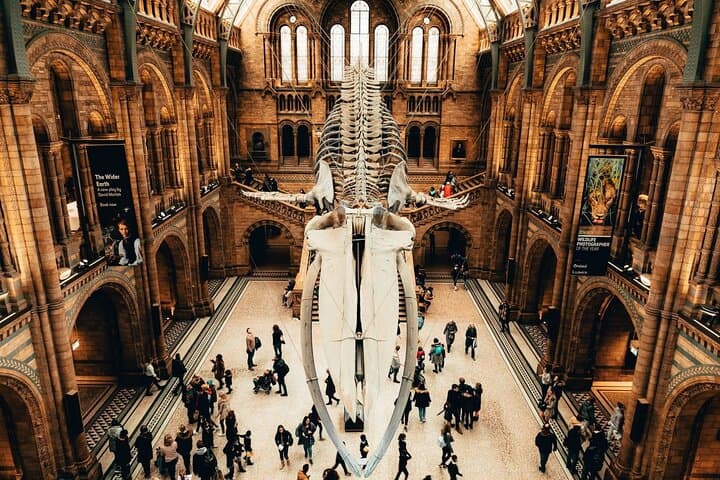

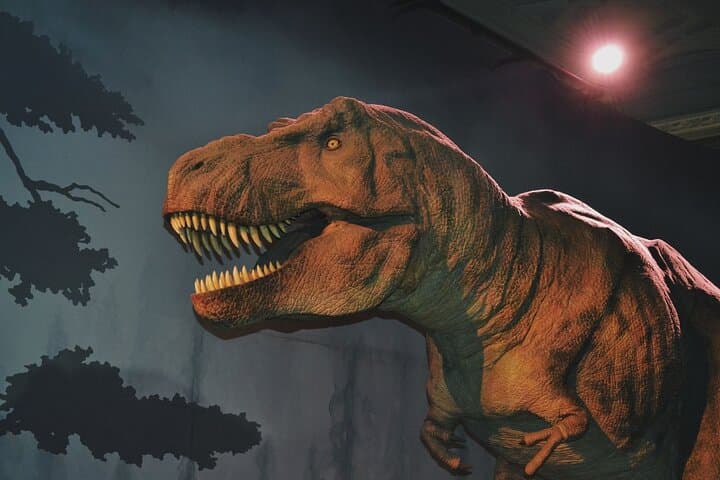
You step through the Museum’s grand arched entrance and the city’s noise thins to a hush punctuated by sneakers on marble. Above, the 128-year-old blue whale skeleton hangs like a slow-moving sky; around you, teeth and talons, fossilized forests and tiny insects chart the patient work of deep time.
You step through the Museum’s grand arched entrance and the city’s noise thins to a hush punctuated by sneakers on marble. Above, the 128-year-old blue whale skeleton hangs like a slow-moving sky; around you, teeth and talons, fossilized forests and tiny insects chart the patient work of deep time.
The Natural History Museum began in the Victorian era as part of the British Museum’s science collections and still wears that era’s ambition — ornate stonework framing specimens from around the globe. Geology and paleontology share galleries; volcanic glass, mammoth tusks, moa bones and the mastodon speak to continental shifts, extinction pulses and the slow rearrangement of habitats. Hyde Park, a short walk away, is London’s green lung: the Serpentine pushes a mild current through its center, Speakers’ Corner offers a slice of civic culture, and memorials and plane trees speak to the city’s layered history.
This experience pairs a reserved-entry ticket with an app-based audio route that points out museum highlights and then guides a Hyde Park loop. Practicalities are straightforward: bring a charged phone to run the audio, expect security checks at the museum, and allow two hours to move at a relaxed pace. Timing matters — early or late reserved entries reduce crowds and give you room to linger by the whale or sit at the Serpentine.
For travellers who want a quick but rich slice of London’s natural and civic history, this combo blends indoor collections with an easy outdoor stroll, balancing scientific storytelling with a dose of urban nature.