THE ADVENTURE COLLECTIVE® · Independent discovery and booking for outdoor travel

Skip long lines at Les Invalides and stand before Napoleon’s tomb, then move through the Musée de l'Armée’s halls of armor, maps and weapons. This practical guide helps you plan a smooth, self-guided visit in central Paris.
Skip long lines at Les Invalides and stand before Napoleon’s tomb, then move through the Musée de l'Armée’s halls of armor, maps and weapons. This practical guide helps you plan a smooth, self-guided visit in central Paris.
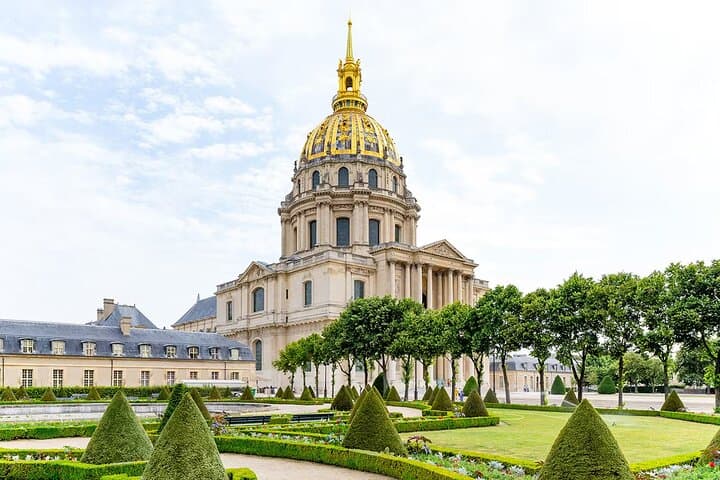
You step out of the Paris traffic and under a gilded dome that slices the winter sky — the Hôtel national des Invalides. Inside, marble and shadow give weight to history: a circular crypt holding Napoleon’s sarcophagus, polished and grave, and galleries where armor, banners, and maps crowd together like witnesses.
Verified experiences and guided adventures in the surrounding area.
Operated by Dream Fly Tourism LLC · Paris, Île-de-France
You step out of the Paris traffic and under a gilded dome that slices the winter sky — the Hôtel national des Invalides. Inside, marble and shadow give weight to history: a circular crypt holding Napoleon’s sarcophagus, polished and grave, and galleries where armor, banners, and maps crowd together like witnesses.
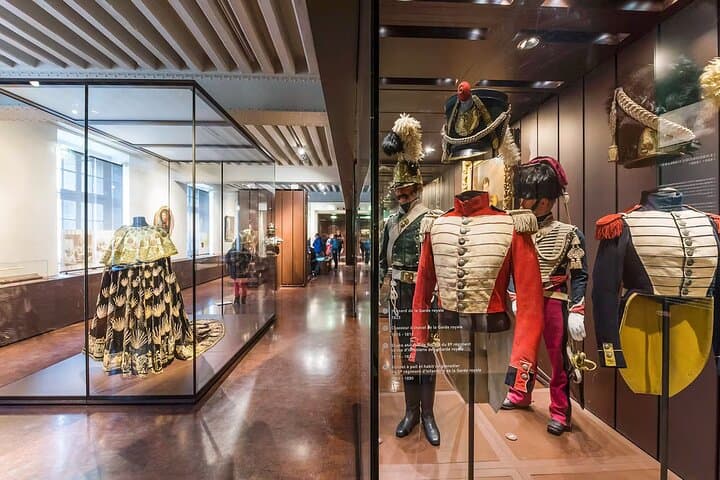
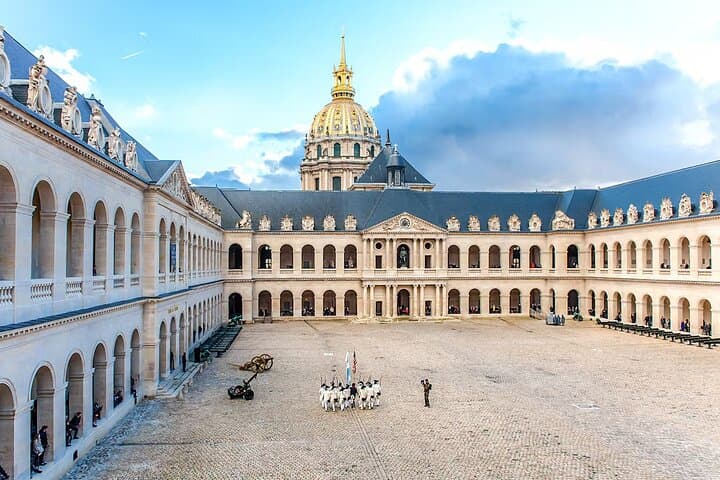
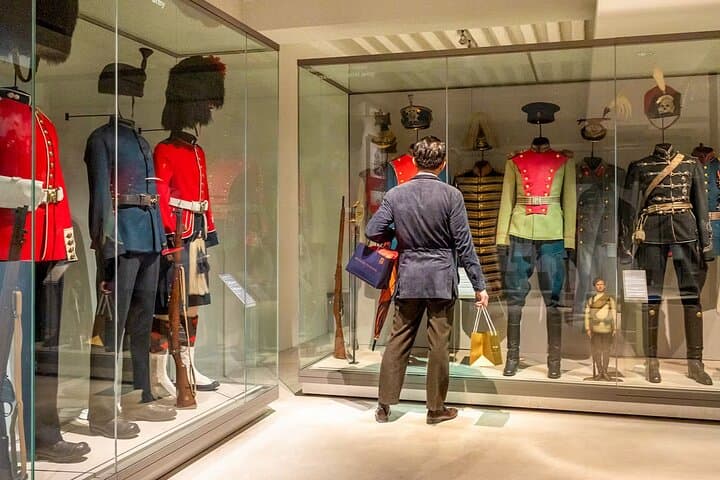
Originally conceived by Louis XIV as a home for injured soldiers, Les Invalides grew into a museum complex that narrates France’s military past from medieval mail to twentieth-century mechanics. The dome, designed by Jules Hardouin-Mansart, crowns the site and was chosen as Napoleon’s final resting place in 1840 during a state reburial that stitched politics and reverence together. The Musée de l'Armée displays relief maps, artillery, uniforms and personal effects that outline changes in technology and tactics — a practical history rather than a romantic one.
Plan for a self-paced visit: skip-the-line access saves queue time but expect standard security checks and intermittent closures for special conservation work. Most rooms are accessible; wear comfortable shoes for long galleries and stone floors. Peak visitation aligns with late morning and early afternoon, so early arrival or late afternoon visits are quieter. Combine with a Seine-side walk or a stop at the Musée d’Orsay for contrast.
Practical notes: photography is generally allowed but respect no-flash rules in the tomb; large bags may be checked. Bring a light layer for the crypt’s cool air and allow 2–3 hours to move thoughtfully through the main collection. This visit rewards curiosity — it’s a clear, tangible route through France’s military story, with architectural élan that frames the artifacts on view.
easy.
2–5 hours.
Minimal physical fitness required; light walking and standing on stone floors.
Plan 2–3 hours for the tomb and main Army Museum galleries; extend to 4–5 hours if you explore all special exhibits.
Yes — many galleries and entrances are wheelchair accessible; contact venue or check signage for accessible routes.
Photography is generally allowed in museum galleries but flash and tripods may be restricted, and rules apply in the crypt.
Tickets provide skip-the-line access but confirm whether a timed entry is required for your booking; arrive within the window if specified.
Built in the late 17th century as a veterans’ hospital under Louis XIV, Les Invalides later became the chosen burial site for Napoleon following his repatriation in 1840.
Museum spaces follow conservation protocols controlling light and humidity; visitors help by following no-flash rules and not touching exhibits.
Dream Fly Tourism LLC operates guided outdoor trips and adventures with an emphasis on safety, stewardship, and memorable experiences.
You step out of the Paris traffic and under a gilded dome that slices the winter sky — the Hôtel national des Invalides. Inside, marble and shadow give weight to history: a circular crypt holding Napoleon’s sarcophagus, polished and grave, and galleries where armor, banners, and maps crowd together like witnesses.
You step out of the Paris traffic and under a gilded dome that slices the winter sky — the Hôtel national des Invalides. Inside, marble and shadow give weight to history: a circular crypt holding Napoleon’s sarcophagus, polished and grave, and galleries where armor, banners, and maps crowd together like witnesses.
Originally conceived by Louis XIV as a home for injured soldiers, Les Invalides grew into a museum complex that narrates France’s military past from medieval mail to twentieth-century mechanics. The dome, designed by Jules Hardouin-Mansart, crowns the site and was chosen as Napoleon’s final resting place in 1840 during a state reburial that stitched politics and reverence together. The Musée de l'Armée displays relief maps, artillery, uniforms and personal effects that outline changes in technology and tactics — a practical history rather than a romantic one.
Plan for a self-paced visit: skip-the-line access saves queue time but expect standard security checks and intermittent closures for special conservation work. Most rooms are accessible; wear comfortable shoes for long galleries and stone floors. Peak visitation aligns with late morning and early afternoon, so early arrival or late afternoon visits are quieter. Combine with a Seine-side walk or a stop at the Musée d’Orsay for contrast.
Practical notes: photography is generally allowed but respect no-flash rules in the tomb; large bags may be checked. Bring a light layer for the crypt’s cool air and allow 2–3 hours to move thoughtfully through the main collection. This visit rewards curiosity — it’s a clear, tangible route through France’s military story, with architectural élan that frames the artifacts on view.