THE ADVENTURE COLLECTIVE® · Independent discovery and booking for outdoor travel

Skip the queues at Les Invalides and move straight into the golden dome to see Napoleon’s tomb and the Musée de l’Armée’s storied collections. This concise guide explains what you’ll see, why it matters, and how to plan your visit for maximum time savings.
Skip the queues at Les Invalides and move straight into the golden dome to see Napoleon’s tomb and the Musée de l’Armée’s storied collections. This concise guide explains what you’ll see, why it matters, and how to plan your visit for maximum time savings.
You arrive at Les Invalides as the city hums around the golden dome; light slides off gilded copper, and the stone façade keeps a quiet record of centuries. Passing through security, the vaulted nave and courtrooms open like chapters—bronze, oak, and well-worn stone that still remember marching boots and ceremonial drums.
Verified experiences and guided adventures in the surrounding area.
Operated by My Travelons Ltd · Paris, Île-de-France
You arrive at Les Invalides as the city hums around the golden dome; light slides off gilded copper, and the stone façade keeps a quiet record of centuries. Passing through security, the vaulted nave and courtrooms open like chapters—bronze, oak, and well-worn stone that still remember marching boots and ceremonial drums.
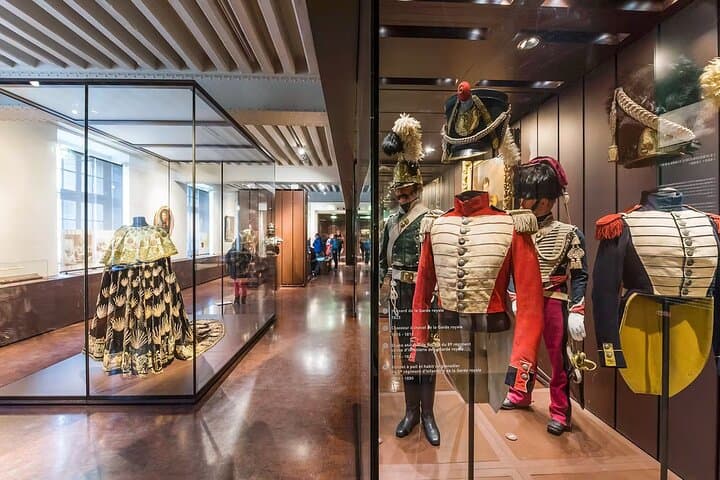
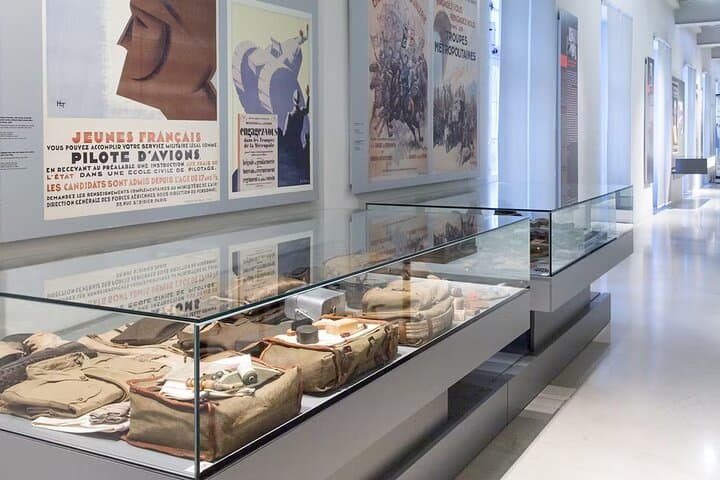
Built in the late 17th century by Louis XIV as a hospital and home for veterans, Les Invalides now houses Napoleon’s tomb beneath an imposing dome and the Musée de l’Armée’s sweeping military collections. The building’s classical masonry and Baroque dome speak to Parisian ambition; inside, exhibits range from medieval armor to 20th-century uniforms, with focused displays like the Museum of Relief Maps and the Museum of the Order of Liberation.
Culture here mixes reverence and scholarship—French military history presented with archival care and curatorial rigor. Local guides often point out smaller details: manufacturers’ marks on muskets, restoration seams in cuirassier armor, and plaques marking key campaigns.
Practical guidance: skip-the-line tickets save time during peak hours (late morning–early afternoon). Allow 1–3 hours depending on depth—longer if you add the Dôme and its crypt. Security checks are standard; large bags aren’t permitted. Bring comfortable shoes for stone floors, a charged phone for your mobile ticket and audio guide, and a light layer for cooler nave temperatures. Check opening hours and guided-session availability in advance to pick quieter entry times and make the most of this compact but dense historical experience.
easy.
1–4 hours.
Suitable for all fitness levels; involves standing and walking on hard floors for extended periods
Yes—tickets usually specify an entry window; arrive 10–15 minutes early to pass security and use your slot efficiently.
Most options include access to both the Dôme des Invalides and Musée de l’Armée—confirm the inclusions when booking.
Les Invalides has accessible entrances and elevators for many galleries, but some historic areas and stairs may limit access—contact the museum for details and assistance.
Yes—multilingual audio guides and small-group guided tours are often offered as add-ons; digital guides usually work with mobile tickets.
Les Invalides was founded in 1670 by Louis XIV as a veterans’ hospital; Napoleon’s tomb was installed in the 19th century beneath the gilded dome.
The museum conducts ongoing conservation of textiles, metals, and paintings; visitors help by following photography and handling rules to reduce wear on artifacts.
My Travelons Ltd operates guided outdoor trips and adventures with an emphasis on safety, stewardship, and memorable experiences.


You arrive at Les Invalides as the city hums around the golden dome; light slides off gilded copper, and the stone façade keeps a quiet record of centuries. Passing through security, the vaulted nave and courtrooms open like chapters—bronze, oak, and well-worn stone that still remember marching boots and ceremonial drums.
You arrive at Les Invalides as the city hums around the golden dome; light slides off gilded copper, and the stone façade keeps a quiet record of centuries. Passing through security, the vaulted nave and courtrooms open like chapters—bronze, oak, and well-worn stone that still remember marching boots and ceremonial drums.
Built in the late 17th century by Louis XIV as a hospital and home for veterans, Les Invalides now houses Napoleon’s tomb beneath an imposing dome and the Musée de l’Armée’s sweeping military collections. The building’s classical masonry and Baroque dome speak to Parisian ambition; inside, exhibits range from medieval armor to 20th-century uniforms, with focused displays like the Museum of Relief Maps and the Museum of the Order of Liberation.
Culture here mixes reverence and scholarship—French military history presented with archival care and curatorial rigor. Local guides often point out smaller details: manufacturers’ marks on muskets, restoration seams in cuirassier armor, and plaques marking key campaigns.
Practical guidance: skip-the-line tickets save time during peak hours (late morning–early afternoon). Allow 1–3 hours depending on depth—longer if you add the Dôme and its crypt. Security checks are standard; large bags aren’t permitted. Bring comfortable shoes for stone floors, a charged phone for your mobile ticket and audio guide, and a light layer for cooler nave temperatures. Check opening hours and guided-session availability in advance to pick quieter entry times and make the most of this compact but dense historical experience.