THE ADVENTURE COLLECTIVE® · Independent discovery and booking for outdoor travel

Skip the line to Crocoparc, Agadir’s compact wildlife and botanical park where crocodiles, iguanas and themed gardens create an educational, family-friendly stop. Plan 1–3 hours, bring sun protection, and consider the transfer option for hassle-free arrival.
Skip the line to Crocoparc, Agadir’s compact wildlife and botanical park where crocodiles, iguanas and themed gardens create an educational, family-friendly stop. Plan 1–3 hours, bring sun protection, and consider the transfer option for hassle-free arrival.
You enter Crocoparc through ocher walls crowned by a giant sculpted crocodile; the gate feels like a storybook that prefers facts over fantasy. Sun hits the stone and the air smells faintly of wet earth from the aquatic garden as you cross into five distinct plant neighborhoods where water lilies, papyrus, succulents and cacti set the stage for the park's real stars—crocodiles, iguanas and giant tortoises.
Verified experiences and guided adventures in the surrounding area.
Operated by CROCOPARC · Agadir, Souss-Massa
You enter Crocoparc through ocher walls crowned by a giant sculpted crocodile; the gate feels like a storybook that prefers facts over fantasy. Sun hits the stone and the air smells faintly of wet earth from the aquatic garden as you cross into five distinct plant neighborhoods where water lilies, papyrus, succulents and cacti set the stage for the park's real stars—crocodiles, iguanas and giant tortoises.
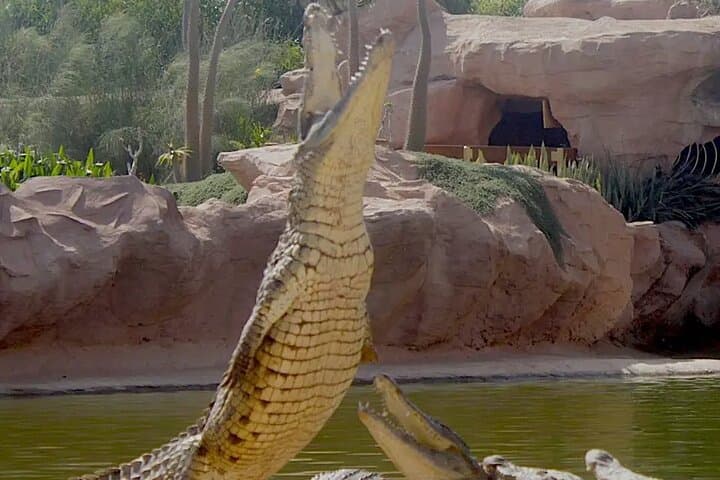
The park leans on local history: crocodiles once swam in the Oued Draa into the early 20th century, and Crocoparc revives that regional connection while showcasing plants adapted to Souss-Massa’s semi-arid climate. Geologically the ravine and ochre masonry echo the red-earth backdrop of southern Morocco, and the curated gardens—blue succulents, an exotic ficus grove, aquatic ponds, tropical palms and cactus terraces—offer microclimates that feel unexpectedly lush.
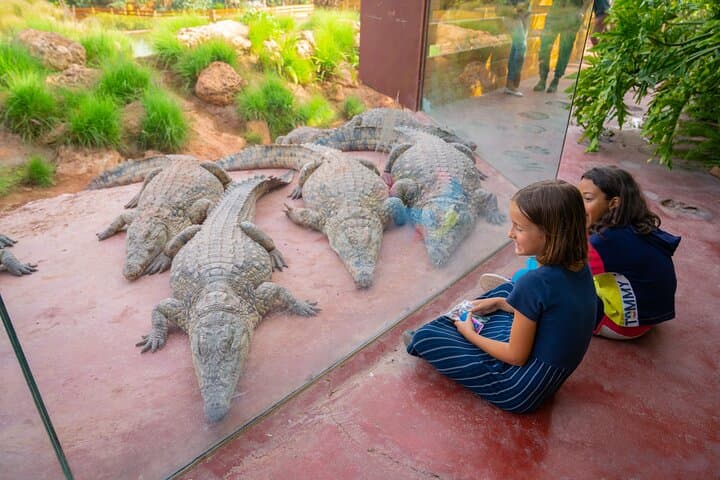
Culturally the site is family-focused: certified wooden playgrounds meet EN1176-1 safety standards and small vendors offer henna tattoos and snacks. The park emphasizes education and close-but-safe viewing of animals; staff and signage explain crocodile behavior and conservation themes.
Practical guidance: plan 1–3 hours, arrive early to avoid midday heat, and bring sun protection and a filled water bottle—shade is limited between gardens. Mobility access is available but some terrain includes steps and raised viewing platforms. If you select the transfer option, confirm pickup details when booking. Keep cameras ready but respect barriers and posted distances; feeding is prohibited. Crocoparc is compact, educational, and suited to families or anyone wanting a short, well-organized wildlife stop while based in Agadir.
easy.
1–3 hours.
Suitable for most fitness levels; expect short walks and some steps on viewing platforms.
Yes—this ticket is mobile or paper friendly and includes a skip-the-line advantage for faster entry.
The optional private transfer covers pickup and drop-off as selected—confirm your pickup point when booking.
The park is wheelchair accessible, with ramps and level paths, though some raised platforms and steps may require assistance.
No—feeding or touching animals is prohibited; viewing areas are designed for safety and animal welfare.
The park references historical crocodile populations in the Oued Draa region and celebrates the area's ecological past through species exhibits and educational signage.
Crocoparc focuses on education and habitat simulation rather than in-situ conservation; visitors should follow rules to minimize disturbance and never feed animals.
CROCOPARC operates guided outdoor trips and adventures with an emphasis on safety, stewardship, and memorable experiences.
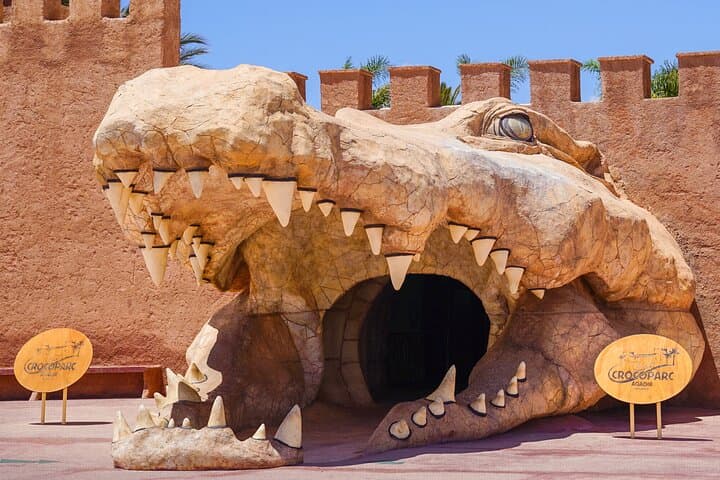
You enter Crocoparc through ocher walls crowned by a giant sculpted crocodile; the gate feels like a storybook that prefers facts over fantasy. Sun hits the stone and the air smells faintly of wet earth from the aquatic garden as you cross into five distinct plant neighborhoods where water lilies, papyrus, succulents and cacti set the stage for the park's real stars—crocodiles, iguanas and giant tortoises.
You enter Crocoparc through ocher walls crowned by a giant sculpted crocodile; the gate feels like a storybook that prefers facts over fantasy. Sun hits the stone and the air smells faintly of wet earth from the aquatic garden as you cross into five distinct plant neighborhoods where water lilies, papyrus, succulents and cacti set the stage for the park's real stars—crocodiles, iguanas and giant tortoises.
The park leans on local history: crocodiles once swam in the Oued Draa into the early 20th century, and Crocoparc revives that regional connection while showcasing plants adapted to Souss-Massa’s semi-arid climate. Geologically the ravine and ochre masonry echo the red-earth backdrop of southern Morocco, and the curated gardens—blue succulents, an exotic ficus grove, aquatic ponds, tropical palms and cactus terraces—offer microclimates that feel unexpectedly lush.
Culturally the site is family-focused: certified wooden playgrounds meet EN1176-1 safety standards and small vendors offer henna tattoos and snacks. The park emphasizes education and close-but-safe viewing of animals; staff and signage explain crocodile behavior and conservation themes.
Practical guidance: plan 1–3 hours, arrive early to avoid midday heat, and bring sun protection and a filled water bottle—shade is limited between gardens. Mobility access is available but some terrain includes steps and raised viewing platforms. If you select the transfer option, confirm pickup details when booking. Keep cameras ready but respect barriers and posted distances; feeding is prohibited. Crocoparc is compact, educational, and suited to families or anyone wanting a short, well-organized wildlife stop while based in Agadir.