THE ADVENTURE COLLECTIVE® · Independent discovery and booking for outdoor travel

Explore Chichén Itzá with skip-the-line access on a 90-minute small-group walk led in Portuguese or Italian. See El Castillo, the Temple of Warriors, the great ball court, and a sacred cenote while learning the astronomy and rituals that shaped Maya life.
Explore Chichén Itzá with skip-the-line access on a 90-minute small-group walk led in Portuguese or Italian. See El Castillo, the Temple of Warriors, the great ball court, and a sacred cenote while learning the astronomy and rituals that shaped Maya life.
You step through the shade of a low ceiba tree and the plaza opens like a carved stage: the stepped silhouette of El Castillo rises, precise and silent, catching light the way the Maya calibrated their calendar.
Verified experiences and guided adventures in the surrounding area.
Operated by Experinciasyucatan · Chichén Itzá, Yucatán
You step through the shade of a low ceiba tree and the plaza opens like a carved stage: the stepped silhouette of El Castillo rises, precise and silent, catching light the way the Maya calibrated their calendar.
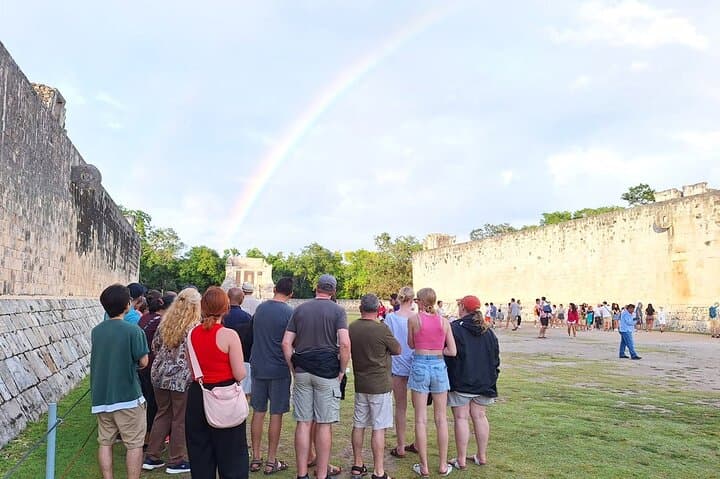
An expert guide leads a focused 90-minute loop—small group, fast access—pointing out the feathered-serpent reliefs on Kukulcán, the whispering acoustics of the staircase, and the carved warriors that frame the Temple of the Warriors. The court for the great ball game sits broad and sun-finished; once the setting for ritual and politics, today its stone still directs a quiet, exacting attention to sightlines and sound.
Geology and human history meet here: Yucatán’s porous limestone created the cenotes that shaped Maya settlement, and nearby sinkholes hold archaeological deposits that revealed offerings and ritual objects. Cultural context threads through every structure—the astronomical alignments, the ritual architecture, and the echoes of colonial-era recording of the site.
Practical guidance: the tour runs about 90 minutes, with up to 12 people and skip-the-line tickets included if selected. Expect paved paths and short stair sections; climbing the main pyramid is prohibited. Morning visits avoid the biggest crowds and the peak sun. Carry water, a wide-brim hat, and sunscreen; lockers are available and the site is largely accessible for strollers and wheelchairs on compact routes.
Photography is allowed from the plazas; drones and tripods are restricted. Respect signage around protected areas and cenotes—this keeps fragile archaeology intact. With the right timing and preparation, the walk feels both brisk and generously informative—a compact introduction to one of Mesoamerica’s defining places.
easy.
1–1.5 hours.
Suitable for most fitness levels; involves moderate walking on paved surfaces and some short stairs.
The guided walking tour lasts about 90 minutes and covers the main monuments including El Castillo, Temple of the Warriors, the great ball court, and a major cenote.
Skip-the-line access is provided when selected in advance; it reduces queue time for admissions but does not remove security checks or entrance procedures.
No—climbing El Castillo and many other elevated structures has been prohibited for years to protect the monuments and visitor safety.
The site offers compacted and paved routes accessible to strollers and some wheelchairs, but certain areas and elevated viewpoints may be restricted.
Chichén Itzá rose to prominence in the Terminal Classic period (c. 800–1000 CE) and combines architectural styles from across the Maya world, reflecting trade and political shifts.
Visitor impact is managed through restricted access to sensitive structures and designated walkways; follow guide directions to minimize wear and respect archaeological preservation.
Experinciasyucatan operates guided outdoor trips and adventures with an emphasis on safety, stewardship, and memorable experiences.
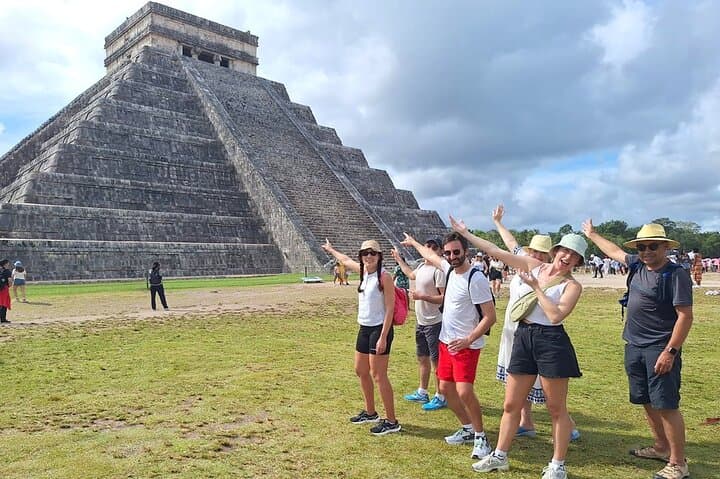

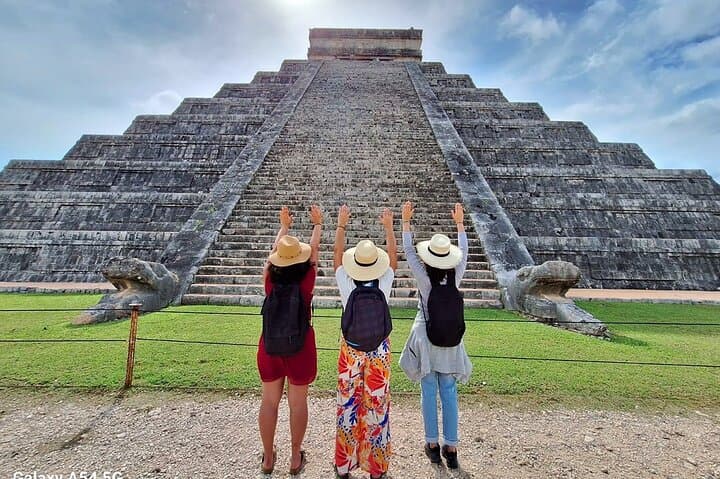
You step through the shade of a low ceiba tree and the plaza opens like a carved stage: the stepped silhouette of El Castillo rises, precise and silent, catching light the way the Maya calibrated their calendar.
You step through the shade of a low ceiba tree and the plaza opens like a carved stage: the stepped silhouette of El Castillo rises, precise and silent, catching light the way the Maya calibrated their calendar.
An expert guide leads a focused 90-minute loop—small group, fast access—pointing out the feathered-serpent reliefs on Kukulcán, the whispering acoustics of the staircase, and the carved warriors that frame the Temple of the Warriors. The court for the great ball game sits broad and sun-finished; once the setting for ritual and politics, today its stone still directs a quiet, exacting attention to sightlines and sound.
Geology and human history meet here: Yucatán’s porous limestone created the cenotes that shaped Maya settlement, and nearby sinkholes hold archaeological deposits that revealed offerings and ritual objects. Cultural context threads through every structure—the astronomical alignments, the ritual architecture, and the echoes of colonial-era recording of the site.
Practical guidance: the tour runs about 90 minutes, with up to 12 people and skip-the-line tickets included if selected. Expect paved paths and short stair sections; climbing the main pyramid is prohibited. Morning visits avoid the biggest crowds and the peak sun. Carry water, a wide-brim hat, and sunscreen; lockers are available and the site is largely accessible for strollers and wheelchairs on compact routes.
Photography is allowed from the plazas; drones and tripods are restricted. Respect signage around protected areas and cenotes—this keeps fragile archaeology intact. With the right timing and preparation, the walk feels both brisk and generously informative—a compact introduction to one of Mesoamerica’s defining places.