THE ADVENTURE COLLECTIVE® · Independent discovery and booking for outdoor travel

Bypass the queues and move straight into the rounded heart of Rome: Castel Sant’Angelo. This practical guide covers history, what you’ll see, and how to plan a smooth visit to the terrace, halls, and secret corridors.
Bypass the queues and move straight into the rounded heart of Rome: Castel Sant’Angelo. This practical guide covers history, what you’ll see, and how to plan a smooth visit to the terrace, halls, and secret corridors.
A pale Tiber bends around a round stone tower and the city opens its arms: that is Castel Sant’Angelo. Step through the gate with skip-the-line access and the air changes—stone corridors hum with centuries of movement while the terrace throws open a cinematic view of St. Peter’s and Rome’s red roofs.
Verified experiences and guided adventures in the surrounding area.
A pale Tiber bends around a round stone tower and the city opens its arms: that is Castel Sant’Angelo. Step through the gate with skip-the-line access and the air changes—stone corridors hum with centuries of movement while the terrace throws open a cinematic view of St. Peter’s and Rome’s red roofs.
Built as Hadrian’s mausoleum in the 2nd century AD, the cylindrical mass later became a papal fortress, prison, and museum. Its layered history reads in masonry seams: Roman concrete at the core, medieval battlements, Renaissance apartments and Baroque chapels. Geologically, the castle sits on the alluvial plain of the Tiber, its survival owed to dense Roman engineering rather than dramatic bedrock.
Culture here is practical and theatrical—the Passetto di Borgo, a raised corridor to the Vatican, speaks to papal urgency; cannon embrasures reveal the city’s defensive instincts. Local guides will point out small rooms with military relics and frescoes that reward a slower pace.
Practical guidance: tickets save you queue time but arrive 10–15 minutes early for security screening. Expect stairs and narrow ramps—mobility-challenged visitors should plan accordingly. Peak crowds come mid-morning; late afternoon visits combine softer light and fewer people. Allow 60–240 minutes depending on how deep you tour the museum and terrace.
Bring water, a light layer for breezy terraces, and a camera with a wide lens for the panorama. Respect the site rules: no oversized bags and limited food near exhibits. With a little planning, Castel Sant’Angelo delivers a compact, layered Roman experience—equal parts view, history, and fortress grit.
easy.
1–4 hours.
Light walking and climbing multiple flights of stairs; suitable for most walkers but not ideal for those with serious mobility limits
They grant priority access but you must still pass security screening; arrive 10–15 minutes early to avoid missing your slot.
There is limited elevator access; several levels require stairs and steep ramps, so contact the venue in advance for specific assistance.
Most visitors spend 60–90 minutes; allow up to 3–4 hours if you linger on terraces, read exhibits, or join a guided tour.
Yes—the panoramic terrace is part of the visit and provides one of the best close-up views of St. Peter’s Basilica and the Tiber.
Originally Hadrian’s mausoleum (2nd century AD), the structure was repurposed through Rome’s history as a fortress, papal residence, prison, and museum.
The castle sits within Rome’s protected historic center; follow signage, avoid touching frescoes, and use marked paths to reduce wear on ancient fabric.
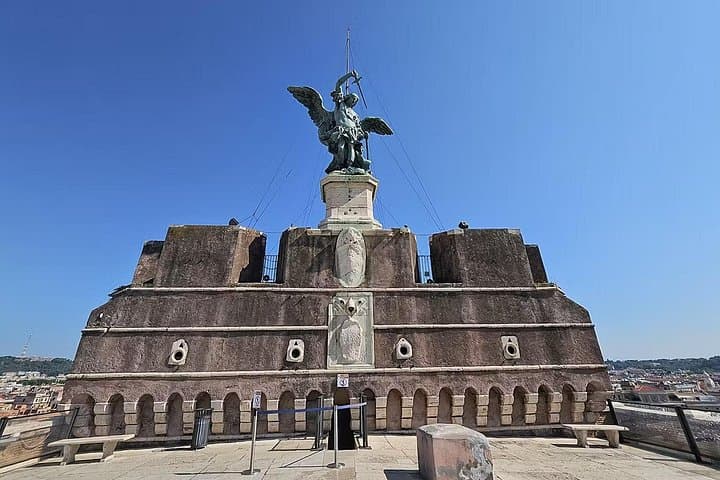
A pale Tiber bends around a round stone tower and the city opens its arms: that is Castel Sant’Angelo. Step through the gate with skip-the-line access and the air changes—stone corridors hum with centuries of movement while the terrace throws open a cinematic view of St. Peter’s and Rome’s red roofs.
A pale Tiber bends around a round stone tower and the city opens its arms: that is Castel Sant’Angelo. Step through the gate with skip-the-line access and the air changes—stone corridors hum with centuries of movement while the terrace throws open a cinematic view of St. Peter’s and Rome’s red roofs.
Built as Hadrian’s mausoleum in the 2nd century AD, the cylindrical mass later became a papal fortress, prison, and museum. Its layered history reads in masonry seams: Roman concrete at the core, medieval battlements, Renaissance apartments and Baroque chapels. Geologically, the castle sits on the alluvial plain of the Tiber, its survival owed to dense Roman engineering rather than dramatic bedrock.
Culture here is practical and theatrical—the Passetto di Borgo, a raised corridor to the Vatican, speaks to papal urgency; cannon embrasures reveal the city’s defensive instincts. Local guides will point out small rooms with military relics and frescoes that reward a slower pace.
Practical guidance: tickets save you queue time but arrive 10–15 minutes early for security screening. Expect stairs and narrow ramps—mobility-challenged visitors should plan accordingly. Peak crowds come mid-morning; late afternoon visits combine softer light and fewer people. Allow 60–240 minutes depending on how deep you tour the museum and terrace.
Bring water, a light layer for breezy terraces, and a camera with a wide lens for the panorama. Respect the site rules: no oversized bags and limited food near exhibits. With a little planning, Castel Sant’Angelo delivers a compact, layered Roman experience—equal parts view, history, and fortress grit.