THE ADVENTURE COLLECTIVE® · Independent discovery and booking for outdoor travel

Avoid long queues and enter Istanbul’s atmospheric Basilica Cistern with skip-the-line tickets. Walk among ancient columns, study the enigmatic Medusa heads, and experience one of the city’s most unusual historic sites with minimal waiting.
Avoid long queues and enter Istanbul’s atmospheric Basilica Cistern with skip-the-line tickets. Walk among ancient columns, study the enigmatic Medusa heads, and experience one of the city’s most unusual historic sites with minimal waiting.
You step off the sunlit street and into sudden coolness: a vaulted, shadowed hall where water holds memory. Stalwart columns rise from shallow black pools, their reflections trembling as distant footsteps press across wooden walkways. The air smells faintly of stone and old water; a slow hush replaces the city’s roar above.
Verified experiences and guided adventures in the surrounding area.
Operated by Dream Fly Tourism LLC · Istanbul, Istanbul
You step off the sunlit street and into sudden coolness: a vaulted, shadowed hall where water holds memory. Stalwart columns rise from shallow black pools, their reflections trembling as distant footsteps press across wooden walkways. The air smells faintly of stone and old water; a slow hush replaces the city’s roar above.
Built under Emperor Justinian in the 6th century to store water for Constantinople, the Basilica Cistern is both engineering feat and atmospheric theatre. Hundreds of columns — many recycled from earlier Roman buildings — create a grid that hints at the city’s layered past. Two Medusa heads lie half-buried at the base of columns, their sideways and inverted placements still provoking theories about reuse and symbolism.
Geologically, the cistern sits on reclaimed marshland near the Bosphorus shore, its brick vaulting designed to withstand the humid microclimate. Culturally, the site links Byzantine hydraulics, Ottoman reuse, and modern tourism in a compact experience beneath Sultanahmet’s skyline.
Practical guidance: book a skip-the-line ticket to avoid queues that form at peak hours; visits run from about 30 minutes to an hour depending on crowds. Wear grippy shoes — wooden walkways can be slippery — and carry a light layer for the cool interior. Photography is allowed but use a steady hand for low-light shots; large bags may be restricted. Public transit (tram) stops nearby, making it easy to pair this visit with Hagia Sophia and the Blue Mosque. Arrive early or late afternoon for smaller crowds and a quieter, more contemplative walk among the columns.
easy.
1–5 hours.
Suitable for all fitness levels; involves short, flat walking on wooden platforms
Typical visits last 30–60 minutes; audio tours and photography can extend time on site.
Not necessary but recommended during high season to avoid long entry lines and to coordinate with nearby attractions.
The cistern has wooden walkways and some uneven surfaces; accessibility is limited—check specific access details before booking.
Photography is allowed in low light; avoid flash if requested by staff and be mindful of other visitors on narrow walkways.
Constructed in the 6th century under Emperor Justinian to supply water to Constantinople, the cistern repurposed Roman columns and reflects Byzantine hydraulic engineering.
The site requires controlled humidity, lighting, and visitor numbers to protect ancient masonry and recycled sculptures; visitors should avoid touching surfaces and follow posted rules.
Dream Fly Tourism LLC operates guided outdoor trips and adventures with an emphasis on safety, stewardship, and memorable experiences.


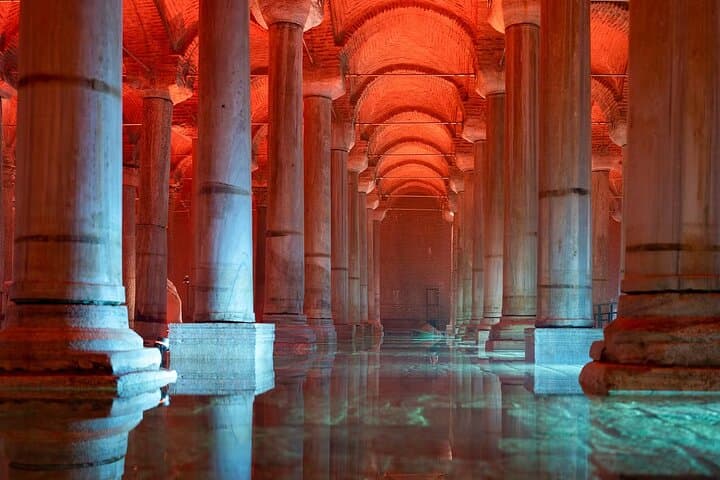
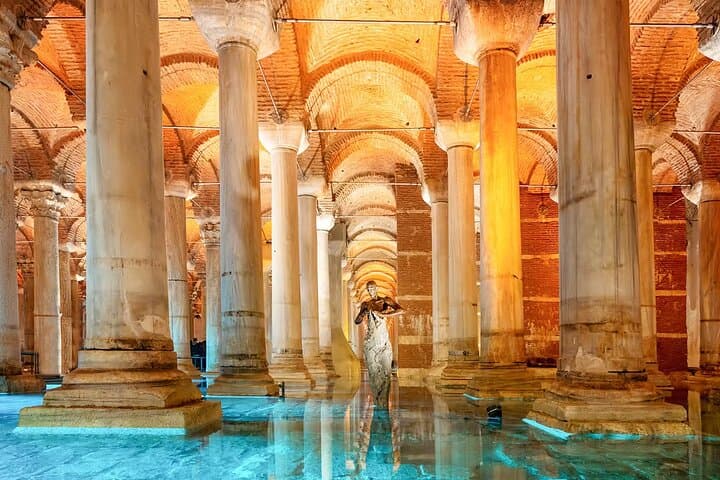
You step off the sunlit street and into sudden coolness: a vaulted, shadowed hall where water holds memory. Stalwart columns rise from shallow black pools, their reflections trembling as distant footsteps press across wooden walkways. The air smells faintly of stone and old water; a slow hush replaces the city’s roar above.
You step off the sunlit street and into sudden coolness: a vaulted, shadowed hall where water holds memory. Stalwart columns rise from shallow black pools, their reflections trembling as distant footsteps press across wooden walkways. The air smells faintly of stone and old water; a slow hush replaces the city’s roar above.
Built under Emperor Justinian in the 6th century to store water for Constantinople, the Basilica Cistern is both engineering feat and atmospheric theatre. Hundreds of columns — many recycled from earlier Roman buildings — create a grid that hints at the city’s layered past. Two Medusa heads lie half-buried at the base of columns, their sideways and inverted placements still provoking theories about reuse and symbolism.
Geologically, the cistern sits on reclaimed marshland near the Bosphorus shore, its brick vaulting designed to withstand the humid microclimate. Culturally, the site links Byzantine hydraulics, Ottoman reuse, and modern tourism in a compact experience beneath Sultanahmet’s skyline.
Practical guidance: book a skip-the-line ticket to avoid queues that form at peak hours; visits run from about 30 minutes to an hour depending on crowds. Wear grippy shoes — wooden walkways can be slippery — and carry a light layer for the cool interior. Photography is allowed but use a steady hand for low-light shots; large bags may be restricted. Public transit (tram) stops nearby, making it easy to pair this visit with Hagia Sophia and the Blue Mosque. Arrive early or late afternoon for smaller crowds and a quieter, more contemplative walk among the columns.