THE ADVENTURE COLLECTIVE® · Independent discovery and booking for outdoor travel

Walk among the Parthenon's columns and overlook Athens with skip-the-line entry and an optional audio guide. This visit combines panoramic views, layered history and practical tips to help you plan a 1–3 hour exploration of the Acropolis and museum.
Walk among the Parthenon's columns and overlook Athens with skip-the-line entry and an optional audio guide. This visit combines panoramic views, layered history and practical tips to help you plan a 1–3 hour exploration of the Acropolis and museum.
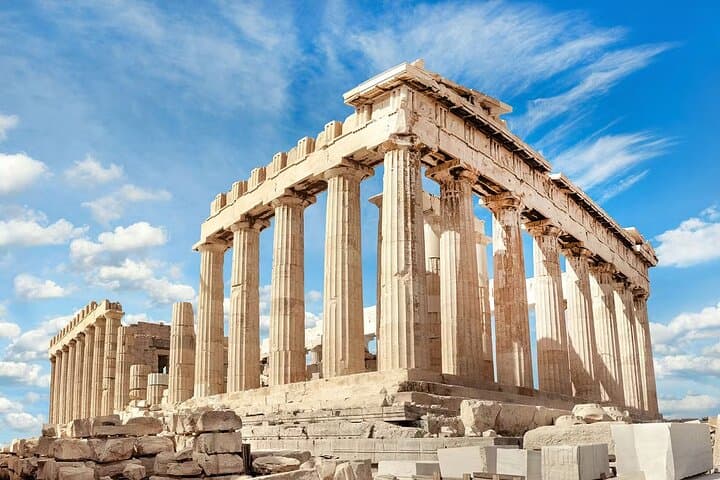
You climb the marble slope and the city contracts beneath you: traffic hum becomes distant, rooftop gardens and the Aegean light stretch out to the horizon, and the Parthenon’s Doric columns loom like an architectural tide. The hill’s worn steps and battered masonry carry the weight of centuries; wind off Mount Hymettus ruffles tourists’ maps and the occasional pigeon, while guides narrate gods and civic ambition in several languages.
Verified experiences and guided adventures in the surrounding area.
Operated by Trip Knox Ltd · Athens, Attica
You climb the marble slope and the city contracts beneath you: traffic hum becomes distant, rooftop gardens and the Aegean light stretch out to the horizon, and the Parthenon’s Doric columns loom like an architectural tide. The hill’s worn steps and battered masonry carry the weight of centuries; wind off Mount Hymettus ruffles tourists’ maps and the occasional pigeon, while guides narrate gods and civic ambition in several languages.
The Acropolis rose to prominence in the 5th century BCE under Pericles; its core structures — the Parthenon, the Temple of Athena Nike and the Propylaea — were built from Pentelic marble quarried nearby, set on a limestone outcrop roughly 150 meters above sea level. Centuries of earthquakes, wars and restoration have left a layered site: classical sculpture fragments, Byzantine and Ottoman additions, and modern scaffolding where conservators work.
For travelers the experience is equal parts panorama and archaeology. An optional audio guide fills gaps in the crowd-driven narrative, while a combined ticket often includes the Acropolis Museum where original sculptures and inscriptions live in cooler, protected rooms.
Practical notes: expect uneven stone, steep steps and limited shade — plan 1–3 hours, arrive early or late afternoon to avoid peak heat and crowds. Carry water, solid footwear, sun protection and your mobile ticket. Respect fenced-off areas and follow staff instructions; photography is allowed but tripods and drones are restricted. With a modest climb and rich historical payoff, the Acropolis is an accessible, unforgettable slice of ancient Greece.
easy.
1–3 hours.
Suitable for most visitors who can handle short flights of stairs and uneven ground; minimal endurance required.
Mobile tickets are accepted; have the QR code ready and your ID available if requested at entry.
Most visitors spend 1–3 hours on the site; add another hour for the Acropolis Museum if included.
There are limited accessible routes and a ramp to certain areas, but much of the hill involves steps and uneven surfaces — contact staff ahead for assistance.
Selfie-sticks, tripods and drones are typically restricted — check current site regulations before you visit.
The Parthenon was built in the mid-5th century BCE as a temple to Athena during Athens’ Golden Age; much of its sculpture was removed or damaged over centuries and many originals are now in the Acropolis Museum.
Long-term restoration uses modern conservation techniques and controlled visits; stay on marked paths and follow staff guidance to minimize wear and protect fragile structures.
Trip Knox Ltd operates guided outdoor trips and adventures with an emphasis on safety, stewardship, and memorable experiences.
You climb the marble slope and the city contracts beneath you: traffic hum becomes distant, rooftop gardens and the Aegean light stretch out to the horizon, and the Parthenon’s Doric columns loom like an architectural tide. The hill’s worn steps and battered masonry carry the weight of centuries; wind off Mount Hymettus ruffles tourists’ maps and the occasional pigeon, while guides narrate gods and civic ambition in several languages.
You climb the marble slope and the city contracts beneath you: traffic hum becomes distant, rooftop gardens and the Aegean light stretch out to the horizon, and the Parthenon’s Doric columns loom like an architectural tide. The hill’s worn steps and battered masonry carry the weight of centuries; wind off Mount Hymettus ruffles tourists’ maps and the occasional pigeon, while guides narrate gods and civic ambition in several languages.
The Acropolis rose to prominence in the 5th century BCE under Pericles; its core structures — the Parthenon, the Temple of Athena Nike and the Propylaea — were built from Pentelic marble quarried nearby, set on a limestone outcrop roughly 150 meters above sea level. Centuries of earthquakes, wars and restoration have left a layered site: classical sculpture fragments, Byzantine and Ottoman additions, and modern scaffolding where conservators work.
For travelers the experience is equal parts panorama and archaeology. An optional audio guide fills gaps in the crowd-driven narrative, while a combined ticket often includes the Acropolis Museum where original sculptures and inscriptions live in cooler, protected rooms.
Practical notes: expect uneven stone, steep steps and limited shade — plan 1–3 hours, arrive early or late afternoon to avoid peak heat and crowds. Carry water, solid footwear, sun protection and your mobile ticket. Respect fenced-off areas and follow staff instructions; photography is allowed but tripods and drones are restricted. With a modest climb and rich historical payoff, the Acropolis is an accessible, unforgettable slice of ancient Greece.