THE ADVENTURE COLLECTIVE® · Independent discovery and booking for outdoor travel

Skip long queues and step straight into one of Greece’s most important archaeological museums. These skip-the-line tickets let you see original Parthenon sculptures, glass-floor excavations, and modern galleries with minimal wait.
Skip long queues and step straight into one of Greece’s most important archaeological museums. These skip-the-line tickets let you see original Parthenon sculptures, glass-floor excavations, and modern galleries with minimal wait.
You step through the museum entrance and the city noise changes pitch; marble and light take over. Glass walkways reveal an ancient neighborhood frozen beneath modern foundations, while original Parthenon sculptures occupy cool, well-lit galleries. The building’s concrete and glass frame Athens’ rocky skyline, and each room narrows attention to carved drapery and chipped anatomy of gods and mortals.
Verified experiences and guided adventures in the surrounding area.
Operated by Dream Fly Tourism LLC · Athens, Attica
You step through the museum entrance and the city noise changes pitch; marble and light take over. Glass walkways reveal an ancient neighborhood frozen beneath modern foundations, while original Parthenon sculptures occupy cool, well-lit galleries. The building’s concrete and glass frame Athens’ rocky skyline, and each room narrows attention to carved drapery and chipped anatomy of gods and mortals.
The Acropolis Museum collects finds from the Acropolis hill and its slopes — pottery, votive objects, and architectural fragments that trace Athens from the Archaic through the Roman eras. Geology is visible in the display: Pentelic marble from nearby quarries, seams of volcanic tuff, and stratified soil revealed in the excavation level. Culturally, the museum’s modern design was controversial when it opened but now serves as a bridge between the archaeological site above and the living city around it.
Practical guidance makes this visit smarter: skip-the-line tickets cut long summer waits, letting you allocate 60–180 minutes depending on interest. Expect security checks and variable crowding; mornings and late afternoons are less congested. Wear comfortable shoes for standing on glass and walking exhibits; a light layer handles cool, air-conditioned halls. Photography is generally allowed without flash; large backpacks may be restricted.
Pair this stop with the Acropolis hill for a full classical itinerary. Allow time to linger over the excavation level—the tactile details of everyday life in ancient Athens often outshine headline sculptures. With a little planning, the museum is both efficient and deeply illuminating.
easy.
1–3 hours.
Suitable for most visitors; requires standing and moderate walking between galleries and over glass floors
Mobile tickets are accepted, but bringing a screenshot or printed copy can speed entry in case of connectivity issues.
Allocate 60–180 minutes depending on interest; 90 minutes covers main highlights comfortably.
Yes — the museum has elevators and accessible routes, and the excavation level is reachable, though surfaces vary.
Yes — they’re adjacent; plan at least two to three hours to do both without rushing, and book Acropolis hill tickets separately.
The museum, opened in 2009, was designed to display finds in context, linking the active archaeological site on the Acropolis with modern museum practice.
Artifact conservation is active onsite; visitors can help by not using flash photography, following signage, and avoiding touching displays.
Dream Fly Tourism LLC operates guided outdoor trips and adventures with an emphasis on safety, stewardship, and memorable experiences.
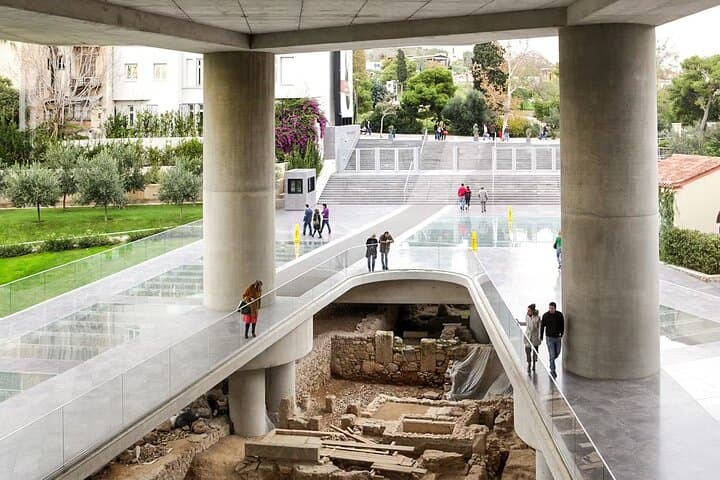
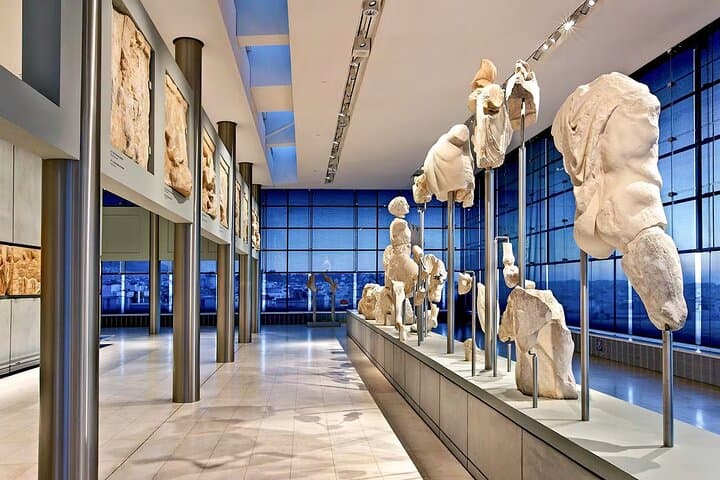
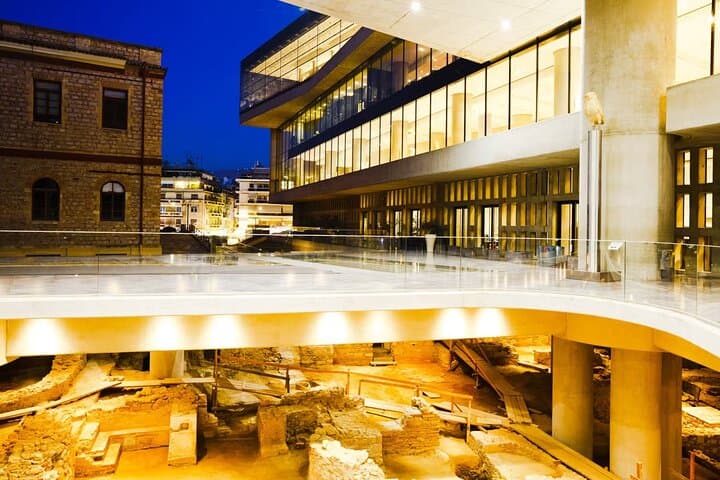
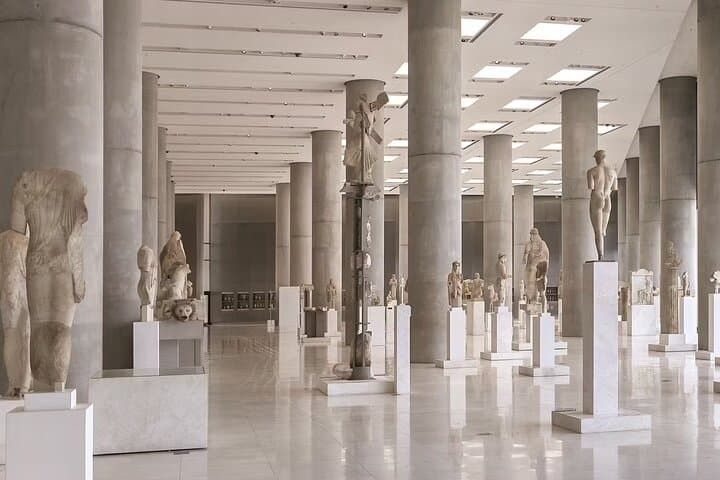
You step through the museum entrance and the city noise changes pitch; marble and light take over. Glass walkways reveal an ancient neighborhood frozen beneath modern foundations, while original Parthenon sculptures occupy cool, well-lit galleries. The building’s concrete and glass frame Athens’ rocky skyline, and each room narrows attention to carved drapery and chipped anatomy of gods and mortals.
You step through the museum entrance and the city noise changes pitch; marble and light take over. Glass walkways reveal an ancient neighborhood frozen beneath modern foundations, while original Parthenon sculptures occupy cool, well-lit galleries. The building’s concrete and glass frame Athens’ rocky skyline, and each room narrows attention to carved drapery and chipped anatomy of gods and mortals.
The Acropolis Museum collects finds from the Acropolis hill and its slopes — pottery, votive objects, and architectural fragments that trace Athens from the Archaic through the Roman eras. Geology is visible in the display: Pentelic marble from nearby quarries, seams of volcanic tuff, and stratified soil revealed in the excavation level. Culturally, the museum’s modern design was controversial when it opened but now serves as a bridge between the archaeological site above and the living city around it.
Practical guidance makes this visit smarter: skip-the-line tickets cut long summer waits, letting you allocate 60–180 minutes depending on interest. Expect security checks and variable crowding; mornings and late afternoons are less congested. Wear comfortable shoes for standing on glass and walking exhibits; a light layer handles cool, air-conditioned halls. Photography is generally allowed without flash; large backpacks may be restricted.
Pair this stop with the Acropolis hill for a full classical itinerary. Allow time to linger over the excavation level—the tactile details of everyday life in ancient Athens often outshine headline sculptures. With a little planning, the museum is both efficient and deeply illuminating.