THE ADVENTURE COLLECTIVE® · Independent discovery and booking for outdoor travel

A 16-day guided expedition that pairs the approachable ski slopes of Nevado Pisco with the technical, high-altitude ascent of Huascarán. This trip blends long glacier skis, roped alpine climbing and local mule-supported logistics—ideal for experienced ski-mountaineers aiming for Peru’s highest summit.
A 16-day guided expedition that pairs the approachable ski slopes of Nevado Pisco with the technical, high-altitude ascent of Huascarán. This trip blends long glacier skis, roped alpine climbing and local mule-supported logistics—ideal for experienced ski-mountaineers aiming for Peru’s highest summit.
You wake before the town of Huaraz has fully lit—headlamps cut small cones of light as the bus threads the Callejón de Huaylas and the first jagged teeth of the Cordillera Blanca appear, white and uncompromising against an ink-blue sky.
Verified experiences and guided adventures in the surrounding area.
Operated by Peru Expeditions Tours · Huaraz, Ancash
You wake before the town of Huaraz has fully lit—headlamps cut small cones of light as the bus threads the Callejón de Huaylas and the first jagged teeth of the Cordillera Blanca appear, white and uncompromising against an ink-blue sky.
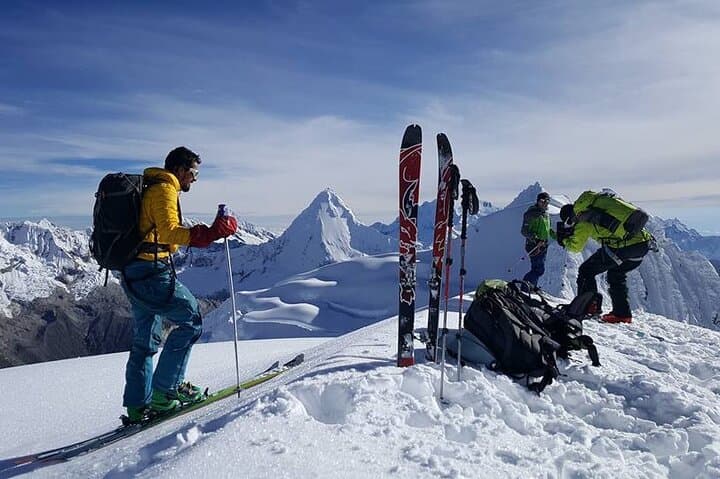
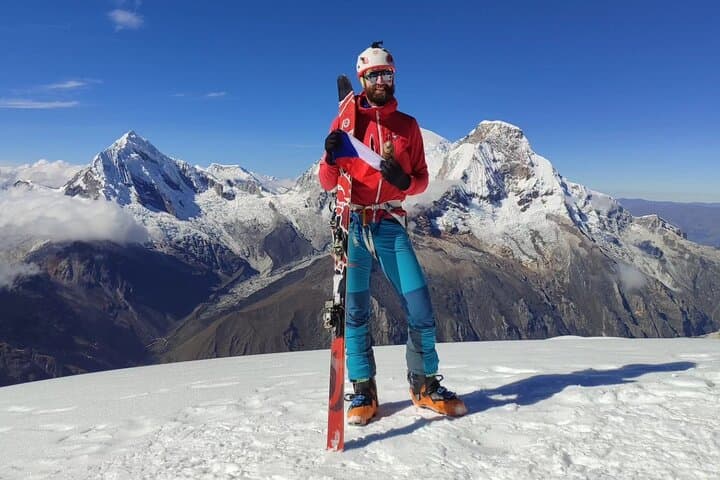
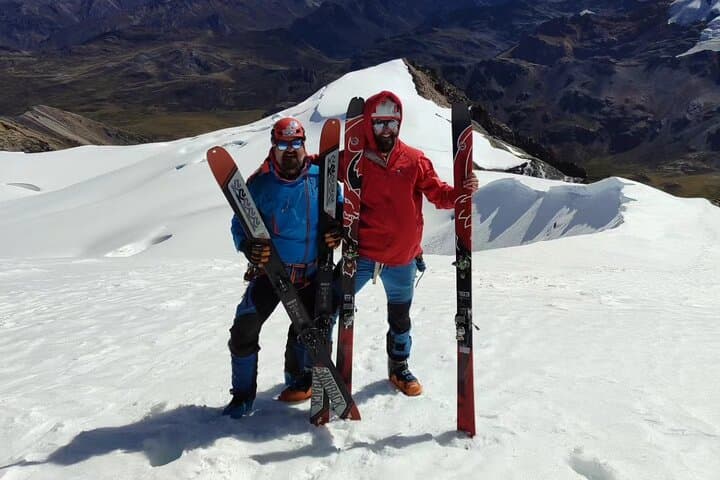
This 16-day expedition threads two very different challenges: Nevado Pisco (5,752m), a long, achievable glacier ski that sharpens legs and confidence, and Huascarán (6,768m), Peru’s highest peak, where steep ice and technical pitches demand full attention. The itinerary moves like an alpine campaign—bus transfer from Lima, acclimatization hikes to Churup Lake, mule-supported approaches to base camps, and nights in pared-down tents under a sky that seems close enough to touch.
Geologically, the Cordillera Blanca is a granite backbone carved by Pleistocene glaciers; seracs and moraines mark the slow arithmetic of ice. Culturally, the expedition cuts through Andean valleys where Quechua-speaking communities still tend highland pastures and build dry-stone corrals; porters and donkeys are part of a local economy that has supported mountaineering for a century.
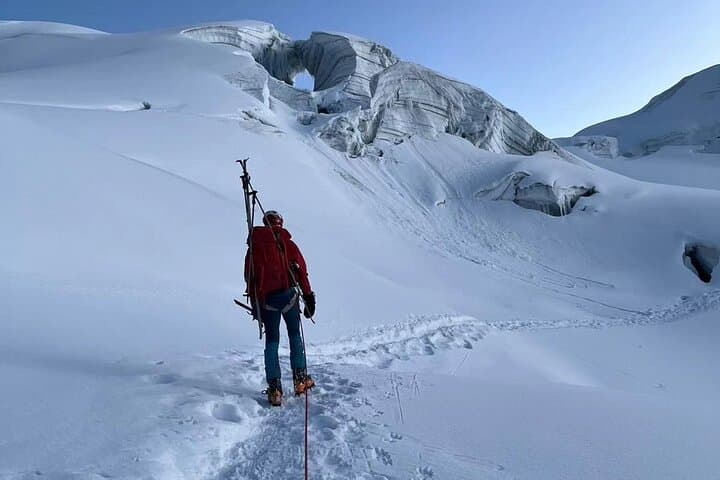
Nevado Pisco offers long, mellow slopes that allow ski mountaineers to practice cramponing and rope travel. Huascarán, by contrast, delivers sustained altitude, crevassed glaciers and short sections of steep ice up to 60 degrees—technical climbing that requires roped travel, front-pointing with crampons and careful route-finding.
Practical edge: come with staged acclimatization. The program builds rest days and a Churup Lake hike to reduce acute mountain sickness risk, but success depends on personal preparation—weeks of cardio, heavy-pack days, and previous glacier travel experience.
Logistics are robust: transfers between Lima and Huaraz, certified IFMGA guides, tent systems (North Face V25 shared), donkeys and porters, and meals prepared at camp. Expect early pre-dawn starts on summit attempts, long days on snow, and temperatures that swing from bright sun to severe wind-chill.
Packing and technique matter: insulated mountaineering boots, a reliable ski-touring setup for descent, technical crampons and ice tools for Huascarán, layered clothing for alpine sun and cold, and a compact crevasse-rescue kit. Satellite communication is available on request, but self-sufficiency is essential—know your knots, ice-ax arrests, and buddy rescue protocols.
Permits and park fees for Huascarán National Park are included, but book 2–3 months ahead to secure dates and logistics. For committed ski mountaineers seeking one of the Andes’ pure high-altitude experiences, this expedition pairs the joy of long glacier turns with the sobering achievement of a 6,700m summit.
expert.
16 days.
Participants should be in excellent aerobic shape with experience carrying heavy packs at altitude and previous glacier/ice experience.
Yes—previous glacier travel and experience above 5,000m strongly improves safety and summit probability.
Transfers, most meals, tents, porters/donkeys, certified IFMGA guide, park fees, and some accommodation in Lima and Huaraz are included.
Pisco offers long but moderate ski slopes; Huascarán’s descent requires strong alpine skiing skills on variable snow and steep sections.
A satellite phone and first-aid kit are available on request; guides typically carry emergency comms but personal devices are recommended.
Build weeks of aerobic training, weighted pack hikes, and technical practice on crampons and ice axes in the months before the trip.
Reserve 2–3 months in advance so guides can secure permits, park fees and logistics—peak season fills quickly.
The Cordillera Blanca has long been traversed by Quechua communities and was mapped by early 20th-century alpinists; modern guiding in Huaraz grew around these routes.
Huascarán National Park protects fragile glacial basins; stick to trails, minimize campfire use and carry out all waste to reduce impact.
Peru Expeditions Tours operates guided outdoor trips and adventures with an emphasis on safety, stewardship, and memorable experiences.
You wake before the town of Huaraz has fully lit—headlamps cut small cones of light as the bus threads the Callejón de Huaylas and the first jagged teeth of the Cordillera Blanca appear, white and uncompromising against an ink-blue sky.
You wake before the town of Huaraz has fully lit—headlamps cut small cones of light as the bus threads the Callejón de Huaylas and the first jagged teeth of the Cordillera Blanca appear, white and uncompromising against an ink-blue sky.
This 16-day expedition threads two very different challenges: Nevado Pisco (5,752m), a long, achievable glacier ski that sharpens legs and confidence, and Huascarán (6,768m), Peru’s highest peak, where steep ice and technical pitches demand full attention. The itinerary moves like an alpine campaign—bus transfer from Lima, acclimatization hikes to Churup Lake, mule-supported approaches to base camps, and nights in pared-down tents under a sky that seems close enough to touch.
Geologically, the Cordillera Blanca is a granite backbone carved by Pleistocene glaciers; seracs and moraines mark the slow arithmetic of ice. Culturally, the expedition cuts through Andean valleys where Quechua-speaking communities still tend highland pastures and build dry-stone corrals; porters and donkeys are part of a local economy that has supported mountaineering for a century.
Nevado Pisco offers long, mellow slopes that allow ski mountaineers to practice cramponing and rope travel. Huascarán, by contrast, delivers sustained altitude, crevassed glaciers and short sections of steep ice up to 60 degrees—technical climbing that requires roped travel, front-pointing with crampons and careful route-finding.
Practical edge: come with staged acclimatization. The program builds rest days and a Churup Lake hike to reduce acute mountain sickness risk, but success depends on personal preparation—weeks of cardio, heavy-pack days, and previous glacier travel experience.
Logistics are robust: transfers between Lima and Huaraz, certified IFMGA guides, tent systems (North Face V25 shared), donkeys and porters, and meals prepared at camp. Expect early pre-dawn starts on summit attempts, long days on snow, and temperatures that swing from bright sun to severe wind-chill.
Packing and technique matter: insulated mountaineering boots, a reliable ski-touring setup for descent, technical crampons and ice tools for Huascarán, layered clothing for alpine sun and cold, and a compact crevasse-rescue kit. Satellite communication is available on request, but self-sufficiency is essential—know your knots, ice-ax arrests, and buddy rescue protocols.
Permits and park fees for Huascarán National Park are included, but book 2–3 months ahead to secure dates and logistics. For committed ski mountaineers seeking one of the Andes’ pure high-altitude experiences, this expedition pairs the joy of long glacier turns with the sobering achievement of a 6,700m summit.