THE ADVENTURE COLLECTIVE® · Independent discovery and booking for outdoor travel

Leave the manicured paths of Kirstenbosch and climb a river-cut throat of sandstone to Table Mountain’s plateau. The Skeleton Gorge morning hike pairs steep scrambling, endemic fynbos and sweeping Cape Town panoramas with expert guiding and hotel transfer.
Leave the manicured paths of Kirstenbosch and climb a river-cut throat of sandstone to Table Mountain’s plateau. The Skeleton Gorge morning hike pairs steep scrambling, endemic fynbos and sweeping Cape Town panoramas with expert guiding and hotel transfer.
Morning arrives in a slow, cool exhale at Kirstenbosch. Dew beads the fynbos and the Boomslang canopy walkway hooks a line through the trees like a raised spine. A guided group slips away from the garden’s gates and into the shaded mouth of Skeleton Gorge, where a braided stream dares you up the mountain; mossed rocks, ironwood trunks and granite steps push the rhythm of the climb.
Verified experiences and guided adventures in the surrounding area.
Operated by Big startups pty ltd · Cape Town, Western Cape
Morning arrives in a slow, cool exhale at Kirstenbosch. Dew beads the fynbos and the Boomslang canopy walkway hooks a line through the trees like a raised spine. A guided group slips away from the garden’s gates and into the shaded mouth of Skeleton Gorge, where a braided stream dares you up the mountain; mossed rocks, ironwood trunks and granite steps push the rhythm of the climb.
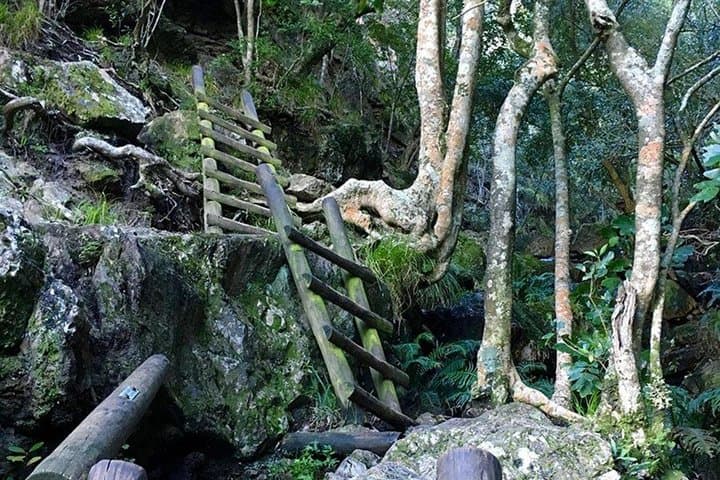
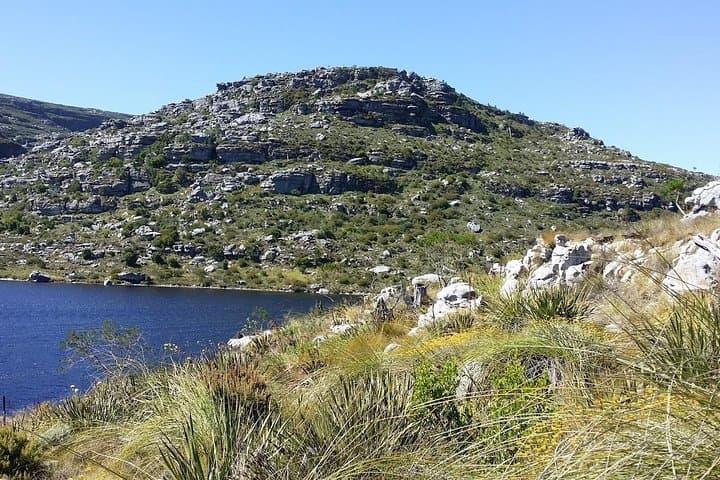
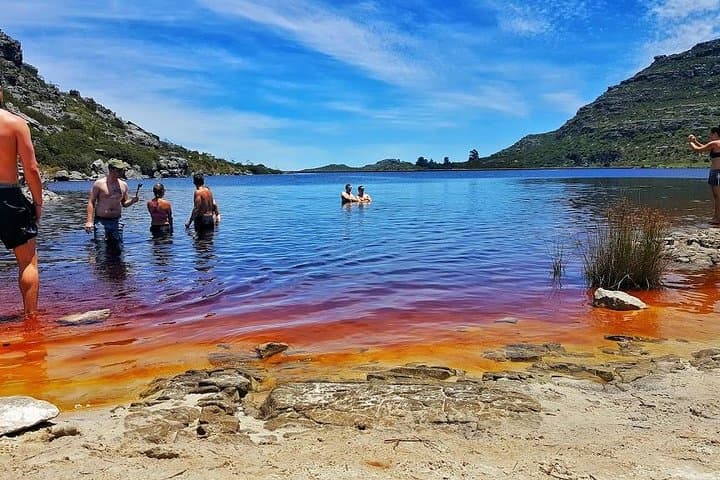
The route up Skeleton Gorge is pure Table Mountain: steep, ancient sandstone folded and scoured into gullies and ledges over more than 450 million years. The trail follows a ravine that was once a seasonal river channel, so hikers trade flat paths for rooted steps, ladders and short rock scrambles. At the summit the plateau unfurls — a wind-ruled plain that opens onto sweeping views of Cape Town and the Atlantic. The descent down Nursery Ravine cuts through different terrain: wider gullies, open slopes of endemic proteas and quieter pools where birdlife drums the air.
Kirstenbosch itself is part botanical archive and part cultural landmark; established in 1913, it was set aside to protect South Africa’s unique Cape Floral Kingdom. The hike stitches those cultivated collections to wild fynbos on Table Mountain’s eastern face. Guides often weave natural-history notes into the rhythm of the walk — from the adaptations of proteas to the spoor of a dassie (rock hyrax) — giving context to the landscape’s fragile biodiversity.
Practicalities are straightforward: expect a full six hours on the trail with moderate to sustained climbing and roughly 600–800 meters of elevation gain depending on the line taken. The operator typically provides bottled water, snacks and hotel pickup in Cape Town. Footwear with solid tread and ankle support is non-negotiable; the gorge can be slippery, especially after rain. Start early for cooler temperatures and the clearest light for photos; afternoons bring stronger winds across the plateau.
Safety and logistics: a guided group keeps navigation simple and efficient, but the terrain demands attention — hands-on scrambling in sections and exposed edges at the top. Pack layers for a changeable microclimate, carry 2–3 liters of water, and leave no trace: this is one of the world’s richest floral hotspots and it reacts quickly to disturbance. Finish the hike with a relaxed transfer back through the southern suburbs and a well-earned coffee in town, bearing views that explain why people keep coming back to Table Mountain.
challenging.
6 hours.
Good cardiovascular fitness and comfort with sustained uphill hiking and short scrambling sections; stair-step endurance is helpful.
Expect a full six hours with roughly 600–800 meters of elevation gain depending on the route; sections include steep steps and short scrambles.
Confirm with your operator—many guided departures include the botanical gardens entry and transfers, but some require you to pay the Kirstenbosch gate fee separately.
Fit beginners who are comfortable with steep walking and scrambling can complete it with a guide, but it’s rated challenging due to sustained uphill and exposed sections.
Toilets are available at Kirstenbosch before you start; on the trail bring your own water (2–3L) though guides provide bottled water and snacks.
If heavy rain or high winds are forecast the operator may cancel—confirm the 24‑hour cancellation window and check for alternative dates or refunds.
Yes—expect endemic fynbos species, sunbirds and the occasional rock hyrax (dassie); the area is a botanical hotspot, so photography and quiet observation pay off.
Kirstenbosch opened in 1913 to conserve South Africa’s unique Cape Floral Kingdom and the trail follows ancient river channels cut into Table Mountain sandstone.
The Cape Floral Kingdom is globally rare and fire-sensitive; hikers should stick to trails, avoid bringing single-use plastics and respect seasonal burning regimes.
Big startups pty ltd operates guided outdoor trips and adventures with an emphasis on safety, stewardship, and memorable experiences.
Morning arrives in a slow, cool exhale at Kirstenbosch. Dew beads the fynbos and the Boomslang canopy walkway hooks a line through the trees like a raised spine. A guided group slips away from the garden’s gates and into the shaded mouth of Skeleton Gorge, where a braided stream dares you up the mountain; mossed rocks, ironwood trunks and granite steps push the rhythm of the climb.
Morning arrives in a slow, cool exhale at Kirstenbosch. Dew beads the fynbos and the Boomslang canopy walkway hooks a line through the trees like a raised spine. A guided group slips away from the garden’s gates and into the shaded mouth of Skeleton Gorge, where a braided stream dares you up the mountain; mossed rocks, ironwood trunks and granite steps push the rhythm of the climb.
The route up Skeleton Gorge is pure Table Mountain: steep, ancient sandstone folded and scoured into gullies and ledges over more than 450 million years. The trail follows a ravine that was once a seasonal river channel, so hikers trade flat paths for rooted steps, ladders and short rock scrambles. At the summit the plateau unfurls — a wind-ruled plain that opens onto sweeping views of Cape Town and the Atlantic. The descent down Nursery Ravine cuts through different terrain: wider gullies, open slopes of endemic proteas and quieter pools where birdlife drums the air.
Kirstenbosch itself is part botanical archive and part cultural landmark; established in 1913, it was set aside to protect South Africa’s unique Cape Floral Kingdom. The hike stitches those cultivated collections to wild fynbos on Table Mountain’s eastern face. Guides often weave natural-history notes into the rhythm of the walk — from the adaptations of proteas to the spoor of a dassie (rock hyrax) — giving context to the landscape’s fragile biodiversity.
Practicalities are straightforward: expect a full six hours on the trail with moderate to sustained climbing and roughly 600–800 meters of elevation gain depending on the line taken. The operator typically provides bottled water, snacks and hotel pickup in Cape Town. Footwear with solid tread and ankle support is non-negotiable; the gorge can be slippery, especially after rain. Start early for cooler temperatures and the clearest light for photos; afternoons bring stronger winds across the plateau.
Safety and logistics: a guided group keeps navigation simple and efficient, but the terrain demands attention — hands-on scrambling in sections and exposed edges at the top. Pack layers for a changeable microclimate, carry 2–3 liters of water, and leave no trace: this is one of the world’s richest floral hotspots and it reacts quickly to disturbance. Finish the hike with a relaxed transfer back through the southern suburbs and a well-earned coffee in town, bearing views that explain why people keep coming back to Table Mountain.