THE ADVENTURE COLLECTIVE® · Independent discovery and booking for outdoor travel

Drive the Skeleton Coast from Swakopmund to Cape Cross for a half-day of shipwrecks, desert fog, and a walkable boardwalk into a colony of thousands of Cape fur seals. This concise outing pairs natural history with chilled coastal landscapes and photography-ready stops.
Drive the Skeleton Coast from Swakopmund to Cape Cross for a half-day of shipwrecks, desert fog, and a walkable boardwalk into a colony of thousands of Cape fur seals. This concise outing pairs natural history with chilled coastal landscapes and photography-ready stops.
The morning fog rolls off the Atlantic and slides inland like a slow tide, softening the sharp spine of the Skeleton Coast as a convoy heads north from Swakopmund. Sand fields ripple to the horizon, then a wooden walkway appears—leading you within noisy reach of thousands of Cape fur seals that claim the black-sand shore.
Verified experiences and guided adventures in the surrounding area.
Operated by Desert Dunes and Dust Tours · Swakopmund, Erongo
The morning fog rolls off the Atlantic and slides inland like a slow tide, softening the sharp spine of the Skeleton Coast as a convoy heads north from Swakopmund. Sand fields ripple to the horizon, then a wooden walkway appears—leading you within noisy reach of thousands of Cape fur seals that claim the black-sand shore.
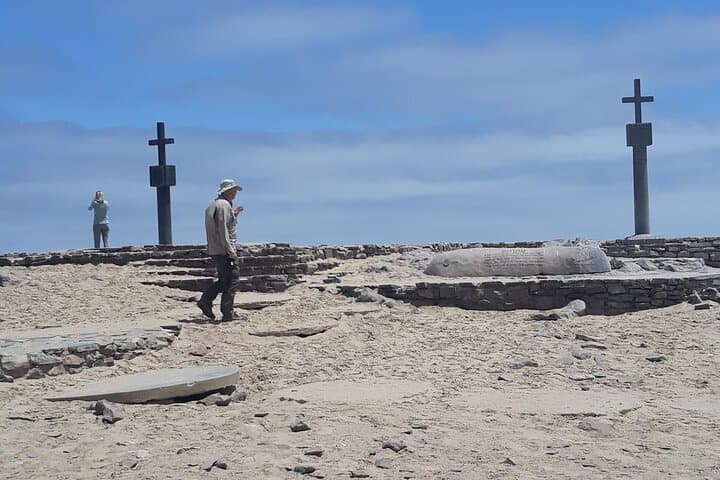
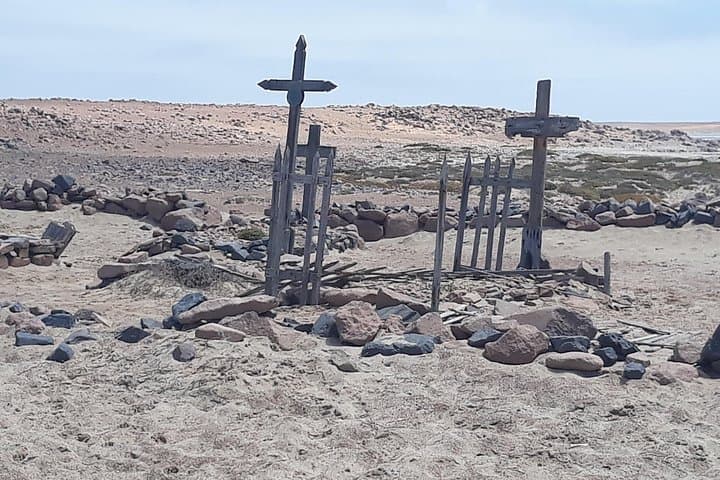
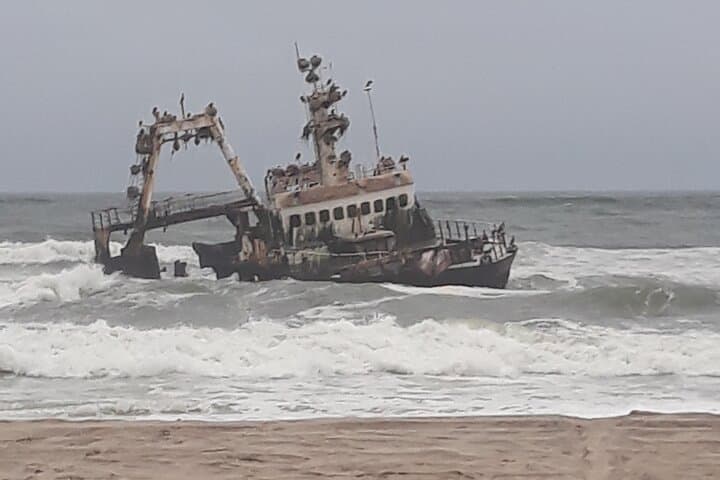
This four-hour outing threads natural history with human stories. In 1493 the navigator Diego Cao (Diego Cão) placed a stone cross near Cape Cross; today a memorial marks that early European contact. Geologically the Skeleton Coast is an exposed coastal desert where cold Benguela currents birth dense fogs that feed tiny lichens and hardy plants—life supported more by moisture in the air than by rain. Scattered shipwrecks and rusting hulls punctuate the sand, reminders of storms and treacherous shoals that gave the stretch its name.
Local stops on the route include the Zeila wreck and a lichen field where guides explain survival strategies of cryptic plants. You'll pass small holiday settlements and the Oranjemund/Henties Bay corridor; a light desert brunch is served near Henties before time at the seal colony. Expect strong smells, photographic opportunities, and a boardwalk that brings you close while protecting fragile dunes.
Practical: travel about 100–140 km north of Swakopmund by vehicle; bring sun protection, sturdy shoes for dune sand, and binoculars. Sandstorms are possible—travelers with spinal or serious heart issues should consult a doctor. Follow your guide's instructions around wildlife: seals are wild, fast, and protective of space. Timing your visit for cooler morning hours yields better light and calmer seals for photography.
easy.
4 hours.
Light walking on sand and boardwalks; suitable for most fitness levels but not for those with serious spinal or heart conditions
The drive is roughly 100–140 km one-way depending on route and stops, with the full round trip included in the four-hour tour.
No—there is a raised boardwalk and designated viewing areas to keep visitors at a safe distance while protecting both people and seals.
Yes, the tour is family-friendly, but infants must sit on an adult's lap and close supervision is required around viewing areas.
Rain is rare; however sandstorms can cause delays or rescheduling. The operator offers alternative dates or refunds if necessary.
Portuguese explorer Diego Cão placed an early marker in this area in the late 15th century; the coast's shipwrecks reflect centuries of maritime hazard along the Benguela-swept shore.
The seal colony is managed to balance tourism with wildlife welfare—stay on paths, avoid feeding animals, and pack out all waste to protect fragile desert and coastal habitats.
Desert Dunes and Dust Tours operates guided outdoor trips and adventures with an emphasis on safety, stewardship, and memorable experiences.
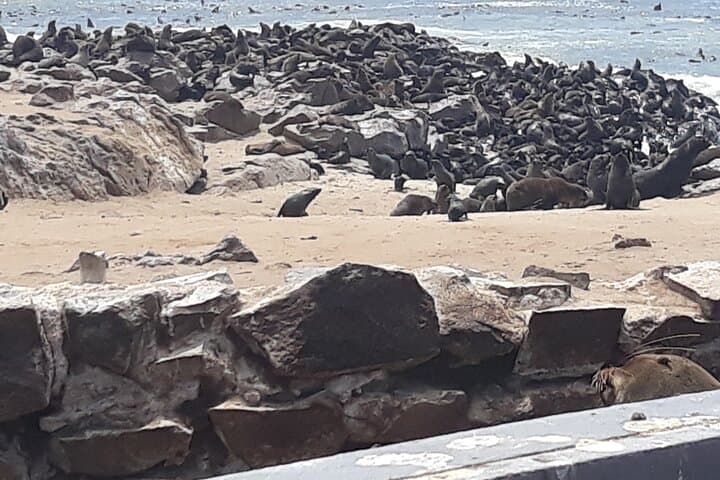
The morning fog rolls off the Atlantic and slides inland like a slow tide, softening the sharp spine of the Skeleton Coast as a convoy heads north from Swakopmund. Sand fields ripple to the horizon, then a wooden walkway appears—leading you within noisy reach of thousands of Cape fur seals that claim the black-sand shore.
The morning fog rolls off the Atlantic and slides inland like a slow tide, softening the sharp spine of the Skeleton Coast as a convoy heads north from Swakopmund. Sand fields ripple to the horizon, then a wooden walkway appears—leading you within noisy reach of thousands of Cape fur seals that claim the black-sand shore.
This four-hour outing threads natural history with human stories. In 1493 the navigator Diego Cao (Diego Cão) placed a stone cross near Cape Cross; today a memorial marks that early European contact. Geologically the Skeleton Coast is an exposed coastal desert where cold Benguela currents birth dense fogs that feed tiny lichens and hardy plants—life supported more by moisture in the air than by rain. Scattered shipwrecks and rusting hulls punctuate the sand, reminders of storms and treacherous shoals that gave the stretch its name.
Local stops on the route include the Zeila wreck and a lichen field where guides explain survival strategies of cryptic plants. You'll pass small holiday settlements and the Oranjemund/Henties Bay corridor; a light desert brunch is served near Henties before time at the seal colony. Expect strong smells, photographic opportunities, and a boardwalk that brings you close while protecting fragile dunes.
Practical: travel about 100–140 km north of Swakopmund by vehicle; bring sun protection, sturdy shoes for dune sand, and binoculars. Sandstorms are possible—travelers with spinal or serious heart issues should consult a doctor. Follow your guide's instructions around wildlife: seals are wild, fast, and protective of space. Timing your visit for cooler morning hours yields better light and calmer seals for photography.