THE ADVENTURE COLLECTIVE® · Independent discovery and booking for outdoor travel

Take a full‑day trip from Seattle into the tulip fields of Skagit Valley for massed color, U‑pick blooms, and a stop in the waterfront town of La Conner. This practical guide covers what to expect, local history, and smart tips for timing and gear.
Take a full‑day trip from Seattle into the tulip fields of Skagit Valley for massed color, U‑pick blooms, and a stop in the waterfront town of La Conner. This practical guide covers what to expect, local history, and smart tips for timing and gear.
A low, cool wind moves through the rows and seems to push the tulips forward, each stem leaning like an audience toward the road. On a clear spring morning the Skagit Valley opens up as a map of color: long, organized bands of scarlet, yellow and violet laid over flat agricultural land. The tour leaves Seattle and follows I‑5 north for roughly 70–80 miles, bringing the city close enough to feel and far enough to be elsewhere.
Verified experiences and guided adventures in the surrounding area.
Operated by Customized Tours · Mount Vernon, Washington
A low, cool wind moves through the rows and seems to push the tulips forward, each stem leaning like an audience toward the road. On a clear spring morning the Skagit Valley opens up as a map of color: long, organized bands of scarlet, yellow and violet laid over flat agricultural land. The tour leaves Seattle and follows I‑5 north for roughly 70–80 miles, bringing the city close enough to feel and far enough to be elsewhere.
Skagit County’s bulb industry grew in the 20th century with influences from Dutch growers; today the valley’s fields are working farmland, rotated annually and planted by seed and bulb to stage those mass blooms. Geologically the valley is glacially derived—broad, fertile floodplain soils that support intensive bulb production. Culturally, small towns like Mount Vernon and La Conner serve as market towns: farm stands, galleries, and a quiet maritime waterfront that reveal the region’s agricultural roots and coastal connections.
On this day trip visitors typically split time between two garden experiences—one large commercial field and one display garden—plus a lunch stop in La Conner. Expect flat walking across farm paths and boardwalks, 60–90 minute visits per site, and ample photo opportunities. Practical notes: go early to avoid crowds and low light for photos, wear waterproof shoes for muddy sections, bring a reusable water bottle and layers for ocean‑influenced winds. If you plan to U‑pick, follow farm rules and use the provided scissors or buckets; farms often include a 10‑stem take home. The trip is a short, sensory push into regional agriculture with easy walking and big visual payoff.
easy.
8 hours.
Suitable for most fitness levels—short, mostly flat walks with occasional uneven farm paths
The full tour runs about eight hours round‑trip, including roughly 60–90 minutes at each farm and a lunch stop in La Conner.
Yes—restrooms are available at the garden sites and in La Conner, but facilities at farms can be basic; plan accordingly.
Many farms offer U‑pick sections and provide scissors and buckets; the tour often includes a set number of stems—follow the farm’s rules.
Yes—paths at display gardens are generally stroller‑accessible, though some field terrain can be uneven; infants must sit on laps per operator policy.
Skagit Valley’s bulb industry expanded in the 20th century with influence from Dutch growers; the spring festival grew as farms opened to the public to celebrate peak bloom.
Farms manage plantings on a rotation and ask visitors to stay on paths to minimize trampling; bring reusable containers and dispose of waste properly to reduce impact.
Customized Tours operates guided outdoor trips and adventures with an emphasis on safety, stewardship, and memorable experiences.


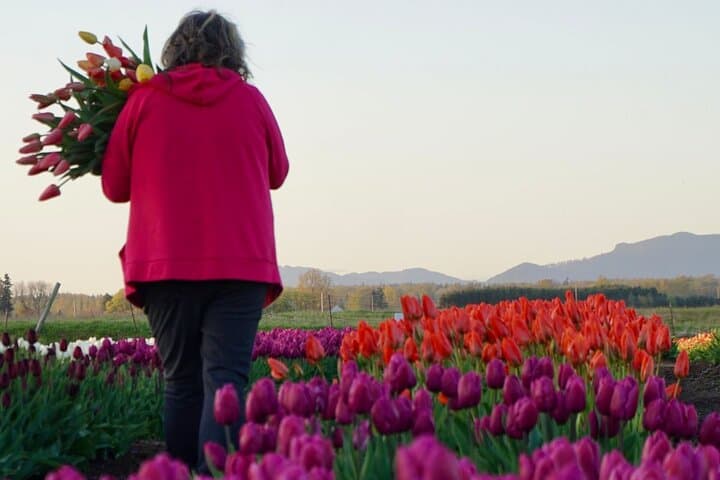

A low, cool wind moves through the rows and seems to push the tulips forward, each stem leaning like an audience toward the road. On a clear spring morning the Skagit Valley opens up as a map of color: long, organized bands of scarlet, yellow and violet laid over flat agricultural land. The tour leaves Seattle and follows I‑5 north for roughly 70–80 miles, bringing the city close enough to feel and far enough to be elsewhere.
A low, cool wind moves through the rows and seems to push the tulips forward, each stem leaning like an audience toward the road. On a clear spring morning the Skagit Valley opens up as a map of color: long, organized bands of scarlet, yellow and violet laid over flat agricultural land. The tour leaves Seattle and follows I‑5 north for roughly 70–80 miles, bringing the city close enough to feel and far enough to be elsewhere.
Skagit County’s bulb industry grew in the 20th century with influences from Dutch growers; today the valley’s fields are working farmland, rotated annually and planted by seed and bulb to stage those mass blooms. Geologically the valley is glacially derived—broad, fertile floodplain soils that support intensive bulb production. Culturally, small towns like Mount Vernon and La Conner serve as market towns: farm stands, galleries, and a quiet maritime waterfront that reveal the region’s agricultural roots and coastal connections.
On this day trip visitors typically split time between two garden experiences—one large commercial field and one display garden—plus a lunch stop in La Conner. Expect flat walking across farm paths and boardwalks, 60–90 minute visits per site, and ample photo opportunities. Practical notes: go early to avoid crowds and low light for photos, wear waterproof shoes for muddy sections, bring a reusable water bottle and layers for ocean‑influenced winds. If you plan to U‑pick, follow farm rules and use the provided scissors or buckets; farms often include a 10‑stem take home. The trip is a short, sensory push into regional agriculture with easy walking and big visual payoff.