THE ADVENTURE COLLECTIVE® · Independent discovery and booking for outdoor travel

Walk and climb across Falljökull’s blue ice with certified guides from Skaftafell Visitor Centre. This 4–4.5 hour small-group tour pairs glacier hiking with beginner ice-climbing on vertical walls — gear and instruction included.
Walk and climb across Falljökull’s blue ice with certified guides from Skaftafell Visitor Centre. This 4–4.5 hour small-group tour pairs glacier hiking with beginner ice-climbing on vertical walls — gear and instruction included.
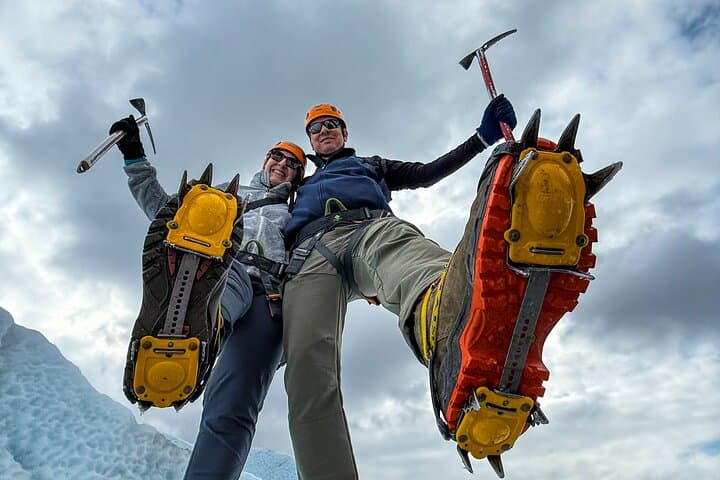
You step from the visitor center into wind that tastes of distant sea and crushed stone. The moraine opens like a jaw and the glacier waits beyond — an expanse of blue ice folding into itself, creaking and sighing as it moves. Under the guide’s calm voice you clip on crampons, feel metal take, and begin the slow, deliberate rhythm of walking on a living surface.
Verified experiences and guided adventures in the surrounding area.
Operated by Icelandic Mountain Guides · Skaftafell, Suðurland
You step from the visitor center into wind that tastes of distant sea and crushed stone. The moraine opens like a jaw and the glacier waits beyond — an expanse of blue ice folding into itself, creaking and sighing as it moves. Under the guide’s calm voice you clip on crampons, feel metal take, and begin the slow, deliberate rhythm of walking on a living surface.
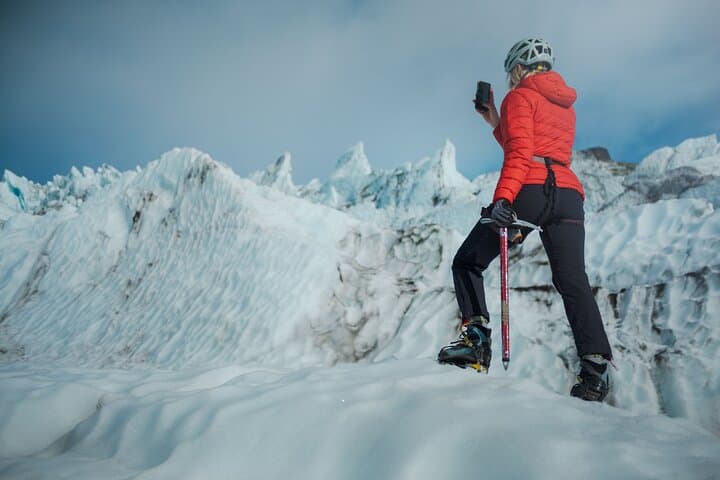
Falljökull is an outlet of Europe’s largest ice cap, Vatnajökull, and the ice underfoot is younger than it looks. Layers of compressed snow and refrozen meltwater create the bright, glassy blues and the deep, sculpted features guides point out: moulin rims where meltwater plunges into the glacier, serrated seracs, and narrow crevasses framed with black volcanic ash. These are not static sculptures but a landscape in motion — the glacier pulls itself forward, cracks and reforms, daring you to read its lines.
Iceland’s eastern glacial country is shaped by the slow dialogue between ice and fire. Beneath your boots lies basalt and volcanic ash from eruptions that fed and scarred the ice. Human history here is sparse but present — from early Norse travelers who crossed the plains to modern mountaineers mapping routes across an ever-changing surface. Local guides with decades of experience translate the glacier’s language into safety cues and geological stories.
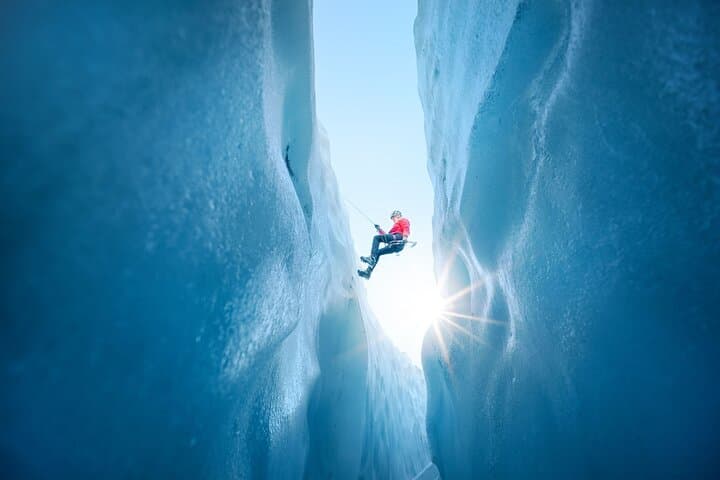
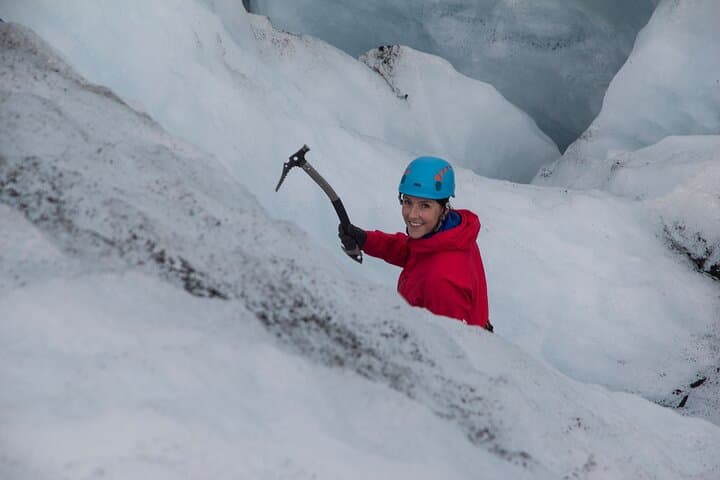
The climb itself is deliberately approachable. After a concise safety briefing you’re taught ice-axe placement, front-pointing with crampons, and basic rope-team procedures. The highlight is a short, vertical ice wall rigged for beginners: three controlled, supported climbs where you learn to trust your tools and the belayer’s rhythm. It’s technical enough to feel earned but designed for first-timers.
Practicalities matter in a place that can change on the hour. Wear crater-stable boots (rental options exist, but confirm size in advance), layer for wind and sun, and carry water in an insulated bottle to avoid freezing. The tour runs about 4–4.5 hours with roughly 3 hours on the ice; small groups (2–6 per guide) mean individual attention and time for questions and photos.
Weather can cancel activities — guides prioritize safety and will reschedule or refund if conditions turn. Bring a camera with spare batteries (cold drains them fast) and a sense of patience: the glacier rewards attentive travelers with striking textures, acute light in crevasses, and a quiet that feels like the planet inhaling. For anyone curious about the mechanics of ice and the thrill of vertical movement, the Skaftafell glacier hike and beginner ice climb is a compact, high-impact way to meet the ice on its terms.
moderate.
4–4.5 hours (approx.).
Moderate fitness — able to hike on uneven icy terrain for several hours and follow basic instructions for climbing.
Participants must be at least 14 years old; minors should be accompanied by an adult.
No — guides teach basic ice-climbing and rope techniques suitable for beginners.
Guides supply helmets, crampons, harnesses, ice axes, ropes, and technical glacier equipment; bring your own clothing and boots if possible.
Meet at the Icelandic Mountain Guides Base Camp next to the Skaftafell Visitor Centre — arrive 20 minutes early.
Tours may be canceled for safety; the operator will refund or offer alternate dates if conditions prevent a safe outing.
Yes — but protect batteries from cold and secure cameras on a strap; phones are prone to rapid battery drain in low temperatures.
Falljökull is an outlet of Vatnajökull, shaped by cycles of volcanic activity and ice flow that have carved the southeast coast over centuries.
Vatnajökull National Park manages access to minimize impact; stay on guided routes to avoid fragile ice features and follow leave-no-trace practices.
Icelandic Mountain Guides operates guided outdoor trips and adventures with an emphasis on safety, stewardship, and memorable experiences.
You step from the visitor center into wind that tastes of distant sea and crushed stone. The moraine opens like a jaw and the glacier waits beyond — an expanse of blue ice folding into itself, creaking and sighing as it moves. Under the guide’s calm voice you clip on crampons, feel metal take, and begin the slow, deliberate rhythm of walking on a living surface.
You step from the visitor center into wind that tastes of distant sea and crushed stone. The moraine opens like a jaw and the glacier waits beyond — an expanse of blue ice folding into itself, creaking and sighing as it moves. Under the guide’s calm voice you clip on crampons, feel metal take, and begin the slow, deliberate rhythm of walking on a living surface.
Falljökull is an outlet of Europe’s largest ice cap, Vatnajökull, and the ice underfoot is younger than it looks. Layers of compressed snow and refrozen meltwater create the bright, glassy blues and the deep, sculpted features guides point out: moulin rims where meltwater plunges into the glacier, serrated seracs, and narrow crevasses framed with black volcanic ash. These are not static sculptures but a landscape in motion — the glacier pulls itself forward, cracks and reforms, daring you to read its lines.
Iceland’s eastern glacial country is shaped by the slow dialogue between ice and fire. Beneath your boots lies basalt and volcanic ash from eruptions that fed and scarred the ice. Human history here is sparse but present — from early Norse travelers who crossed the plains to modern mountaineers mapping routes across an ever-changing surface. Local guides with decades of experience translate the glacier’s language into safety cues and geological stories.
The climb itself is deliberately approachable. After a concise safety briefing you’re taught ice-axe placement, front-pointing with crampons, and basic rope-team procedures. The highlight is a short, vertical ice wall rigged for beginners: three controlled, supported climbs where you learn to trust your tools and the belayer’s rhythm. It’s technical enough to feel earned but designed for first-timers.
Practicalities matter in a place that can change on the hour. Wear crater-stable boots (rental options exist, but confirm size in advance), layer for wind and sun, and carry water in an insulated bottle to avoid freezing. The tour runs about 4–4.5 hours with roughly 3 hours on the ice; small groups (2–6 per guide) mean individual attention and time for questions and photos.
Weather can cancel activities — guides prioritize safety and will reschedule or refund if conditions turn. Bring a camera with spare batteries (cold drains them fast) and a sense of patience: the glacier rewards attentive travelers with striking textures, acute light in crevasses, and a quiet that feels like the planet inhaling. For anyone curious about the mechanics of ice and the thrill of vertical movement, the Skaftafell glacier hike and beginner ice climb is a compact, high-impact way to meet the ice on its terms.