THE ADVENTURE COLLECTIVE® · Independent discovery and booking for outdoor travel

Stand on the edge of Falljökull and walk into blue ice on a focused 4‑hour glacier hike. Small groups, expert guides, and super‑jeep transfers make this an accessible but real glacier experience in Skaftafell.
Stand on the edge of Falljökull and walk into blue ice on a focused 4‑hour glacier hike. Small groups, expert guides, and super‑jeep transfers make this an accessible but real glacier experience in Skaftafell.
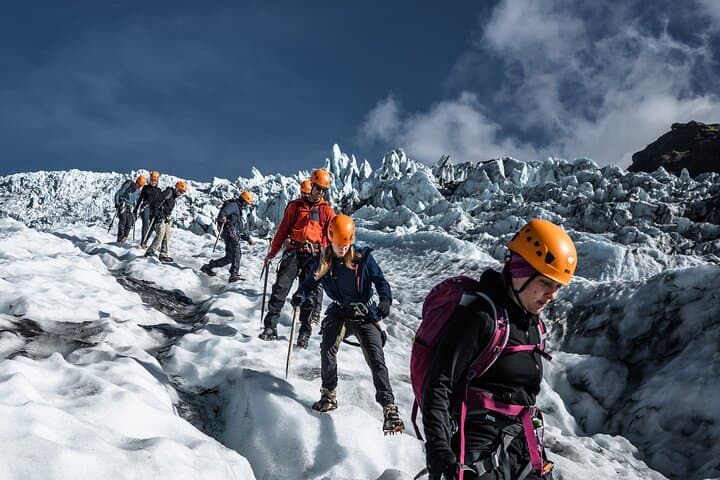
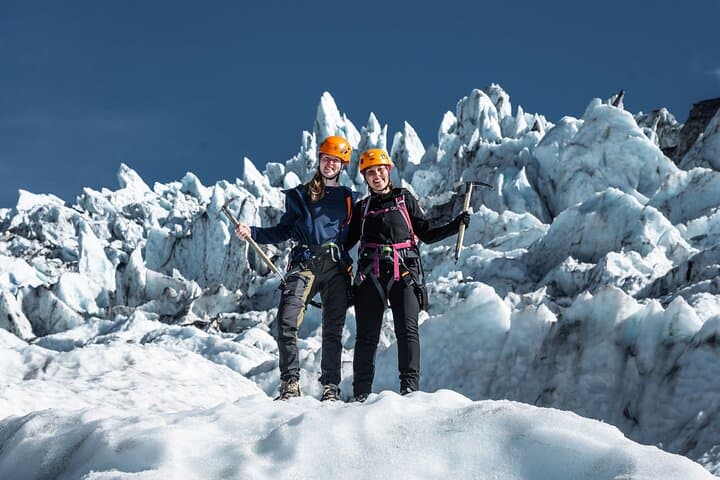
A cold wind pulls at your hood as the black expedition truck eases off the ring road and onto gravel. You step out at the margin where glacier turns to moraine; blue ice towers ahead like weathered architecture, and the guide’s breath puffs in short clouds. Within minutes you’re being fitted with crampons and an ice axe, the small-group rhythm forming—eight people, one guide—before the super‑jeep shoulders uphill to the true edge of Falljökull.
Verified experiences and guided adventures in the surrounding area.
Operated by Local Guide of Vatnajokull · Skaftafell, Southern Region
A cold wind pulls at your hood as the black expedition truck eases off the ring road and onto gravel. You step out at the margin where glacier turns to moraine; blue ice towers ahead like weathered architecture, and the guide’s breath puffs in short clouds. Within minutes you’re being fitted with crampons and an ice axe, the small-group rhythm forming—eight people, one guide—before the super‑jeep shoulders uphill to the true edge of Falljökull.
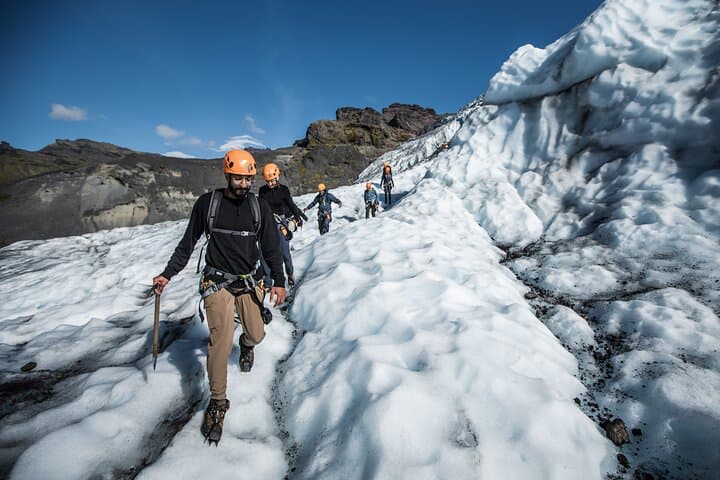
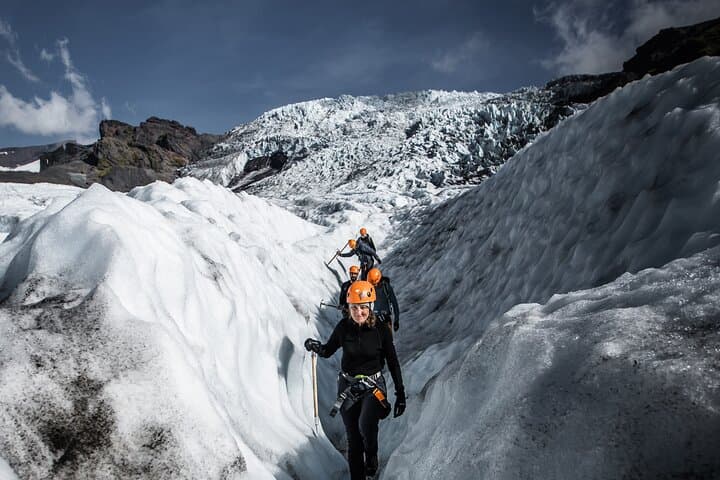
The hike itself is direct: roughly a 300‑meter ascent from the glacier edge toward an icefall that changes from week to week. Underfoot the ice clicks and shifts—clear runnels, opaque blue faces, and dusted layers that reveal the glacier’s history of compression and melt. You’ll walk across hard névé and step around ribboned crevasses, the guide pointing out moulins that have drilled like wells into the glacier’s spine. The soundscape is minimal—compressed air in the ice, a distant waterfall daring you to listen closer.
This landscape is a chapter of Vatnajökull, Europe’s largest ice cap. Over millennia, ice sculpted the peaks and buried older volcanic landforms; beneath the glacier, subglacial eruptions still reshape the terrain in sudden, dramatic events. Local guides carry this layered history forward—geology, recent climate trends, and the human stories of farmers and travelers who learned to read weather off the ice.
Practically, the tour is built for accessibility: no prior glacier experience required, but a moderate level of fitness is essential. Expect changeable conditions—wind, glare, and variable temperatures—so plan for layers, wind protection, and eye protection for bright, reflected light. The company runs carbon‑offset transfers in super‑jeeps and keeps groups small to reduce impact and increase safety; your guide rigs you, teaches basic self‑arrest, and leads you past fragile features.
Timing matters. Summer brings long daylight and softer snow, offering more time to explore sculpted features; shoulder seasons give stronger contrasts in ice color but colder conditions. Always listen to your guide about crevasse crossings and photo stops—safety comes first. After four hours you return the way you came, boots clanking in a rhythm that suddenly feels like the only language to speak here.
If you want a concentrated, hands‑on encounter with Icelandic ice—one that balances instruction, geology, and actual time on the glacier—this Falljökull hike is a compact, sensible way to stand on Europe’s frozen edge.
moderate.
4 hours.
Able to hike on uneven icy terrain, ascend ~300 m and walk several kilometers at a steady pace; good cardiovascular baseline recommended.
No prior experience is required; guides teach crampon use, self‑arrest basics, and safe glacier travel techniques on the hike.
Meet at Freysnes gas station by the black expedition truck; the company provides 4x4 super‑jeep transfer to the glacier edge.
Not recommended for pregnant travelers; children may join if physically capable and accepted by the guide—confirm with the operator when booking.
Tours can be canceled for safety; the operator offers full refunds if canceled at least 24 hours prior or when weather prevents safe operation.
Yes—crampons, ice axe, helmet and harness are included and fitted at the meeting point before the hike.
Expect moderate exertion: icy booting, short steep sections, and up to 300 m of ascent; a basic level of fitness and mobility is required.
Falljökull is an outlet of Vatnajökull, the largest glacier in Europe; the region records interactions between ice and volcanic activity that have shaped local landscapes and settlements.
The glacier is retreating; operators emphasize low‑impact routes, small groups, and carbon‑offset transfers to reduce footprint and protect fragile moraine and ice features.
Local Guide of Vatnajokull operates guided outdoor trips and adventures with an emphasis on safety, stewardship, and memorable experiences.
A cold wind pulls at your hood as the black expedition truck eases off the ring road and onto gravel. You step out at the margin where glacier turns to moraine; blue ice towers ahead like weathered architecture, and the guide’s breath puffs in short clouds. Within minutes you’re being fitted with crampons and an ice axe, the small-group rhythm forming—eight people, one guide—before the super‑jeep shoulders uphill to the true edge of Falljökull.
A cold wind pulls at your hood as the black expedition truck eases off the ring road and onto gravel. You step out at the margin where glacier turns to moraine; blue ice towers ahead like weathered architecture, and the guide’s breath puffs in short clouds. Within minutes you’re being fitted with crampons and an ice axe, the small-group rhythm forming—eight people, one guide—before the super‑jeep shoulders uphill to the true edge of Falljökull.
The hike itself is direct: roughly a 300‑meter ascent from the glacier edge toward an icefall that changes from week to week. Underfoot the ice clicks and shifts—clear runnels, opaque blue faces, and dusted layers that reveal the glacier’s history of compression and melt. You’ll walk across hard névé and step around ribboned crevasses, the guide pointing out moulins that have drilled like wells into the glacier’s spine. The soundscape is minimal—compressed air in the ice, a distant waterfall daring you to listen closer.
This landscape is a chapter of Vatnajökull, Europe’s largest ice cap. Over millennia, ice sculpted the peaks and buried older volcanic landforms; beneath the glacier, subglacial eruptions still reshape the terrain in sudden, dramatic events. Local guides carry this layered history forward—geology, recent climate trends, and the human stories of farmers and travelers who learned to read weather off the ice.
Practically, the tour is built for accessibility: no prior glacier experience required, but a moderate level of fitness is essential. Expect changeable conditions—wind, glare, and variable temperatures—so plan for layers, wind protection, and eye protection for bright, reflected light. The company runs carbon‑offset transfers in super‑jeeps and keeps groups small to reduce impact and increase safety; your guide rigs you, teaches basic self‑arrest, and leads you past fragile features.
Timing matters. Summer brings long daylight and softer snow, offering more time to explore sculpted features; shoulder seasons give stronger contrasts in ice color but colder conditions. Always listen to your guide about crevasse crossings and photo stops—safety comes first. After four hours you return the way you came, boots clanking in a rhythm that suddenly feels like the only language to speak here.
If you want a concentrated, hands‑on encounter with Icelandic ice—one that balances instruction, geology, and actual time on the glacier—this Falljökull hike is a compact, sensible way to stand on Europe’s frozen edge.