THE ADVENTURE COLLECTIVE® · Independent discovery and booking for outdoor travel

Spend six days tracing the high points of the Angkorian world with a private local host. From Angkor Wat at sunrise to jungle-templed Beng Mealea and the floating villages of Tonle Sap, this itinerary combines deep history with hands-on local insight.
Spend six days tracing the high points of the Angkorian world with a private local host. From Angkor Wat at sunrise to jungle-templed Beng Mealea and the floating villages of Tonle Sap, this itinerary combines deep history with hands-on local insight.
You arrive before dawn: the first light washes the lotus-filled moat and the central towers of Angkor Wat stand black against a pale sky. Your local guide folds history into the morning air—names of kings, the rhythm of river-of-stone bas-reliefs—and the crowd thins as you move deeper into galleries that feel older than the language used to describe them.
Verified experiences and guided adventures in the surrounding area.
Operated by Tour Guide-Siem Reap · Siem Reap, Siem Reap Province
You arrive before dawn: the first light washes the lotus-filled moat and the central towers of Angkor Wat stand black against a pale sky. Your local guide folds history into the morning air—names of kings, the rhythm of river-of-stone bas-reliefs—and the crowd thins as you move deeper into galleries that feel older than the language used to describe them.
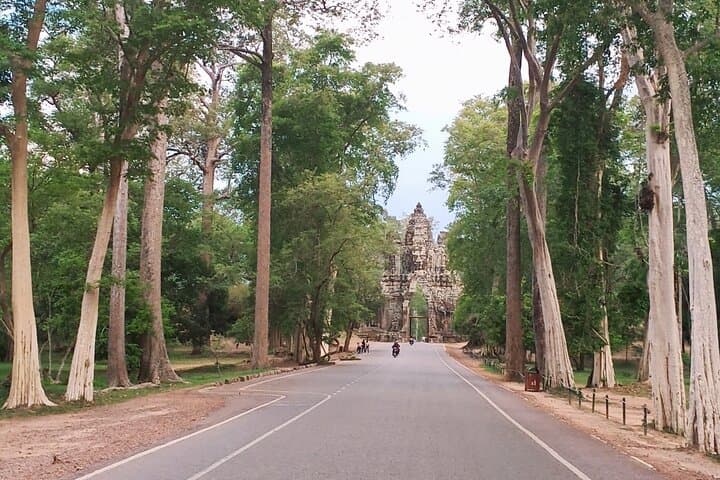
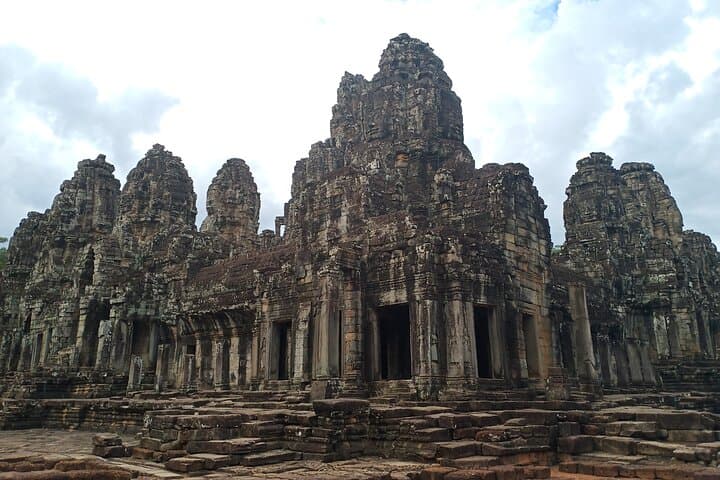
Across six days the route shifts between carved sandstone, forest-clad ruins and a living lake. Bayon’s 216 stone faces peer from temple towers; Ta Prohm lets Spung tree roots lay claim to stone walls; Banteay Srei’s pink sandstone is unexpectedly intimate; Kbal Spean’s River of a Thousand Lingas reveals religious practice cut directly into bedrock. Beng Mealea offers jungle-worn corridors and a sense of exploration absent at the main circuit, while Tonle Sap exposes a seasonal world where houses and livelihoods ride the water.
Geology and engineering intersect here: laterite foundations, sandstone reliefs transported along ancient river routes, and raised causeways that once managed hydrology for an imperial capital. Culture is present in small things—monks at Wat Bo, carvers at Artisans d’Angkor, and fishermen casting nets with practiced arcs.
Practical guidance: plan sunrise at Angkor Wat or sunset at Phnom Bakheng to avoid midday heat. Carry an Angkor pass (available nearby), breathable sun protection, and reusable water. Some sites involve stairs and uneven stone; allow moderate fitness for Kbal Spean and Beng Mealea. Your private guide can tailor pacing—use afternoons for a slow lunch or a Tonle Sap boat trip when temperatures peak.
moderate.
6 days.
Moderate — mostly easy walking but expect stairs, uneven stone and a 3 km jungle walk at Kbal Spean
Yes — the APSARA Angkor Pass is required (options for 1-, 3- or 7-day passes) and is purchased at the official ticket center near the park entrance.
Some areas and transport are accessible but many temples have steep steps and uneven surfaces; check with your operator for tailored access and which sites are suitable.
Yes — private guides commonly personalize routes and pacing, including skipping crowded sites or adding off-the-beaten-path temples like Beng Mealea or Ta Nei.
The cool, dry season (Nov–Feb) offers lower humidity and clearer skies; the wet season (May–Oct) has fewer visitors and lusher scenery but more rain.
Angkor was the heart of the Khmer Empire (9th–15th centuries); its city-planning, hydraulic systems and temple mountain architecture reflect imperial cosmology and engineering prowess.
Tourism supports local conservation but also stresses ancient stone and living communities; travel with accredited guides, avoid touching carvings and support local artisans to help channel benefits sustainably.
Tour Guide-Siem Reap operates guided outdoor trips and adventures with an emphasis on safety, stewardship, and memorable experiences.
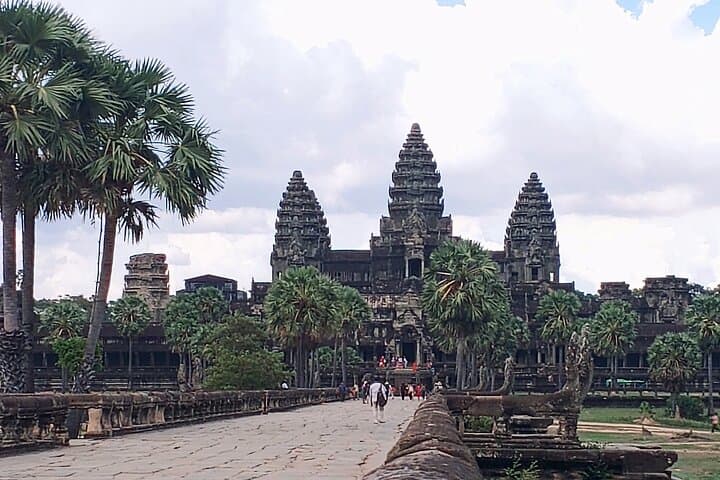
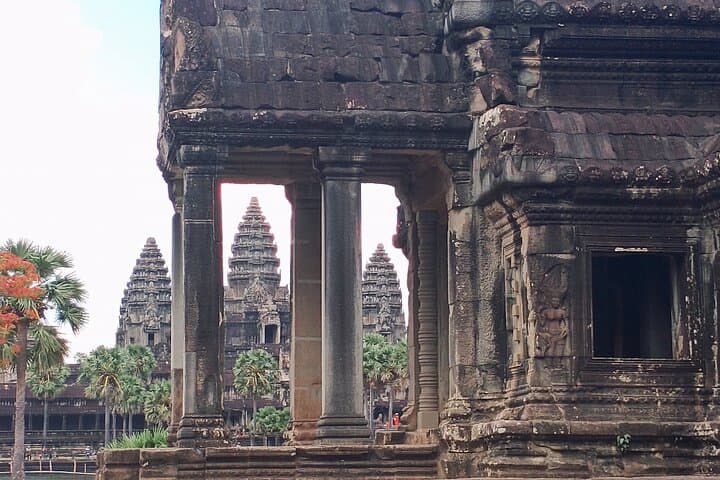
You arrive before dawn: the first light washes the lotus-filled moat and the central towers of Angkor Wat stand black against a pale sky. Your local guide folds history into the morning air—names of kings, the rhythm of river-of-stone bas-reliefs—and the crowd thins as you move deeper into galleries that feel older than the language used to describe them.
You arrive before dawn: the first light washes the lotus-filled moat and the central towers of Angkor Wat stand black against a pale sky. Your local guide folds history into the morning air—names of kings, the rhythm of river-of-stone bas-reliefs—and the crowd thins as you move deeper into galleries that feel older than the language used to describe them.
Across six days the route shifts between carved sandstone, forest-clad ruins and a living lake. Bayon’s 216 stone faces peer from temple towers; Ta Prohm lets Spung tree roots lay claim to stone walls; Banteay Srei’s pink sandstone is unexpectedly intimate; Kbal Spean’s River of a Thousand Lingas reveals religious practice cut directly into bedrock. Beng Mealea offers jungle-worn corridors and a sense of exploration absent at the main circuit, while Tonle Sap exposes a seasonal world where houses and livelihoods ride the water.
Geology and engineering intersect here: laterite foundations, sandstone reliefs transported along ancient river routes, and raised causeways that once managed hydrology for an imperial capital. Culture is present in small things—monks at Wat Bo, carvers at Artisans d’Angkor, and fishermen casting nets with practiced arcs.
Practical guidance: plan sunrise at Angkor Wat or sunset at Phnom Bakheng to avoid midday heat. Carry an Angkor pass (available nearby), breathable sun protection, and reusable water. Some sites involve stairs and uneven stone; allow moderate fitness for Kbal Spean and Beng Mealea. Your private guide can tailor pacing—use afternoons for a slow lunch or a Tonle Sap boat trip when temperatures peak.