THE ADVENTURE COLLECTIVE® · Independent discovery and booking for outdoor travel

Catch sunrise at Angkor Wat, wander root-wrapped galleries, then travel overland to Phnom Penh’s royal palaces and sombre memorials. A six-day private tour that mixes temple exploration with city history and practical travel logistics.
Catch sunrise at Angkor Wat, wander root-wrapped galleries, then travel overland to Phnom Penh’s royal palaces and sombre memorials. A six-day private tour that mixes temple exploration with city history and practical travel logistics.
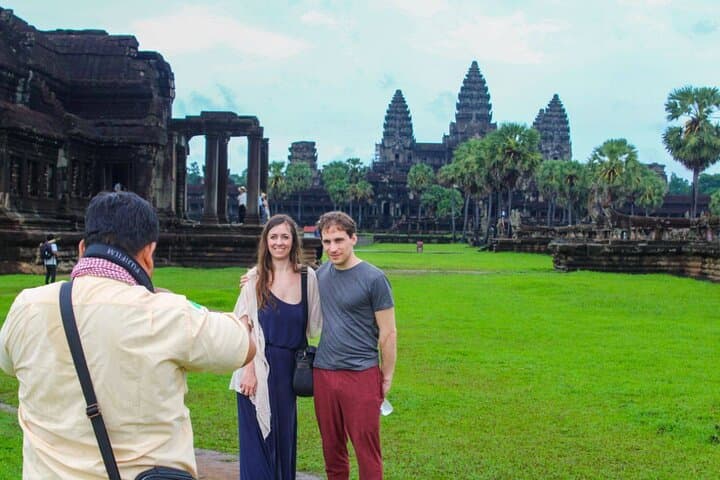
Dawn breaks orange over the reflection pond as you stand before Angkor Wat — the stone towers sharpened against a humid sky, bats and egrets punctuating the silence. That sunrise moment anchors the first day of a six-day route that moves from the temple forests of Siem Reap to the riverfront boulevards of Phnom Penh.
Verified experiences and guided adventures in the surrounding area.
Operated by About Cambodia Travel & Tours · Siem Reap, Siem Reap Province
Dawn breaks orange over the reflection pond as you stand before Angkor Wat — the stone towers sharpened against a humid sky, bats and egrets punctuating the silence. That sunrise moment anchors the first day of a six-day route that moves from the temple forests of Siem Reap to the riverfront boulevards of Phnom Penh.
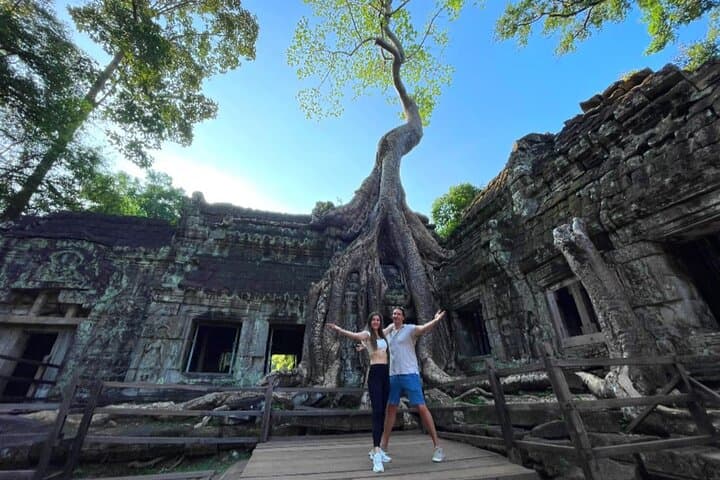
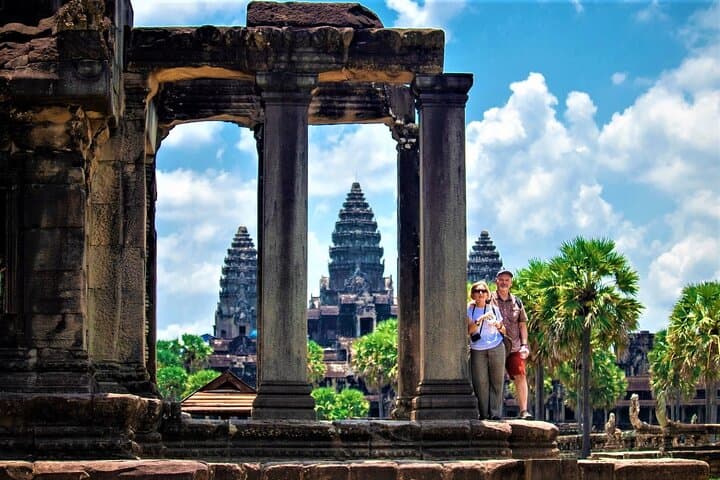
The monuments at Angkor are carved from sandstone and laterite, erected between the 9th and 13th centuries by Khmer kings who translated cosmology into city plans and temple-mountains. On this itinerary you trace that arc: Angkor Wat’s pilgrimage corridors, the many-faced towers of Bayon, the root-entwined galleries of Ta Prohm and the pink sandstone filigree of Banteay Srei. Between ruins you’ll pass Khmer villages, rice paddies and the faded engineering of ancient reservoirs (barays) that once regulated monsoon flows.
Phnom Penh provides a tonal shift — colonial-era art-deco market halls, gilded royal precincts and heavier history at Tuol Sleng and Choeung Ek, reminders of the 20th-century trauma that shaped modern Cambodia.
Practical notes: expect long days on uneven stone and packed dirt; light, closed-toe shoes and sun protection are essential. Temple passes and licensed English-speaking guides are typically included on quality packaged tours; carry small bills for tips and market purchases. Plan early starts to avoid midday heat, bring a reusable water bottle, and be prepared to remove shoes at holy sites. This trip blends archaeology and urban history with accessible logistics — a concentrated, walkable introduction to Cambodia’s past and present.
moderate.
6 days.
Moderate fitness: comfortable walking and standing for several hours each day; short uneven climbs and many steps.
Most quality multi-day packages include the appropriate Angkor pass (1, 3 or 7-day) for scheduled temple visits—confirm at booking.
Many nationalities can obtain a visa on arrival or e‑visa before travel; check current Cambodian entry rules for your passport well in advance.
This tour lists licensed English-speaking guides as included, offering historical context and navigation through the sites.
Yes—this overland itinerary includes private transfers and intercity transport as part of the package.
The Angkor complex reflects Khmer imperial power from the 9th–13th centuries; Phnom Penh’s modern fabric bears the imprint of French colonial planning and the scars of the Khmer Rouge era.
High visitor numbers stress fragile sandstone and roots—follow paths, avoid touching bas-reliefs, and support local guides and community-run conservation initiatives.
About Cambodia Travel & Tours operates guided outdoor trips and adventures with an emphasis on safety, stewardship, and memorable experiences.
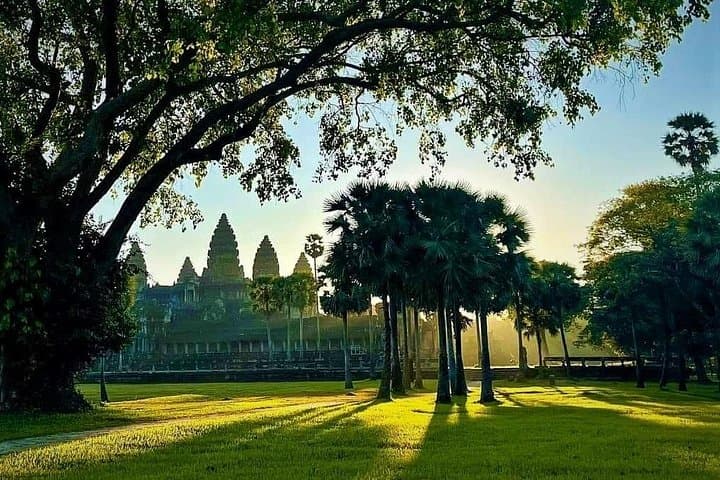
Dawn breaks orange over the reflection pond as you stand before Angkor Wat — the stone towers sharpened against a humid sky, bats and egrets punctuating the silence. That sunrise moment anchors the first day of a six-day route that moves from the temple forests of Siem Reap to the riverfront boulevards of Phnom Penh.
Dawn breaks orange over the reflection pond as you stand before Angkor Wat — the stone towers sharpened against a humid sky, bats and egrets punctuating the silence. That sunrise moment anchors the first day of a six-day route that moves from the temple forests of Siem Reap to the riverfront boulevards of Phnom Penh.
The monuments at Angkor are carved from sandstone and laterite, erected between the 9th and 13th centuries by Khmer kings who translated cosmology into city plans and temple-mountains. On this itinerary you trace that arc: Angkor Wat’s pilgrimage corridors, the many-faced towers of Bayon, the root-entwined galleries of Ta Prohm and the pink sandstone filigree of Banteay Srei. Between ruins you’ll pass Khmer villages, rice paddies and the faded engineering of ancient reservoirs (barays) that once regulated monsoon flows.
Phnom Penh provides a tonal shift — colonial-era art-deco market halls, gilded royal precincts and heavier history at Tuol Sleng and Choeung Ek, reminders of the 20th-century trauma that shaped modern Cambodia.
Practical notes: expect long days on uneven stone and packed dirt; light, closed-toe shoes and sun protection are essential. Temple passes and licensed English-speaking guides are typically included on quality packaged tours; carry small bills for tips and market purchases. Plan early starts to avoid midday heat, bring a reusable water bottle, and be prepared to remove shoes at holy sites. This trip blends archaeology and urban history with accessible logistics — a concentrated, walkable introduction to Cambodia’s past and present.