THE ADVENTURE COLLECTIVE® · Independent discovery and booking for outdoor travel

Ride camels from Siwa’s palms into the Great Sand Sea, catching sunrise or sunset from high dunes before trying sandboarding on wind-shaped slopes. A short, guided excursion that pairs desert views with local tea and cultural touches.
Ride camels from Siwa’s palms into the Great Sand Sea, catching sunrise or sunset from high dunes before trying sandboarding on wind-shaped slopes. A short, guided excursion that pairs desert views with local tea and cultural touches.
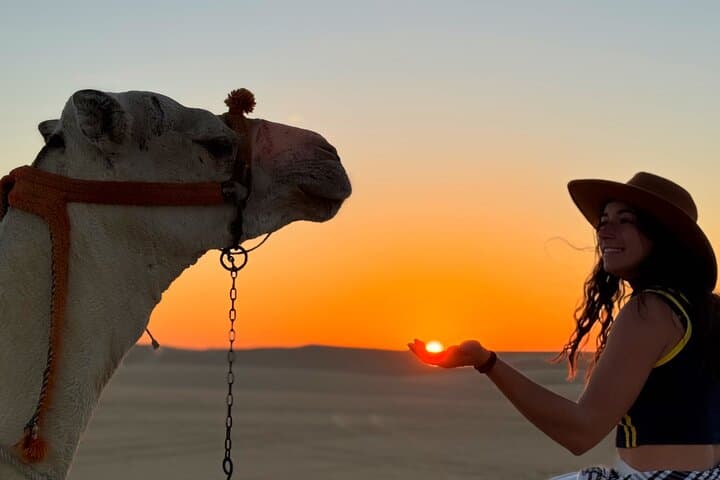
The caravan moves slow and sure across a ribbon of gold — camels’ hooves thud softly as the sky pulls colors low. Whether you climb at dawn or linger for sunset, the ride from Siwa’s palms out into the high dunes feels like stepping beyond maplines: the oasis shrinks behind you and the Great Sand Sea opens, a rolling field of wind-sculpted ridges and occasional rocky outcrops such as Dakrour Mountain.
Verified experiences and guided adventures in the surrounding area.
Operated by Siwa Camel Camp · Siwa, Matrouh Governorate
The caravan moves slow and sure across a ribbon of gold — camels’ hooves thud softly as the sky pulls colors low. Whether you climb at dawn or linger for sunset, the ride from Siwa’s palms out into the high dunes feels like stepping beyond maplines: the oasis shrinks behind you and the Great Sand Sea opens, a rolling field of wind-sculpted ridges and occasional rocky outcrops such as Dakrour Mountain.
Siwa is an oasis city of springs and salt lakes on Egypt’s Western Desert, historically a crossroads for Berber and Egyptian cultures and a stopping point on trans-Saharan routes. The geology here is largely Pleistocene sand and limestone; high dunes near the oasis can reach tens of meters and create sweeping vantage points for panoramic views. Local Bedouin customs and embroidered nomadic garments are often part of the experience — tea, dates, and short cultural breaks tie the ride to living tradition.
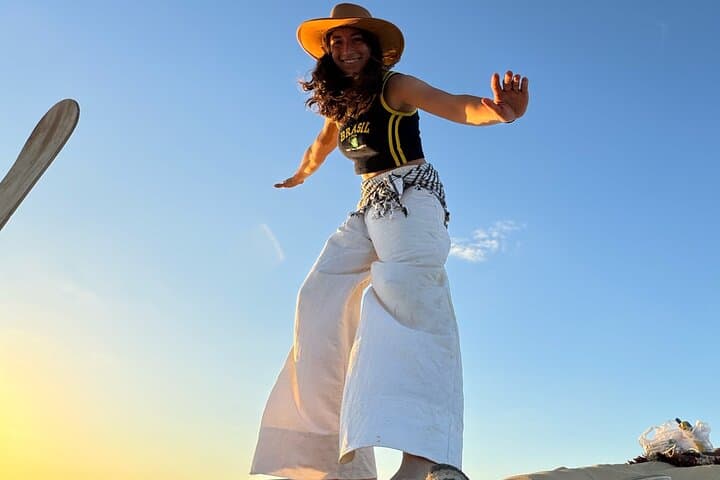
Practically, expect a guided 2‑hour camel trek inside a roughly three-hour excursion with hotel pickup, a snack break, and supervised sandboarding on the higher dunes. Mounting and dismounting are assisted; the pace is gentle but uneven sand demands steady balance. Plan for strong sun, temperature swings at sunrise/sunset, and loose footing while sandboarding. Bring water, closed-toe shoes, and a lightweight layer. Photogenic viewpoints are concentrated at ridge tops; arrive early for cooler air and softer light. For travelers seeking an accessible desert introduction that blends low-impact adventure with cultural context, this Siwa outing is a compact, memorable choice.
easy.
3 hours.
Suitable for most fitness levels; you should be able to mount a camel and handle short walks on loose sand.
The advertised camel ride portion is approximately 2 hours, within a total 3‑hour activity including transfers and breaks.
Yes — instructors provide basic guidance and a gentle slope for first-timers; expect to slide seated or standing depending on skill.
Yes, the tour includes hotel pickup and drop-off within Siwa; confirm your pickup point when booking.
Children are typically allowed but must be able to safely mount and remain secure on a camel; check age or weight restrictions with the operator.
Siwa has long been a cultural crossroads and was famous in antiquity for the Oracle of Amun; the oasis retains Amazigh (Berber) cultural influences.
Respect springs and agricultural plots; avoid leaving litter on dunes and follow guides to prevent erosion of fragile dune vegetation.
Siwa Camel Camp operates guided outdoor trips and adventures with an emphasis on safety, stewardship, and memorable experiences.
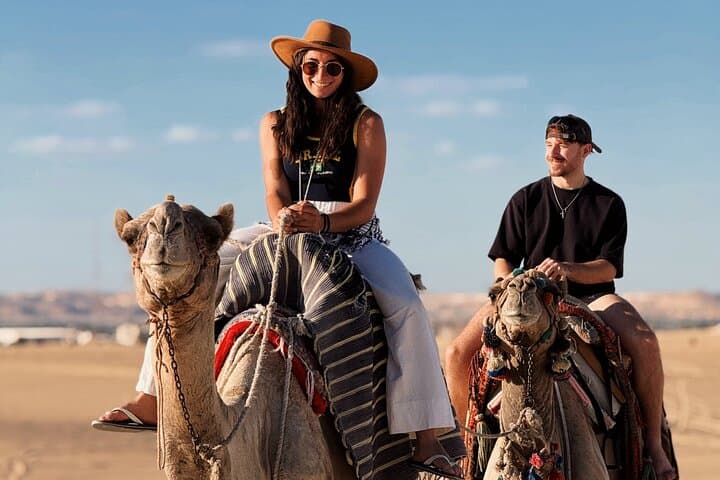
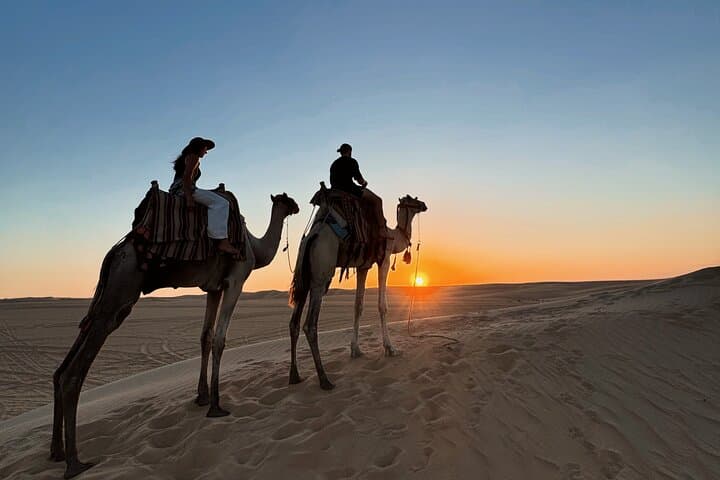
The caravan moves slow and sure across a ribbon of gold — camels’ hooves thud softly as the sky pulls colors low. Whether you climb at dawn or linger for sunset, the ride from Siwa’s palms out into the high dunes feels like stepping beyond maplines: the oasis shrinks behind you and the Great Sand Sea opens, a rolling field of wind-sculpted ridges and occasional rocky outcrops such as Dakrour Mountain.
The caravan moves slow and sure across a ribbon of gold — camels’ hooves thud softly as the sky pulls colors low. Whether you climb at dawn or linger for sunset, the ride from Siwa’s palms out into the high dunes feels like stepping beyond maplines: the oasis shrinks behind you and the Great Sand Sea opens, a rolling field of wind-sculpted ridges and occasional rocky outcrops such as Dakrour Mountain.
Siwa is an oasis city of springs and salt lakes on Egypt’s Western Desert, historically a crossroads for Berber and Egyptian cultures and a stopping point on trans-Saharan routes. The geology here is largely Pleistocene sand and limestone; high dunes near the oasis can reach tens of meters and create sweeping vantage points for panoramic views. Local Bedouin customs and embroidered nomadic garments are often part of the experience — tea, dates, and short cultural breaks tie the ride to living tradition.
Practically, expect a guided 2‑hour camel trek inside a roughly three-hour excursion with hotel pickup, a snack break, and supervised sandboarding on the higher dunes. Mounting and dismounting are assisted; the pace is gentle but uneven sand demands steady balance. Plan for strong sun, temperature swings at sunrise/sunset, and loose footing while sandboarding. Bring water, closed-toe shoes, and a lightweight layer. Photogenic viewpoints are concentrated at ridge tops; arrive early for cooler air and softer light. For travelers seeking an accessible desert introduction that blends low-impact adventure with cultural context, this Siwa outing is a compact, memorable choice.