THE ADVENTURE COLLECTIVE® · Independent discovery and booking for outdoor travel

An easy two-day hike from Pokhara to Sirubari combines forested trails, terraced fields and a night in a Gurung homestay. Expect steady climbs, panoramic Himalayan views and hands-on cultural exchange.
An easy two-day hike from Pokhara to Sirubari combines forested trails, terraced fields and a night in a Gurung homestay. Expect steady climbs, panoramic Himalayan views and hands-on cultural exchange.
You step off the minivan in Arjunchaupari and breathe air that tastes faintly of cedar and wet earth — a preview of the next two days. The trail rises in a steady ribbon through mixed forest, then opens onto green terraces that tilt toward the Annapurna massif; the mountains keep you honest, their ridgelines appearing and hiding with the light.
Verified experiences and guided adventures in the surrounding area.
Operated by Nepal Mountain Club Pvt Ltd · Pokhara, Gandaki Province
You step off the minivan in Arjunchaupari and breathe air that tastes faintly of cedar and wet earth — a preview of the next two days. The trail rises in a steady ribbon through mixed forest, then opens onto green terraces that tilt toward the Annapurna massif; the mountains keep you honest, their ridgelines appearing and hiding with the light.
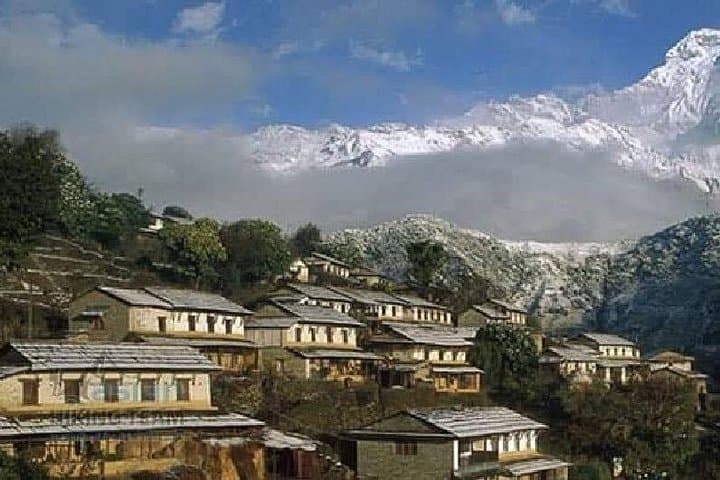
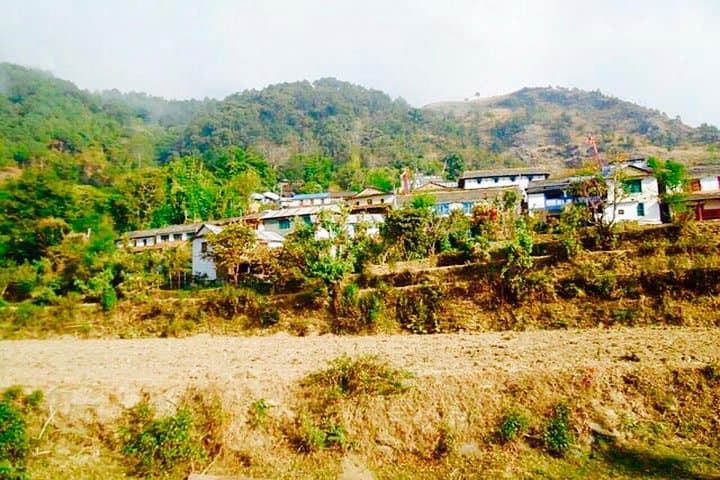
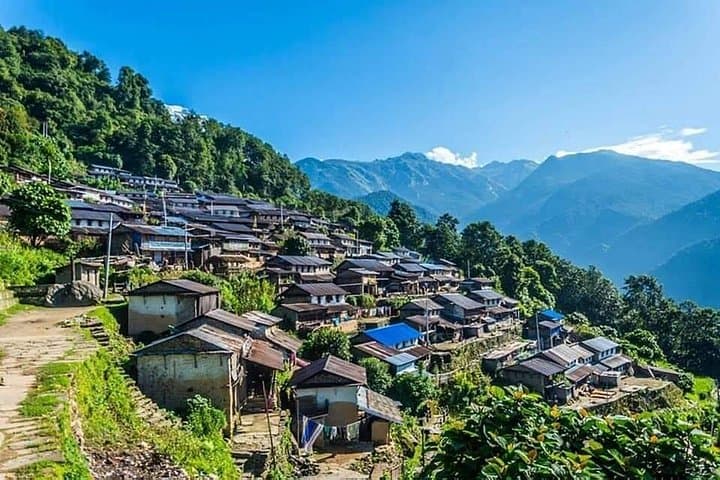
Sirubari is a small Gurung village with stone houses, slate roofs and terraced fields carved into foothill slopes. The local geology is typical of the lesser Himalaya: folded sedimentary rocks and deep valley incision that create steep slopes and narrow ridgelines. Historically, communities here practiced trans-Himalayan trade and subsistence farming; homestays evolved as a community-led tourism model to diversify income while preserving cultural practices like traditional weaving and ritual music.
Expect unpaved lanes, stone stair sections and short stretches of steep switchback. The walking time from Arjunchaupari to Sirubari is commonly 3–5 hours (roughly 6–8 km) with about 400–600 m of elevation change depending on route choices. Evenings are for shared meals — lentils, seasonal greens and millet — and informal cultural exchanges with hosts.
Practical guidance: start early to catch mountain light, carry 1–1.5 L water, wear grippy hiking shoes and layers for rapid temperature swings. Respect household rules, ask before photographing people, and accept local food portions as a sign of hospitality. The homestay model supports small-community conservation, so pack out any non-biodegradable waste. This is an accessible, low-technical two-day trek suited for walkers who want cultural immersion paired with Himalayan foothill scenery.
easy.
2 days.
Light- to moderate-level fitness: comfortable walking 3–5 hours on uneven trails and descending/ascending several hundred meters.
The route is classified easy; trails are well-trodden with short steep sections — beginners who can walk several hours with breaks should manage comfortably.
Homestays are simple family homes with basic amenities; rooms can be shared and bathrooms are communal — the experience prioritizes cultural exchange over hotel-style privacy.
Local breakfast, lunch and dinner are included as per the itinerary, featuring Nepalese home cooking like dal, rice, seasonal vegetables and locally produced bread.
Sirubari sits in the Himalayan foothills under 2,000 m — altitude sickness is unlikely for most travelers, but take normal pacing and hydration precautions.
Sirubari’s homestay program grew from community efforts to showcase Gurung culture while reducing out-migration; the area’s farming terraces reflect centuries of local adaptation to steep slopes.
The village emphasizes low-impact tourism and agricultural sustainability; visitors are encouraged to avoid single-use plastics and support local businesses directly.
Nepal Mountain Club Pvt Ltd operates guided outdoor trips and adventures with an emphasis on safety, stewardship, and memorable experiences.
You step off the minivan in Arjunchaupari and breathe air that tastes faintly of cedar and wet earth — a preview of the next two days. The trail rises in a steady ribbon through mixed forest, then opens onto green terraces that tilt toward the Annapurna massif; the mountains keep you honest, their ridgelines appearing and hiding with the light.
You step off the minivan in Arjunchaupari and breathe air that tastes faintly of cedar and wet earth — a preview of the next two days. The trail rises in a steady ribbon through mixed forest, then opens onto green terraces that tilt toward the Annapurna massif; the mountains keep you honest, their ridgelines appearing and hiding with the light.
Sirubari is a small Gurung village with stone houses, slate roofs and terraced fields carved into foothill slopes. The local geology is typical of the lesser Himalaya: folded sedimentary rocks and deep valley incision that create steep slopes and narrow ridgelines. Historically, communities here practiced trans-Himalayan trade and subsistence farming; homestays evolved as a community-led tourism model to diversify income while preserving cultural practices like traditional weaving and ritual music.
Expect unpaved lanes, stone stair sections and short stretches of steep switchback. The walking time from Arjunchaupari to Sirubari is commonly 3–5 hours (roughly 6–8 km) with about 400–600 m of elevation change depending on route choices. Evenings are for shared meals — lentils, seasonal greens and millet — and informal cultural exchanges with hosts.
Practical guidance: start early to catch mountain light, carry 1–1.5 L water, wear grippy hiking shoes and layers for rapid temperature swings. Respect household rules, ask before photographing people, and accept local food portions as a sign of hospitality. The homestay model supports small-community conservation, so pack out any non-biodegradable waste. This is an accessible, low-technical two-day trek suited for walkers who want cultural immersion paired with Himalayan foothill scenery.