THE ADVENTURE COLLECTIVE® · Independent discovery and booking for outdoor travel

Cruise around Sirmione’s peninsula, admire Grotte di Catullo from the water, then walk through medieval streets and thermal springs with a local guide. This two-hour boat-and-walking combo packs history, geology, and lakeside panoramas into an accessible half-day outing.
Cruise around Sirmione’s peninsula, admire Grotte di Catullo from the water, then walk through medieval streets and thermal springs with a local guide. This two-hour boat-and-walking combo packs history, geology, and lakeside panoramas into an accessible half-day outing.
You step out from under the castle’s stone arch and the lake opens like a cool hand before you—flat glass at dawn, quickening with wind as the boat slips away from the quay. The skiff carves around Sirmione’s narrow peninsula, revealing villas clinging to limestone ledges and steam-tinted thermal springs that still scent the air where groundwater meets the sun-warmed lake.
Verified experiences and guided adventures in the surrounding area.
Operated by Ways · Sirmione, Lombardy
You step out from under the castle’s stone arch and the lake opens like a cool hand before you—flat glass at dawn, quickening with wind as the boat slips away from the quay. The skiff carves around Sirmione’s narrow peninsula, revealing villas clinging to limestone ledges and steam-tinted thermal springs that still scent the air where groundwater meets the sun-warmed lake.
This short loop stitches together the town’s layers: a Roman villa complex, Grotte di Catullo, sits on the peninsula’s tip, its ruined terraces cut into glacial-era limestone; the medieval Scaliger Castle keeps watch with its square tower and drawbridge where your walking tour begins. Your guide threads history and geology—Roman trade, medieval fortification, and the tectonic trough that formed Garda’s basin—into stories that make streets and stones feel alive.
Culturally, Sirmione mixes day-trippers with locals who come for thermal baths and gelato; Maria Callas’ former home is one local touchstone. Expect narrow lanes, cobbled steps, and viewpoints that force you to slow down and look across the lake toward Monte Baldo.
Practical notes: the combined boat-and-walk format suits most fitness levels—two hours total—with short standing periods on the boat and uneven paving in town. Wear sturdy shoes, bring sun protection and a refillable bottle, and plan mornings or late afternoons for softer light and smaller crowds. If wind or weather cancels the boat, guides will adjust the itinerary; check accessibility if mobility is limited.
easy.
2 hours.
Suitable for most people who can stand for short periods and walk on uneven cobbles; minimal elevation change.
The experience lasts about two hours and includes a roughly 40-minute boat loop around the peninsula followed by a guided 60-minute walk through Sirmione’s historic center.
If weather or wind makes the boat unsafe, the guide may offer a modified walking-only itinerary; refunds are subject to the operator’s policy.
Yes—infants must sit on an adult’s lap during the boat portion; the walking section is short but includes uneven surfaces.
Mobile or paper tickets are accepted; you can get a full refund if you cancel at least 24 hours before departure according to the operator’s policy.
Sirmione’s tip holds the Grotte di Catullo, a large Roman villa complex built on glacial limestone; the current castle is a 13th-century Scaliger fortification that controlled lake traffic.
Lake Garda is ecologically sensitive—avoid littering, respect restricted thermal spring areas, and use refillable bottles; local operators promote low-impact boating and group size limits.
Ways operates guided outdoor trips and adventures with an emphasis on safety, stewardship, and memorable experiences.
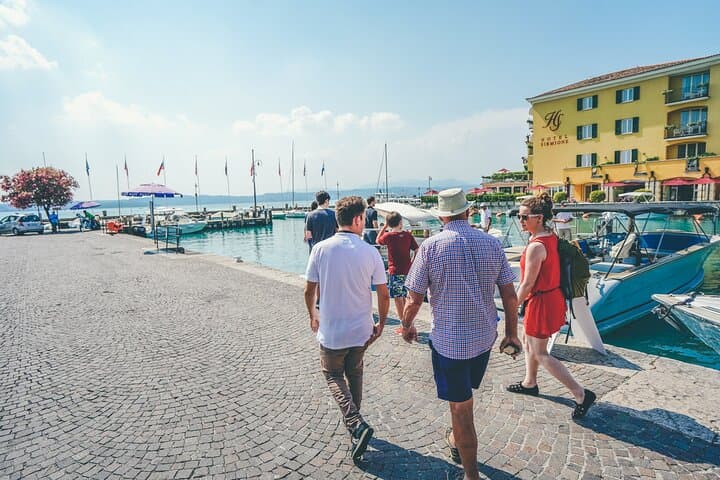
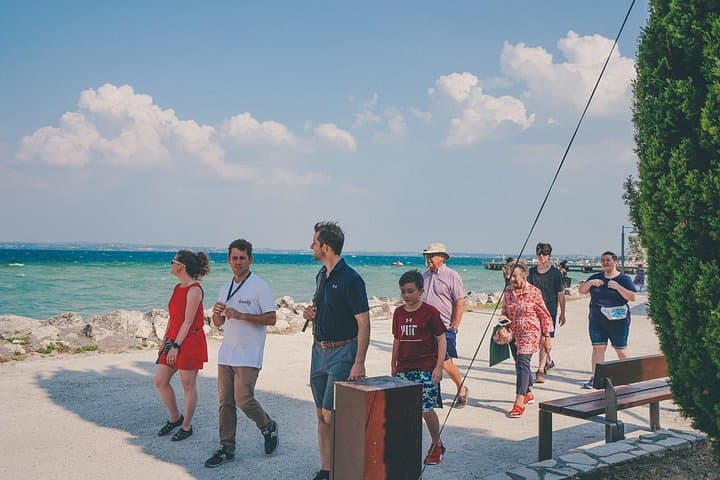
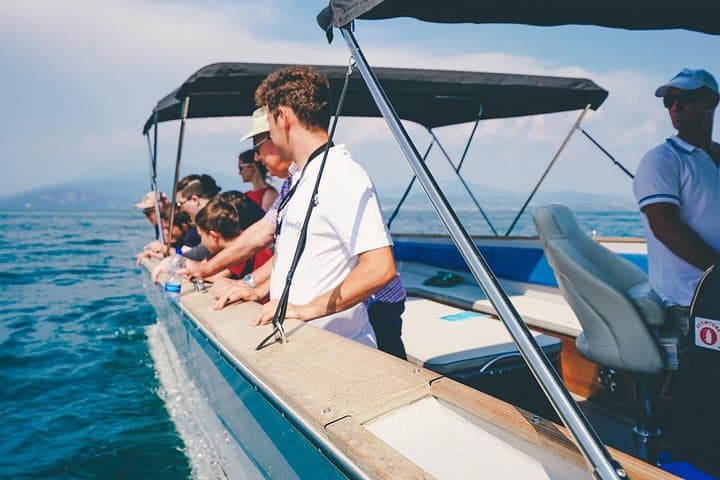

You step out from under the castle’s stone arch and the lake opens like a cool hand before you—flat glass at dawn, quickening with wind as the boat slips away from the quay. The skiff carves around Sirmione’s narrow peninsula, revealing villas clinging to limestone ledges and steam-tinted thermal springs that still scent the air where groundwater meets the sun-warmed lake.
You step out from under the castle’s stone arch and the lake opens like a cool hand before you—flat glass at dawn, quickening with wind as the boat slips away from the quay. The skiff carves around Sirmione’s narrow peninsula, revealing villas clinging to limestone ledges and steam-tinted thermal springs that still scent the air where groundwater meets the sun-warmed lake.
This short loop stitches together the town’s layers: a Roman villa complex, Grotte di Catullo, sits on the peninsula’s tip, its ruined terraces cut into glacial-era limestone; the medieval Scaliger Castle keeps watch with its square tower and drawbridge where your walking tour begins. Your guide threads history and geology—Roman trade, medieval fortification, and the tectonic trough that formed Garda’s basin—into stories that make streets and stones feel alive.
Culturally, Sirmione mixes day-trippers with locals who come for thermal baths and gelato; Maria Callas’ former home is one local touchstone. Expect narrow lanes, cobbled steps, and viewpoints that force you to slow down and look across the lake toward Monte Baldo.
Practical notes: the combined boat-and-walk format suits most fitness levels—two hours total—with short standing periods on the boat and uneven paving in town. Wear sturdy shoes, bring sun protection and a refillable bottle, and plan mornings or late afternoons for softer light and smaller crowds. If wind or weather cancels the boat, guides will adjust the itinerary; check accessibility if mobility is limited.