THE ADVENTURE COLLECTIVE® · Independent discovery and booking for outdoor travel

Spend two days between cool, terraced hills and the hot Nile banks: hike the tiered Sipi Falls, tour highland coffee farms, and visit the Source of the Nile in Jinja. This 2-day itinerary combines steep, rewarding walks with cultural coffee experiences and long scenic transfers.
Spend two days between cool, terraced hills and the hot Nile banks: hike the tiered Sipi Falls, tour highland coffee farms, and visit the Source of the Nile in Jinja. This 2-day itinerary combines steep, rewarding walks with cultural coffee experiences and long scenic transfers.
You step out of the vehicle to a cool breath of air and the distant hiss of water — Sipi Falls unfolds across tiers carved into the eastern flank of Mount Elgon. Green rice terraces slide down the hills, and a path threads through small stone houses and coffee plots, dropping toward the first, thunderous fall.
Verified experiences and guided adventures in the surrounding area.
Operated by Discover Sipi · Kapchorwa, Eastern Region
You step out of the vehicle to a cool breath of air and the distant hiss of water — Sipi Falls unfolds across tiers carved into the eastern flank of Mount Elgon. Green rice terraces slide down the hills, and a path threads through small stone houses and coffee plots, dropping toward the first, thunderous fall.
The route here follows old trade tracks used by the Bagisu people; the valley’s volcanic soils are the product of Mount Elgon’s long volcanic history and make the region one of Uganda’s richest coffee belts. Jinja, lower and hotter, has a very different history — the Nile’s source drew colonial explorers and now draws adventure-seekers for short boat rides and water sports.
Culturally, local guides double as storytellers: they point out indigenous coffee processing methods and explain the role of the Bagisu clan system in local festivals. Geologically, the falls are erosional steps where Elgon’s basaltic flows meet softer sediments, producing the dramatic drops you’ll hike between.
Practical guidance: plan for steep descents and steep climbs — the main Sipi loop takes 3–4 hours of variable walking with uneven steps. Carry water, good traction shoes, and a light rain layer; pack locally roasted coffee to take home. Travel time from Kampala is long, so expect full-day transfers and an overnight in Sipi Valley Resort or Sipi Falls Lodge. Book a local guide to support the community and to navigate the best viewpoints safely.
moderate.
2 days.
Requires moderate fitness: able to handle several hours of uphill and downhill walking plus long vehicle transfers.
The standard loop visiting all three falls takes about 3–4 hours depending on pace and stops for photography or coffee farm visits.
Sections are paved but parts of Nakalama–Mbale and Kapchorwa roads can be under repair; expect dusty or rough patches and a long drive from Kampala.
A local guide is recommended for navigation, cultural insight, and to avoid fragile trails — many bookings include or can arrange one.
Yes; this itinerary pairs a morning in Jinja with a highland stay at Sipi, but expect extended driving time between the two.
The Bagisu people have farmed these slopes for generations; coffee cultivation and the colonial-era interest in the Nile shaped much of the region’s modern economy.
Trails are vulnerable to erosion and litter; support local guides, stick to established paths, and buy coffee directly from cooperatives to help sustain community-led conservation.
Discover Sipi operates guided outdoor trips and adventures with an emphasis on safety, stewardship, and memorable experiences.

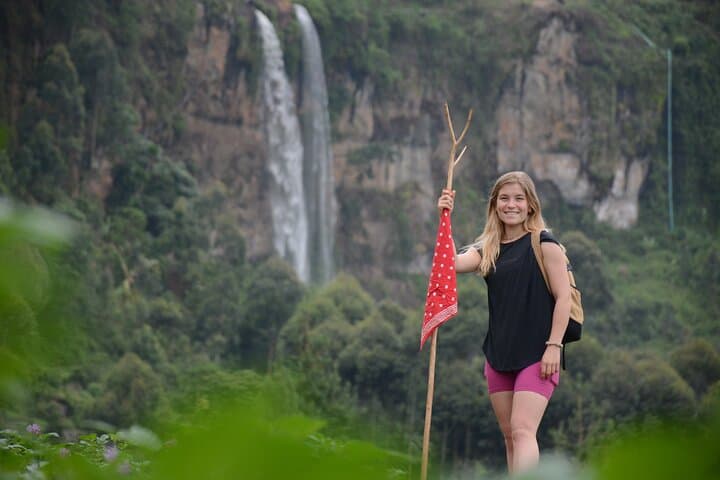


You step out of the vehicle to a cool breath of air and the distant hiss of water — Sipi Falls unfolds across tiers carved into the eastern flank of Mount Elgon. Green rice terraces slide down the hills, and a path threads through small stone houses and coffee plots, dropping toward the first, thunderous fall.
You step out of the vehicle to a cool breath of air and the distant hiss of water — Sipi Falls unfolds across tiers carved into the eastern flank of Mount Elgon. Green rice terraces slide down the hills, and a path threads through small stone houses and coffee plots, dropping toward the first, thunderous fall.
The route here follows old trade tracks used by the Bagisu people; the valley’s volcanic soils are the product of Mount Elgon’s long volcanic history and make the region one of Uganda’s richest coffee belts. Jinja, lower and hotter, has a very different history — the Nile’s source drew colonial explorers and now draws adventure-seekers for short boat rides and water sports.
Culturally, local guides double as storytellers: they point out indigenous coffee processing methods and explain the role of the Bagisu clan system in local festivals. Geologically, the falls are erosional steps where Elgon’s basaltic flows meet softer sediments, producing the dramatic drops you’ll hike between.
Practical guidance: plan for steep descents and steep climbs — the main Sipi loop takes 3–4 hours of variable walking with uneven steps. Carry water, good traction shoes, and a light rain layer; pack locally roasted coffee to take home. Travel time from Kampala is long, so expect full-day transfers and an overnight in Sipi Valley Resort or Sipi Falls Lodge. Book a local guide to support the community and to navigate the best viewpoints safely.